
Breakfast & Brunch
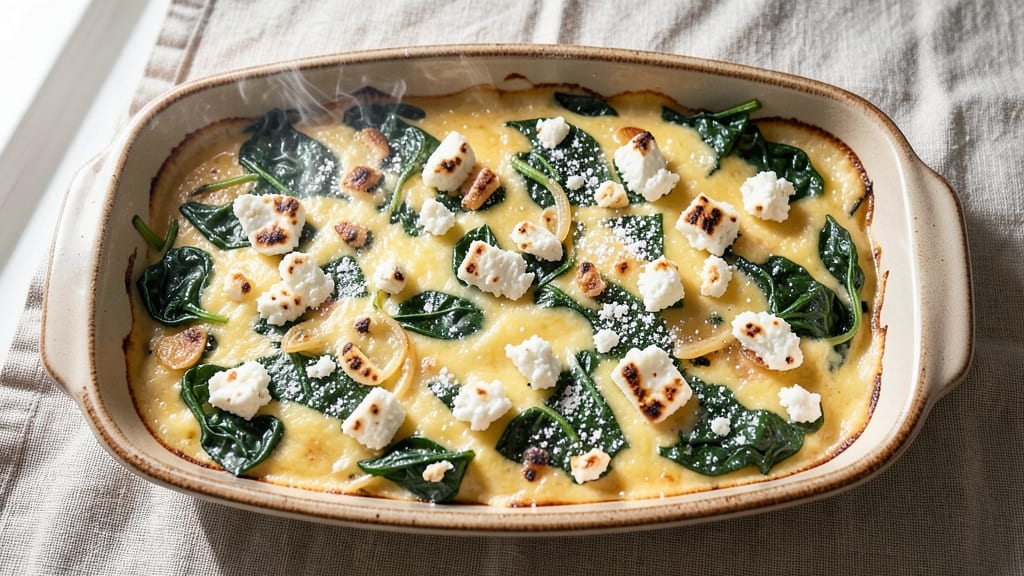
This spinach feta egg casserole recipe transforms simple ingredients into a restaurant-worthy breakfast that bakes up golden, fluffy, and packed with savory layers. The secret lies in pre-cooking the spinach to preserve its vibrant color and texture while letting the eggs set into a tender, custardy center—no soggy bottoms here.
I’ve perfected this dish for brunch crowds or quick weeknight meals, where every bite delivers a perfect balance of creamy eggs, salty feta, and earthy spinach.
The beauty of this casserole is its foolproof layering technique: wilted spinach and crumbled feta form the base, followed by a rich egg mixture that puffs up beautifully in the oven.
Baking at 350°F for 30 minutes ensures the top stays golden and crisp while the center remains silky and set. No fancy equipment is needed—just a baking dish and a little patience for the flavors to meld together.
What makes this dish truly special is its versatility. Serve it as a hearty breakfast with crusty bread or a fresh salad, or repurpose leftovers for lunch the next day.
The recipe easily adapts too—swap the feta for goat cheese, add roasted vegetables, or even mix in cooked shrimp for a seafood twist. Every variation keeps the core texture and flavor intact, making it a brunch staple that never disappoints.
Ready in under an hour, this casserole is the ultimate make-ahead meal—just assemble it the night before and bake in the morning. The aroma alone will wake up your household, and the first forkful will have everyone asking for seconds. Let’s get baking!
Ingredients for spinach feta egg casserole
Twelve ingredients, one golden baking dish—this vegetarian casserole delivers restaurant-quality texture without the fuss.
| Ingredient | Amount | Notes |
|---|---|---|
| Large Eggs 🥚 | 8 whole | Room temperature for even baking |
| Whole Milk 🥛 | 1 cup | Full-fat for creaminess |
| Unsalted Butter 🧈 | ½ cup | Cold, cubed for even distribution |
| Fresh Baby Spinach 🌿 | 10 oz | Wilted, excess liquid drained |
| Crumbled Feta Cheese 🧀 | 1 ½ cups | High-quality, salty variety |
| All-Purpose Flour 🌾 | ¼ cup | For binding egg mixture |
| Diamond Crystal Kosher Salt 🧂 | 1 ½ tsp | Adjust to taste after baking |
| Freshly Ground Black Pepper 🌶️ | ½ tsp | Cracked peppercorns preferred |
| Dried Oregano 🍃 | ½ tsp | Mediterranean blend preferred |
| Garlic Cloves 🧄 | 3 cloves | Minced for aromatic base |
| Shredded Parmesan Cheese 🧀 | ½ cup | Freshly grated for topping |
| Toasted Breadcrumbs 🍞 | ¼ cup | Panko preferred for texture |
The spinach deserves star treatment here. Fresh baby spinach wilts beautifully and retains its vibrant color, but frozen works in a pinch if thawed and squeezed dry. For the feta, high-quality crumbled feta from the deli section—avoid pre-shredded varieties that contain anti-caking agents. The Parmigiano-Reggiano for topping should be freshly grated; pre-shredded contains cellulose that prevents proper melting. Eggs should be large and room temperature—this ensures even baking and prevents cracking during layering. If you're short on time, Whole Foods or local specialty grocers often carry pre-wilted spinach in their refrigerated sections, saving you a step.
No fresh spinach? Frozen chopped spinach, thawed and drained thoroughly, works perfectly—just squeeze out every drop of moisture to prevent a soggy casserole. Swapping feta for goat cheese or ricotta changes the texture but keeps the dish vegetarian. For a lower-carb option, omit the breadcrumbs and sprinkle with extra Parmesan instead. The Diamond Crystal kosher salt is crucial—it dissolves cleanly and enhances flavor without overpowering. If you're sensitive to salt, taste the feta first and reduce the added salt accordingly. The garlic should be minced finely for even distribution, but if you're using a garlic press, pulse it briefly to avoid a pasty texture.
This casserole reheats beautifully—350°F for 15-20 minutes restores its fluffy texture perfectly. Store leftovers in an airtight container for up to 4 days in the refrigerator, or freeze portions for 3 months. For make-ahead convenience, assemble the dish the night before and refrigerate uncovered for 1 hour to let the layers set slightly—this prevents shifting during baking. The breadcrumb topping can be toasted ahead and stored in a sealed container for up to 3 days, keeping its crisp texture intact.
Why You'll Love This Recipe
- No-Chop Needed: I swear by this trick—just fold in those baby spinach leaves whole, no chopping required. The heat wilts them perfectly without any prep work, and honestly? The texture is so much better when they stay in those tender little bundles.
- Salty Creamy Magic: That feta-milk-egg combo is where it all happens—creamy custard with sharp, briny bites in every forkful. The butter adds richness, but it’s the feta that makes this dish ridiculously addictive, even for people who think they don’t like spinach.
- Breakfast for Dinner: This is my go-to when I need something hearty but still feels light—great for lazy Sundays, post-workout meals, or when I’m too tired to cook. Serve it warm with crusty bread, or let it cool for a make-ahead lunch that still tastes fresh.
- Leftovers That Don’t Suck: Between us, most egg casseroles turn into sad, rubbery leftovers. Not this one. The milk keeps it moist, and the feta adds enough salt to preserve flavor for days. I’ve reheated portions for breakfast, packed it for work, and even frozen slices—still delicious.
Step-by-step instructions for spinach feta egg casserole
Layering this casserole properly ensures fluffy eggs and melty cheese every time.
Prepare the Spinach and Garlic Base
In a large skillet over medium heat, melt 0.25 cup unsalted butter until it foams. Add the 3 minced garlic cloves and sauté for 30 seconds until fragrant—don't let it brown or it'll turn bitter. Toss in the 10 oz drained baby spinach and cook for 2-3 minutes until just wilted. Transfer the spinach mixture to a greased 9x13-inch baking dish and spread evenly.
Here's the thing—overcooking the spinach makes it bitter, so watch closely. You want it tender but still vibrant green. Sprinkle half of the 1.5 cups crumbled feta cheese over the spinach and mix lightly with a fork. This creates the flavor foundation for your casserole.
Make the Egg Mixture
In a large bowl, whisk together the 8 large eggs, 1 cup whole milk, 0.25 cup all-purpose flour, 1.5 tsp kosher salt, 0.5 tsp black pepper, and 0.5 tsp dried oregano until completely combined. The batter should be smooth with no visible streaks of flour. This mixture is what will create the signature fluffy texture.
I like to use a whisk for this step—it incorporates air better than a spoon. The flour acts as a thickener here, so make sure it's fully dissolved. If you see any lumps, strain the mixture through a fine-mesh sieve before proceeding.
Layer the Casserole
Pour the egg mixture evenly over the spinach in the baking dish. Gently tap the dish on the counter to help any air bubbles rise to the surface. Sprinkle the remaining 1.5 cups feta cheese and 0.5 cup shredded parmesan cheese evenly over the top, pressing down lightly with the back of a spoon to help them melt into the eggs.
This layering technique is crucial—it prevents a dense top layer while ensuring maximum cheesiness. The feta will melt into the eggs during baking, creating pockets of creamy, salty goodness throughout. Don't skip this step or you'll end up with a cheesy crust instead of even distribution.
Add the Crunchy Topping
Sprinkle the 0.25 cup toasted breadcrumbs evenly over the cheese layer. This creates a delightful textural contrast against the creamy eggs and melty cheese. For extra flavor, you could mix in a pinch of dried oregano with the breadcrumbs, but I find the toasting process brings out enough flavor on its own.
Here's where the magic happens: The breadcrumbs will crisp up beautifully in the oven, creating a perfect balance of textures. Make sure to spread them evenly so every bite has that satisfying crunch. If you're feeling fancy, you could even toast them with a tiny bit of olive oil before adding.
Bake to Golden Perfection
Preheat your oven to 350°F and bake the casserole for 35-40 minutes until the top is golden brown and the center is just set. The edges should pull away from the baking dish slightly, and the casserole should feel firm when gently shaken.
This is the moment that matters: The casserole should be fully set but still slightly jiggly in the center—like a custard. If you cut into it too early, the center will be runny. If you overbake, it'll be dry. The 35-40 minute range gives you a good window, but always check at the lower end if you're unsure. Let it rest for 10 minutes before serving—this allows the layers to fully set and makes slicing much easier.
Pro Tips For Making Spinach Feta Egg Casserole
- Wilt Spinach First: I learned this the hard way—raw spinach in a casserole turns to mush. Sauté the baby spinach in a dry pan for 2-3 minutes until just wilted, then drain most of the liquid. This keeps the texture tender but not soggy, and the flavor stays bright instead of bitter.
- Use Room-Temp Eggs: Cold eggs won’t blend smoothly into the milk mixture, and you’ll end up with uneven curds. Let them sit in warm water for 5 minutes before cracking—this guarantees a silky batter. (Yes, even if you’re impatient like me.)
- Skip the Overmixing: The second you start beating the egg-milk mix vigorously, you risk tough scrambled eggs. Stir just until the feta is mostly dissolved, then stop. Lumps are fine—they’ll melt into creamy pockets when baked.
- Bake on Low Heat: Cranking the oven to 375°F (200°C) might seem efficient, but it’ll dry out the top before the center sets. Bake at 350°F (175°C) for 25-30 minutes, then switch to broil for 2-3 minutes at the end—this gives you a golden crust without rubbery eggs.
Serving suggestions for this spinach feta egg casserole
Crusty Bread Pairings
Serve your spinach feta casserole with warm, toasted sourdough bread or a rustic baguette to soak up any extra egg mixture. I love using a French stick from Whole Foods—its crisp crust contrasts perfectly with the creamy casserole.
For extra flair, brush the bread with garlic-infused olive oil and sprinkle with flaky sea salt before serving. 🥖
Bright Salad Contrast
A crisp arugula salad with lemon vinaigrette cuts through the richness beautifully. Toss 4 cups baby arugula with 2 tbsp extra virgin olive oil, 1 tbsp fresh lemon juice, and 1 tsp honey for a refreshing balance.
Add shaved fennel or cherry tomatoes for extra crunch and color. This pairing keeps the meal light while complementing the savory casserole.
Greek-Inspired Sides
Add Mediterranean flair with hummus and warm pita wedges. Store-bought or homemade hummus pairs perfectly with the feta flavors. I recommend Trader Joe's roasted red pepper hummus for its bold taste. Serve with toasted pita triangles brushed with olive oil and sprinkled with za'atar seasoning for an authentic touch.
Coffee or Tea Pairings
This hearty casserole pairs wonderfully with a strong black coffee or earl grey tea to cleanse your palate. For a brunch spread, I suggest cold brew coffee with a splash of oat milk—the slight sweetness balances the salty feta.
If you prefer tea, chamomile or green tea with honey adds a soothing contrast to the rich dish.
Make-Ahead Serving Tips
Assemble the casserole the night before and refrigerate uncovered for 1 hour to let flavors meld. Before baking, let it sit at room temperature for 15 minutes—this ensures even cooking.
For a restaurant-style presentation, cut into rectangular portions and garnish each serving with fresh parsley and an extra sprinkle of Parmesan cheese. 💫
Leftovers Reinvented
Repurpose leftovers into spinach feta egg muffins by pouring into greased muffin tins and baking at 350°F for 15-20 minutes. These make perfect grab-and-go breakfasts. Alternatively, slice and serve on toasted baguette slices with a drizzle of balsamic glaze for a brunch sandwich. The possibilities are endless! 🍽️
Nutrition facts
Frequently asked questions
Why does my spinach feta egg casserole turn out watery?
Watery results usually happen when too much moisture remains in the spinach or the egg mixture isn't properly set. Always drain wilted spinach thoroughly and avoid overfilling the baking dish—it should be 3/4 full max. Bake until the center is just set (35-40 minutes at 350°F) and let it rest 10 minutes before serving to allow excess moisture to evaporate.
Can I make this casserole ahead of time?
Yes! Assemble the casserole the night before and refrigerate uncovered for 1 hour to let flavors meld. Before baking, let it sit at room temperature for 15 minutes—this ensures even cooking. For best results, bake straight from the fridge (add 5-10 minutes to baking time). The make-ahead method actually enhances the flavor!
What can I substitute if I don't have feta cheese?
Try goat cheese (creamy texture) or ricotta (milder flavor) as substitutes. For a sharper taste, use Parmesan cheese or crumbled halloumi—just reduce the amount by 1/3 since these cheeses are saltier. If you're avoiding dairy, try nutritional yeast for a cheesy flavor without the same richness.
How do I reheat leftovers without drying them out?
Reheat covered in the oven at 350°F for 15-20 minutes until warmed through. For microwave reheating, cover with a damp paper towel and heat in 30-second intervals, stirring between each. Add a splash of milk or water to restore moisture if needed. Leftovers keep well for 4 days in the fridge.
Can I make this casserole in a smaller baking dish?
Yes! For a 9x9-inch dish, reduce all ingredients by 1/3 (about 4 servings). For a 8-inch round dish, use 1/2 the recipe and bake for 25-30 minutes instead. The baking time will be shorter due to the smaller volume, but check at the lower end to avoid overcooking.