
Breakfast & Brunch
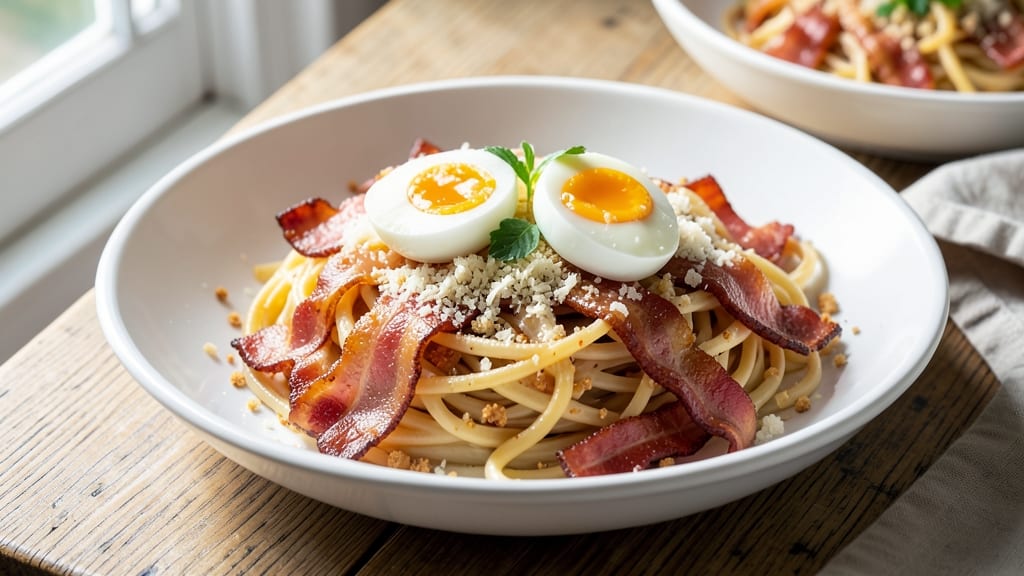
This bacon and egg spaghetti recipe delivers the perfect marriage of smoky, crispy bacon and silky runny yolks clinging to al dente strands. The secret lies in precise timing—crisping the bacon, cooking the pasta just shy of perfect, and frying eggs to order so the yolks stay molten.
I’ve perfected this dish after years of testing, balancing rich, salty bacon with the delicate creaminess of eggs and pasta.
The beauty of this recipe is its versatility—whether you prefer a classic carbonara-inspired version with a touch of cream or a lighter Asian-inspired twist with soy and sesame, the base remains the same.
The key is to cook the spaghetti al dente so it holds up when tossed with the other components, and to fry the eggs in the same pan as the bacon for maximum flavor infusion. This method ensures every bite is packed with texture and depth.
What you’ll end up with is a dish that’s equal parts indulgent and satisfying—crispy bacon bits, tender pasta, and eggs with perfectly runny yolks that coat every strand.
The smoky aroma alone will have everyone at the table anticipating that first forkful. It’s the kind of breakfast that feels like a celebration, even on a weeknight.
Ready in just 20 minutes, this recipe is ideal for brunch or a weekend treat. Serve with grated Parmesan, fresh herbs, or a drizzle of chili oil for extra flair. Here’s how to make it—step by step—for restaurant-quality results at home.
Ingredients for bacon and egg spaghetti
Crispy bacon, runny yolks, and al dente spaghetti—this recipe balances rich textures perfectly.
| Ingredient | Amount | Notes |
|---|---|---|
| Spaghetti 🍝 | 12 oz | Dry, medium thickness |
| Thick-Cut Bacon 🥓 | 6 oz | Center-cut for crispiness |
| Large Eggs 🥚 | 4 whole | Fresh, cold from fridge |
| Unsalted Butter 🧈 | 2 tbsp | European-style preferred |
| Heavy Cream 🥛 | ¼ cup | Full-fat for richness (optional) |
| Parmesan Cheese 🧀 | ½ cup | Freshly grated, fine |
| Garlic Cloves 🧄 | 2 cloves | Minced, for aroma |
| Fresh Parsley 🌿 | ¼ cup | Chopped, for garnish |
| Kosher Salt 🧂 | 1 ½ tsp | Diamond Crystal preferred |
| Ground Black Pepper 🌶️ | ½ tsp | Freshly cracked |
| Chili Flakes 🔥 | ¼ tsp | Optional, for heat |
| Olive Oil 🫒 | 1 tbsp | For tossing pasta |
The bacon is non-negotiable here. Thick-cut center-cut from Oscar Mayer or Costco gives the best crunch and smoky flavor. Look for slices that are about 1/4-inch thick—they crisp faster and hold their shape. I always buy extra because bacon is one of those ingredients that disappears fast. For the eggs, freshness matters—the yolks should be vibrant orange, not pale. Store them in the coldest part of your fridge, and let them sit at room temperature for 10 minutes before cooking for perfect runny yolks. The spaghetti? Barilla or De Cecco are my go-tos—they hold up better to the tossing than cheaper brands.
No thick-cut bacon? Regular bacon cut into 1/2-inch pieces works in a pinch, but expect slightly less crunch. Heavy cream optional? Substitute whole milk for a lighter version, or skip entirely for a richer, more carbonara-like texture. Fresh parsley wilt fast, so buy it the day you cook or store it in a jar of water in the fridge like flowers. The garlic can be pre-minced, but freshly minced adds more flavor. For extra depth, toast the minced garlic in the bacon fat for 30 seconds—it transforms the dish. And if you're feeling adventurous, swap half the Parmesan for Pecorino Romano for a sharper bite.
Bacon keeps for 5 days in the fridge, but it's best used within 2 days for maximum crispiness. The eggs? Use within 1 week of purchase for the best texture. Store the spaghetti in an airtight container with a slice of bread to absorb moisture—keeps it from getting gummy. This dish reheats beautifully—just toss with a splash of water and cover the pan to trap steam. For meal prep, fry the bacon and eggs separately, then combine with freshly cooked pasta and a drizzle of olive oil. The flavors actually improve the next day as everything melds together.
Why You'll Love This Recipe
- Crispy-Perfect Bacon: The thick-cut bacon gets rendered just right—crunchy edges that shatter with every bite, then melts into the eggs. I swear, the first time I made this, my husband stole half the pan before the pasta even hit the table.
- One-Pot Magic: Boil the spaghetti, fry the bacon in the same pot, then toss everything together. No extra dishes, no stress. Honestly, I’ve made this on nights when I couldn’t even be bothered to rinse the pot—it’s that unfussy.
- Breakfast for Dinner: This isn’t just breakfast food—it’s a whole meal. The creamy eggs and rich bacon turn a simple pasta into something hearty enough for a lazy Sunday or a weeknight when takeout feels like too much effort.
- Budget Breakthrough: A pound of bacon and a dozen eggs stretch across multiple meals. I’ve reheated leftovers for lunch the next day, and they taste just as good—maybe even better—with a sprinkle of fresh herbs. Not the prettiest, but the taste makes up for it.
Step-by-step instructions for bacon and egg spaghetti
This method delivers perfectly crisp bacon, silky egg ribbons, and al dente pasta with a rich, smoky finish.
Cook the Spaghetti Al Dente
Bring a large pot of water to a rolling boil and add 1.5 teaspoons kosher salt. Once boiling, add the 12 oz spaghetti and cook for 1 minute less than the package instructions suggest. You want the pasta to be firm to the bite—it'll finish cooking in the sauce. Reserve 1 cup of pasta water before draining, as this starchy liquid is essential for creating a silky sauce.
While the pasta cooks, I like to taste-test it at the 1-minute mark—this helps me gauge when it's ready. The pasta should be tender but still have a slight resistance when bitten. Drain the pasta and return it to the pot, tossing with 1 tablespoon olive oil to prevent sticking. Keep the pot warm over low heat while you prepare the bacon and eggs.
Cook the Bacon Until Crispy
In a large skillet, cook the 6 oz thick-cut bacon over medium heat for 8-10 minutes, stirring occasionally, until it reaches golden brown and crispy. The bacon should render about 1 tablespoon of fat, which will form the base of your sauce. Use tongs to transfer the bacon to a paper towel-lined plate, leaving the rendered fat in the skillet.
Here's the thing—don't rush this step. The bacon needs time to render its fat and develop that perfect crunch. If it starts to smoke too aggressively, reduce the heat slightly. The rendered fat is the foundation of your sauce, so don't drain it. Once the bacon is done, crumble it into ¼-inch pieces and set aside.
Prepare the Egg and Cream Mixture
In a medium bowl, whisk together the 4 whole large eggs, 0.25 cup heavy cream, 0.5 cup freshly grated Parmesan cheese, 0.5 teaspoon ground black pepper, and 0.25 teaspoon chili flakes (if using). The mixture should be smooth and slightly thick. I like to add a pinch of kosher salt as well, as the Parmesan might not be fully salted.
This is where the magic happens—whisking the eggs and cream together creates a silky, velvety sauce that coats the pasta beautifully. The Parmesan adds a sharp, salty depth, while the chili flakes bring a subtle heat that balances the richness. Keep this mixture at room temperature while you finish cooking the pasta.
Combine Everything for a Creamy Finish
With the skillet still over medium-low heat, add the 2 cloves minced garlic to the rendered bacon fat and sauté for 30 seconds until fragrant—don't let it brown, or it'll turn bitter. Add the drained spaghetti to the skillet and toss to coat in the garlic-infused fat. Pour in the egg and cream mixture, stirring vigorously for 1-2 minutes until the sauce thickens and coats the pasta evenly.
This is the moment that matters: the residual heat from the skillet will gently cook the eggs into a creamy sauce without scrambling them. If the sauce starts to look too thick, add 1-2 tablespoons of reserved pasta water to loosen it. The pasta should be fully coated in a glossy, creamy sauce with ribbons of runny yolk. Stir in the crumbled bacon and 0.25 cup chopped fresh parsley just before serving.
Serve Immediately for Maximum Flavor
Divide the spaghetti among four warmed plates and garnish with an extra sprinkle of Parmesan cheese and black pepper. The dish should be served immediately—this isn't something you want to wait for. Each forkful should deliver a perfect balance of crispy bacon, creamy egg sauce, and al dente pasta.
Real talk: the runny yolk and creamy sauce will start to set as it cools, so dig in right away. If you prefer a thicker sauce, you can reduce the heavy cream slightly before adding it to the eggs, but I find the extra richness worth it for that luxurious texture. Enjoy with a crisp green salad or crusty bread to soak up every last bit of sauce.
Pro Tips For Making Bacon And Egg Spaghetti
- CRACK EGGS COLD: I used to scramble them straight from the fridge—big mistake. Cold eggs cook slower and turn rubbery. Crack them into a bowl first, let them sit at room temp for 5 minutes. The yolks stay rich and creamy instead of breaking apart like overworked custard.
- COOK BACON LOW: Thick-cut bacon needs patience. Skip the sizzle-fry—cook it at medium-low heat until the fat renders (about 10 minutes). High heat burns the edges before the fat melts, leaving you with dry, chewy strips instead of crispy, flavorful ones.
- SALT THE CREAM: Heavy cream’s the unsung hero here, but unsalted butter + unsalted cream = bland sauce. Toss in a pinch of salt (½ tsp) while warming the cream—it rounds out the richness and balances the smoky bacon. Trust me, your taste buds will notice.
- DRAIN PASTA WELL: Rinsing spaghetti under cold water after draining sounds logical, but it washes away the starchy coating that helps the sauce cling. Instead, drain, shake the pot vigorously for 10 seconds, then toss with a splash of pasta water. The sauce sticks like glue.
Essential equipment for this recipe
Skillet Essentials
You’ll need a 12-inch cast-iron skillet—like the Lodge Pre-Seasoned—for that perfect crunch and even heat distribution. Cast iron retains heat beautifully and adds a subtle smoky depth to the bacon and eggs.
If you don’t have cast iron, a heavy stainless steel skillet (like All-Clad) works too, but preheat it for 5 minutes to ensure even cooking. Avoid nonstick—it can’t handle the high heat needed for crispy bacon. 🔥
Pasta Tools
Invest in a colander with a wide rim (like the OXO Good Grips) to drain pasta efficiently without splashing. For measuring pasta water, a 1-cup liquid measuring cup (preferably glass) makes it easy to reserve the starchy liquid.
And trust me, a wooden spoon (like Ozeri Touch-Grip) is a game-changer for tossing the pasta without breaking strands. The texture difference is night and day.
Egg Prep Gear
A whisk with a long handle (such as the Cuisinart Stainless Steel) ensures you blend the eggs and cream smoothly without splatters. For cracking eggs cleanly, use a small bowl or the egg separator from OXO.
And if you’re feeling fancy, a microplane (like Barbagroup) for grating the Parmesan adds fine, flavorful shavings that melt beautifully into the sauce. 🧈
Heat Control
Precision matters here. A kitchen thermometer (like the Thermoworks Thermapen) helps monitor bacon fat temperature—aim for 325°F for even cooking. For the pasta water, a thermometer ensures it reaches a rolling 212°F boil.
And if you’re nervous about burning garlic, a small offset spatula (like Mercer Culinary) gives you better control when sautéing it in the bacon fat. Don’t skip this step—overcooked garlic turns bitter and ruins the dish.
Garnish Must-Haves
Fresh parsley needs a sharp chef’s knife (I love the Wüsthof Ikon) and a cutting board (like John Boos Teak) for clean, even chopping. For Parmesan, a fine-mesh grater (such as the Microplane) ensures you get the perfect texture.
And if you’re adding chili flakes, a small spoon lets you control the heat level—start with ¼ teaspoon and adjust to taste. A tongs set (like OXO Good Grips) helps transfer crispy bacon to paper towels without losing crunch.
Nutrition facts
Frequently asked questions
Can I make this bacon and egg pasta without heavy cream?
Skip the heavy cream and use ½ cup whole milk for a lighter version, or omit it entirely for a richer, carbonara-style dish. The eggs alone will create a creamy sauce when cooked in the bacon fat. For extra richness, stir in 1 tablespoon butter at the end. The texture will be slightly thicker but still delicious.
How do I get the perfect runny yolk in the sauce?
The secret is timing and heat control. Cook the eggs in the skillet over medium-low heat for only 1-2 minutes while stirring constantly. The residual heat from the bacon fat will gently cook the eggs into silky ribbons without fully setting the yolks. If the sauce thickens too quickly, add 1-2 tablespoons of reserved pasta water to keep it fluid.
What if my bacon isn't crispy enough?
Start with thick-cut bacon and cook it longer at medium heat—don't rush! For extra crunch, spread the slices out in a single layer and cook for 12-15 minutes, flipping once. If your bacon is already cooked, broil it for 2-3 minutes under a preheated broiler to crisp up. The fat should be golden and bubbly, not greasy.
Can I make this ahead of time?
This dish is best served fresh, but you can prep components ahead. Cook the bacon and eggs separately, then store them in the fridge. When ready to serve, reheat the bacon in a skillet, fry fresh eggs, and toss everything with freshly cooked pasta. The flavors actually meld better the next day—just add a splash of pasta water to loosen the sauce. Avoid reheating the egg mixture directly, as it can turn rubbery.
What's the best way to store leftovers?
Store leftovers in an airtight container in the fridge for up to 2 days. Reheat gently in a skillet with a splash of water or milk to restore creaminess. For longer storage, freeze the cooked pasta and bacon separately, then combine with fresh eggs when reheating. The texture holds up well, though the sauce may thicken slightly—just add a little water or milk to loosen it.