
Breakfast & Brunch
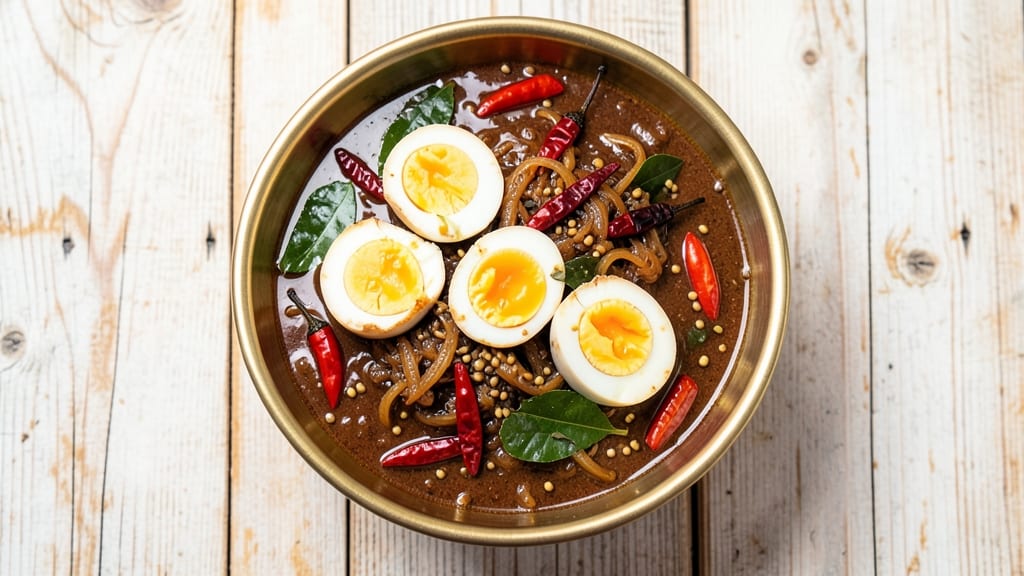
Andhra style egg curry delivers the bold, tangy-spicy comfort of South India in every bite—where tamarind brightens red chilies, mustard seeds sizzle into aromatic perfection, and hard-boiled eggs transform into melt-in-your-mouth tenderness. This one-pot recipe captures the essence of Andhra Pradesh's fiery yet balanced flavors, using techniques like tempering whole spices and simmering the curry just until the eggs absorb the rich, spiced gravy. What makes it special is the harmony of sweet, sour, and heat, where tamarind's tang cuts through the chili's intensity while coconut milk adds a velvety depth.
The magic happens in layers: first, the spices—mustard seeds, curry leaves, and dry red chilies—bloom in hot oil, filling your kitchen with that unmistakable Andhra aroma. Then comes the tamarind pulp, which lends the signature sour kick, while tomatoes and onions build a flavorful base.
The hard-boiled eggs, gently simmered in the curry, soak up the spices until their yolks turn golden and their whites remain firm yet tender. This dish isn’t just about heat; it’s about balance, where every ingredient plays its part to create a curry that’s both comforting and deeply satisfying.
By the time you serve this curry steaming over hot steamed rice or alongside buttery roti, you’ll taste the authenticity of Andhra cuisine—spicy yet refined, tangy yet rich, and impossibly comforting.
The eggs, now infused with the curry’s flavors, become the star, while the gravy clings to each grain of rice, making every bite a little taste of home. Whether you're feeding a family or treating yourself to a flavorful meal, this recipe delivers restaurant-quality results with minimal effort.
Adjust the spice level to your preference by controlling the number of red chilies or adding a pinch of sugar to balance the heat. For extra richness, stir in a tablespoon of coconut milk at the end.
The curry tastes even better the next day as the flavors meld further, making it perfect for meal prep. Let’s bring the flavors of Andhra to your table!
Ingredients for andhra style egg curry
Tamarind's tang, ginger's kick, and coconut's creaminess—just 15 ingredients for bold Andhra flavors.
| Ingredient | Amount | Notes |
|---|---|---|
| Hard-Boiled Eggs 🥚 | 6 whole | Medium size, peeled |
| Mustard Seeds 🌿 | 1 tbsp | Whole, yellow variety |
| Dry Red Chilies 🌶️ | 4 whole | Kashmiri or bird's eye |
| Curry Leaves 🌿 | ¼ cup | Fresh, packed loosely |
| Onions 🧅 | 1 whole | Medium, finely chopped |
| Tomatoes 🍅 | 2 medium | Ripe, chopped |
| Tamarind Pulp 🍈 | 2 tbsp | Soaked in warm water |
| Ginger | 1 inch | Fresh, peeled, grated |
| Ginger 🧄 | 1 ½ tbsp | Fresh, peeled, grated |
| Garlic Cloves 🧄 | 6 cloves | Peeled, minced |
| Coconut Milk 🥥 | ½ cup | Full-fat, canned |
| Vegetable Oil 🫒 | ½ cup | For tempering |
| Salt 🧂 | 1 tsp | Adjust to taste |
| Turmeric Powder 🌿 | ½ tsp | Freshly ground preferred |
| Cumin Seeds 🌿 | ½ tsp | Toasted lightly |
The tamarind pulp is non-negotiable—look for blocks at Indian grocery stores or use bottled pulp from Trader Joe's. Soak it in warm water for 10 minutes to soften. For curry leaves, fresh is a must—dried won't give that authentic aroma. Ginger and garlic? Buy extra—you'll want them for other dishes after this. The dry red chilies can be adjusted: Kashmiri for mild heat, bird's eye for fire. Store tamarind blocks in a cool, dry place for up to 6 months.
No tamarind? Lemon juice plus a pinch of sugar gets you close, but it won't be the same. Short on coconut milk? Cashew cream works in a pinch—blend soaked cashews with water. The eggs should be medium-sized for perfect texture—large ones stay too firm. For extra richness, stir in 1 tbsp yogurt at the end. The cumin seeds? Toast them first—that nutty aroma is everything. And if your chilies are too spicy, remove the seeds before adding.
This curry tastes even better the next day—flavors meld like magic. Store leftovers in the fridge for 4 days or freeze for 3 months. I like to portion it into containers with rice for quick lunches. The eggs stay firm but spice-soaked—perfect for meal prep. For reheating, add a splash of water to prevent drying out. And pro tip: Save the curry leaves—they keep for months in oil!
Why You'll Love This Recipe
- No Chopping Chaos: I swear by this recipe when I’m too tired to dice anything—just halve those hard-boiled eggs and toss them in whole. The onions get a quick sauté with the mustard seeds and chilies, but even that’s optional if you’re in a rush. That tempering of curry leaves and spices? One pan, five minutes max.
- Spice Bomb Alert: Here’s what sold me—the way the dry red chilies and mustard seeds sizzle in ghee until they smell like a spice shop explosion. The curry leaves add that bright, herbal punch, and the hard-boiled eggs? They soak up all the oil and spice, giving you that crispy edge with the creamy center I can’t resist.
- Lunchbox Hero: Between us, this is my go-to for packed lunches. The eggs hold up for days in the fridge, and the curry’s rich but not heavy—perfect with steamed rice or even flatbreads. My kid brings it back half-eaten because it’s actually better cold than most takeout.
- Pantry Magic: Honestly, I make this when I’m low on groceries. Mustard seeds, chilies, onions, and eggs? That’s it. The spices you likely already have. And because it reheats like a dream, I’ll often make a big batch on Sundays—leftovers taste just as good, and it’s my secret weapon for lazy weeknights.
Step-by-step instructions for Andhra style egg curry
Let's create this vibrant, tamarind-infused egg curry that delivers bold Andhra flavors in every bite.
Prepare the Tamarind Base
Soak the 2 tablespoons tamarind pulp in ½ cup warm water for 10 minutes until fully dissolved. This creates the signature tangy foundation of Andhra cuisine. Strain through a fine sieve to remove any fibrous bits, pressing gently with a spoon to extract all the flavor. The resulting liquid should be smooth and slightly sticky—this is your tamarind base.
In a separate small bowl, combine the strained tamarind liquid with ½ cup coconut milk and set aside. This combination balances the tamarind's acidity with creamy richness. I like to taste it at this stage—it should be pleasantly sour with a hint of sweetness from the coconut. If it's too tart, add a pinch of sugar (though our ingredients list doesn't include it, this is optional).
Temper the Spices
Heat ½ cup vegetable oil in a heavy-bottomed pot over medium heat. Add the ½ teaspoon toasted cumin seeds and let them sizzle for 30 seconds until they release their nutty aroma. This is crucial—don't rush this step or you'll miss the depth of flavor.
Next, add the 1 tablespoon mustard seeds. They'll pop dramatically—this is normal and indicates they're heating properly. Immediately follow with the 4 whole dry red chilies and ¼ cup curry leaves. Stir constantly for 1 minute until the chilies darken slightly and the curry leaves become fragrant. The pot should smell like a spice market exploded—this is where the magic happens.
Build the Curry Base
Add the 1 whole finely chopped onion to the pot and sauté for 4-5 minutes until it turns golden brown. This caramelization builds sweetness that balances the tamarind's acidity. Then add the 1 inch grated ginger and 1.5 tablespoons grated ginger (yes, we're doubling the ginger—it's traditional for this dish). Cook for another 2 minutes until the raw ginger smell disappears.
Stir in the 6 minced garlic cloves and cook for 30 seconds until fragrant. Now add the 2 chopped tomatoes and ½ teaspoon turmeric powder. Cook for 5 minutes until the tomatoes soften and the oil separates from the spices. This is your flavor foundation—don't skip this step or your curry will taste flat.
Combine and Simmer
Pour in the tamarind-coconut mixture and stir well. The curry will bubble vigorously—let it cook uncovered for 5 minutes to allow excess moisture to evaporate. Then add 1 teaspoon salt and the 6 peeled hard-boiled eggs, gently stirring to coat them in the spiced sauce.
Simmer for 8-10 minutes on low heat, stirring occasionally. The eggs should absorb the flavors without breaking. You'll know it's ready when the sauce thickens slightly and coats the back of a spoon. The tamarind will have mellowed, creating that perfect balance of tangy, spicy, and creamy.
Finish and Serve
Garnish with additional curry leaves if desired, though the dish is already packed with flavor. Serve immediately with steamed rice or appam to soak up every last bit of that vibrant sauce. The eggs should be warm throughout, with the yolk slightly creamy from the coconut milk infusion.
This curry delivers on comfort with its familiar egg-and-rice combination, but the tamarind-kissed sauce elevates it to something special. The spices sing while the coconut milk softens the heat—perfect for a satisfying weeknight meal that feels like a celebration.
Pro Tips For Making Andhra Style Egg Curry
- CRACK EGGS HALF-WAY: Peel the eggs before adding them to the curry—Andhra style relies on the yolks breaking just enough to coat the gravy, not turn it into scrambled eggs. I learned this the hard way after serving a plate where the yolks stayed whole and the dish looked undercooked.
- TOAST CHILIES FIRST: Dry roast the red chilies for 30 seconds until they smell smoky—this deepens their flavor way more than raw chilies ever will. Skip this, and your curry will taste flat, no matter how much mustard you add.
- LOW HEAT FOR ONIONS: Cook the onions on medium-low until they’re translucent but not brown—burnt onions make the curry bitter, and Andhra curries need that sweet, mellow base. I used to rush this, and the whole dish suffered.
- SIMMER EGGS GENTLY: Once the eggs are in the curry, keep the heat at a whisper—hard-boiled eggs turn rubbery if they boil again. A slow simmer (2-3 minutes max) keeps them tender and lets the gravy soak in properly.
Regional styles of these flavors
Andhra Coast Style
The coastal regions of Andhra Pradesh, particularly around Visakhapatnam and Srikakulam, take this curry to another level by adding a touch of coconut milk directly to the tempering stage.
Instead of mixing it later, heat ½ cup coconut milk with the oil and mustard seeds—this creates a lighter, more aromatic sauce that clings beautifully to the rice. Locals also add a pinch of asafoetida (hing) when tempering the spices for that umami depth that’s hard to replicate.
The result is a curry with a silky texture and a brighter, more vibrant color. 🌊
Rayalaseema Heat
In the dry, inland Rayalaseema region, the curry gets a smoky twist using dried coconut flakes instead of fresh milk. Toast ¼ cup flakes in the oil before adding mustard seeds, then grind them into a fine powder to mix into the sauce.
This adds a nutty, toasty note that balances the tamarind’s tang. For extra heat, Rayalaseema cooks use extra dry red chilies (up to 6 whole chilies) and a sprinkle of black salt (kala namak) at the end for that signature sulfurous kick.
The eggs here are often lightly crushed before adding to the curry for faster flavor absorption. 🔥
Hyderabad Fusion Twist
While not traditional Andhra, Hyderabad’s love for biryani spices has created a fusion version where the curry is finished with saffron-infused milk and fried onions. After simmering the eggs, stir in 1 tbsp fried onions and a pinch of saffron dissolved in 2 tbsp warm milk.
This adds a floral sweetness that contrasts beautifully with the tamarind’s acidity. For garnish, top with chopped mint leaves—a common biryani ingredient that adds freshness. This version works perfectly with jeera rice (cumin-infused basmati) for a restaurant-style experience. 🌟
Tamil-Inspired Adaptation
Crossing into Tamil Nadu, this curry often incorporates tamarind leaves instead of just pulp. Soak 2-3 tamarind leaves with the pulp to infuse an earthy depth. Tamil cooks also add a splash of coconut water (not milk) to the tempering oil for a lighter body.
The curry is finished with a drizzle of sesame oil and crushed peanuts for crunch. This version pairs exceptionally well with idli or dosa, turning it into a breakfast staple. The peanuts add a satisfying texture contrast to the soft eggs. 🥜
Modern Kitchen Shortcuts
For busy weeknights, swap the tempering process with 1 tbsp store-bought Andhra-style curry powder (like MTR or MDH brands). Mix it with the onions and tomatoes at Step 3 for instant depth.
Use pre-grated ginger-garlic paste (like Herb Ox) to save time—just reduce the amount to 1 tbsp total since pastes are more concentrated. For tamarind, Trader Joe’s tamarind paste works perfectly. These shortcuts keep the authentic flavors while cutting prep time by half. 💡
Spice Level Control
Andhra curries are famously spicy, but you can adjust heat without losing authenticity. For mild heat, remove seeds from chilies and reduce quantity to 2 whole chilies. For medium heat, use 3-4 Kashmiri chilies (milder but still vibrant).
For extra heat, add ½ tsp cayenne pepper at the end. Balance heat by stirring in 1 tsp sugar or 1 tbsp yogurt—both are traditional fixes in Andhra kitchens. The key is tamarind’s tang, which naturally cools the palate between spicy bites. 🌶️
Nutrition facts
Frequently asked questions
Can I make this Andhra egg curry without tamarind?
While tamarind is essential for authentic flavor, you can substitute with 2 tablespoons lemon juice plus ½ teaspoon sugar to mimic the tang. For a closer match, try 1 tablespoon amchur (dry mango powder) mixed with 1 tablespoon water—this adds both sourness and complexity. The curry will taste different but still delicious!
How do I prevent the eggs from breaking in the curry?
Use medium-sized eggs (not large) and ensure they're fully cooked and peeled before adding. Gently stir them into the simmering sauce and cook on low heat for just 8-10 minutes. For extra protection, lightly crush the eggshells with a spoon before adding them to the curry—this helps them absorb flavor faster without breaking.
What's the best way to store leftovers?
Store in an airtight container in the fridge for up to 4 days. The flavors actually improve overnight as the tamarind and spices meld! For reheating, warm gently on low heat with 1-2 tablespoons water to prevent drying. For freezing, portion with rice in containers—this makes quick lunches where the eggs stay perfectly firm.
Can I make this curry less spicy?
For mild heat, reduce chilies to 2 whole (remove seeds) or use Kashmiri chilies instead of bird's eye. Add 1 teaspoon sugar or 1 tablespoon yogurt at the end to balance. The tamarind's tang naturally cools the palate—this is why Andhra curries feel balanced even when spicy. Start with 3 chilies for medium heat.
What are the best sides to serve with this curry?
The classic pairing is steamed basmati rice, but Andhra cooks also serve it with appam (fermented rice hoppers) or pulusu (Andhra-style dosa). For a modern twist, try garlic naan or jeera rice. The coconut milk in the curry makes it especially delicious with raita (yogurt with cucumber and mint) to cool the palate.