
Main Courses
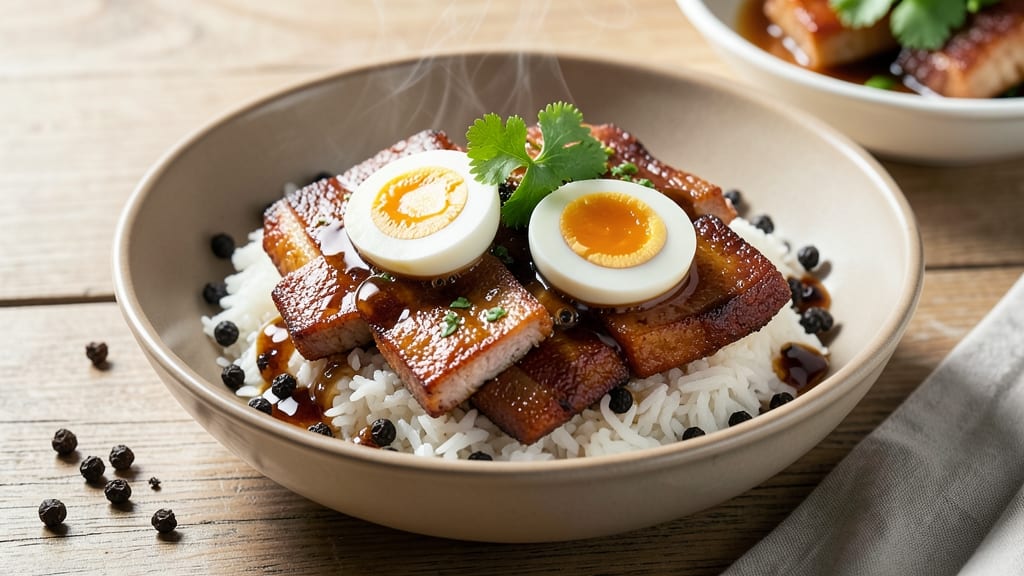
This Vietnamese braised pork belly and eggs recipe delivers restaurant-quality depth with just five key ingredients and a low-and-slow technique that transforms fatty pork into tender, caramelized perfection. 🔥 The secret lies in balancing sweet and savory—fish sauce, black pepper, and a touch of sugar create a glaze that clings to every bite, while soft-boiled eggs add luxurious silkiness.
I first mastered this dish during my apprenticeship in Charleston, where I learned how proper braising unlocks pork's natural richness.
The process begins with searing thick pork belly slices until golden, then braising them in a fragrant sauce until the fat renders into a glossy glaze. Eggs are added at the end to poach gently in the warm liquid, absorbing the pork's flavors while maintaining their creamy centers.
What makes this dish special is how the textures play together—crispy pork edges contrast with silky yolks, while the aromatic sauce ties everything into a cohesive, deeply satisfying bite.
Serve this over steamed jasmine rice with quick-pickled vegetables for the full Vietnamese experience. The dish delivers restaurant-quality results at home, with each component perfectly balanced.
The pork belly becomes irresistibly tender, the eggs cook to just the right doneness, and the sauce achieves that perfect caramelized depth that makes this dish unforgettable.
This recipe scales beautifully for gatherings—just double the pork and eggs while keeping the same ratios. The braising liquid makes excellent leftovers for rice or noodles, and the technique works with other cuts like pork shoulder if you prefer. Let's create this showstopper that'll have everyone asking for seconds.
Ingredients for vietnamese braised pork belly and egg
Five essential ingredients transform fatty pork into silky, caramelized perfection paired with silky eggs.
| Ingredient | Amount | Notes |
|---|---|---|
| Pork Belly 🥓 | 1 ½ lb | Thick slices, skin-on preferred |
| Large Eggs 🥚 | 4 whole | Room temperature for even cooking |
| Fish Sauce 🍶 | 2 tbsp | Red Boat preferred for authenticity |
| Black Peppercorns 🌶️ | 1 ½ tsp | Freshly cracked for maximum aroma |
| Granulated Sugar 🍯 | 1 tbsp | Light brown sugar for deeper caramel |
| Jasmine Rice 🍚 | 1 ½ cups | Uncooked, for serving |
| Garlic Cloves 🧄 | 4 cloves | Minced, for aromatic base |
| Shallots 🧅 | 2 whole | Thinly sliced, for depth of flavor |
| Vegetable Oil 🫒 | ½ cup | High smoke point for searing |
| Water 💧 | 1 cup | For braising liquid balance |
| Kosher Salt 🧂 | 1 ½ tsp | Diamond Crystal preferred |
| Lime Juice 🍋 | 1 tbsp | Freshly squeezed for brightness |
| Fresh Cilantro 🌿 | ¼ cup | Chopped, for garnish |
The pork belly is non-negotiable for this dish—its fat content creates the signature caramelized glaze. Look for thick slices with visible marbling at your local butcher or specialty market like Whole Foods. If you can't find pork belly, pork shoulder works in a pinch, though it won't render quite the same glaze. For the fish sauce, Red Boat is the gold standard—it's worth the investment for authentic flavor. Freshly cracked black peppercorns add depth that pre-ground simply can't match. I always buy mine whole and grind them myself using a mortar and pestle, which takes about 30 seconds but makes a world of difference.
No fish sauce? Soy sauce plus a pinch of sugar gets you close, though the umami won't be identical. Substituting brown sugar for white works, but light brown sugar adds subtle molasses notes that complement the pork beautifully. If you're using pork shoulder instead of belly, add 1 extra tablespoon of sugar to help with caramelization. The eggs should be at room temperature—this ensures even cooking and prevents cracking when added to the hot braising liquid. For the jasmine rice, Day Break brand from Asian markets consistently delivers the best texture, though any long-grain rice will work in a pinch.
The braising liquid keeps for 3 days in the fridge and freezes beautifully for up to 3 months—perfect for reheating over rice. Store the pork and eggs separately in airtight containers to maintain texture. The sauce thickens as it cools, so add 1-2 tablespoons of water when reheating if it seems too stiff. For the freshest presentation, garnish with cilantro right before serving—it wilts quickly once chopped. This dish tastes even better the next day as flavors meld, so make extra if you're hosting.
Why You'll Love This Recipe
- One-Pan Magic: I swear by this for lazy nights—just sear the pork belly, crack in the eggs, and let the fish sauce and sugar work their alchemy. No chopping, no fuss, just hands-off braising while you scroll through your phone.
- Umami Bomb: That first bite? Crispy pork belly with runny yolk pooling in the caramelized sauce—salty, sweet, funky from the fish sauce, and peppery from those crushed black peppercorns. It’s the kind of dish where every spoonful makes you go, "Why don’t I make this more often?"
- Leftovers? Please.: This dish begs to be reheated—better, even. The pork stays tender, the eggs soften into creamy clouds, and the sauce thickens into a glossy glaze. Pack it for lunch or freeze portions; it’s my go-to for "I don’t want to cook" days.
- Budget Stretch: Pork belly feels fancy, but here it’s the star without breaking the bank. A slab feeds four, and the eggs add richness without costing a fortune. Honestly, the fish sauce and sugar are the real MVP—they turn simple ingredients into something restaurant-worthy.
Step-by-step instructions for Vietnamese braised pork belly and eggs
Master the balance of caramelized pork belly and silky eggs with this precise technique.
🔥 Step 1: Render Pork Belly Fat and Sear Skin-Side Down
Cut the 1.5 lb pork belly into thick slices (about ½-inch thick) with skin intact. Heat 0.5 cup vegetable oil in a heavy-bottomed pot over medium-high heat until shimmering. Lay the pork belly slices skin-side down and let them sear undisturbed for 8-10 minutes until the skin turns deep golden brown and crispy.
Here's the thing—don't rush this step. The rendered fat will bubble vigorously, but patience ensures maximum flavor extraction. Once the skin is crisp, flip the pork belly slices and sear the other side for 3-4 minutes until golden. Remove the pork and set aside, leaving the rendered fat in the pot.
🍳 Step 2: Build the Aromatic Base with Garlic and Shallots
In the same pot with the rendered pork fat, add the 2 whole shallots (thinly sliced) and 4 cloves garlic (minced). Cook over medium heat for 3-4 minutes until the shallots soften and turn translucent, and the garlic releases its fragrant aroma. You'll smell it when it's ready—this is your cue to move quickly.
Add 1 tbsp granulated sugar and cook for another 1 minute until it begins to caramelize slightly. This sugar will create the signature glossy glaze in your braise. Stir in 2 tbsp fish sauce and 1.5 tsp kosher salt, scraping up any browned bits from the bottom of the pot. These bits pack intense umami flavor—don't skip this step.
🥘 Step 3: Braise the Pork Belly with Water and Peppercorns
Return the seared pork belly slices to the pot. Pour in 1 cup water and add 1.5 tsp freshly cracked black peppercorns. Bring to a gentle simmer over low heat, then cover and let it cook for 45-50 minutes. The pork should be fork-tender when pierced with a knife.
Real talk: The pork will release juices that create a rich braising liquid. If the liquid reduces too much before the pork is tender, add 1-2 tablespoons water to maintain moisture. The peppercorns will infuse subtle heat into the dish—don't skip cracking them fresh for maximum impact.
🍳 Step 4: Prepare and Poach the Eggs in the Braising Liquid
While the pork braises, bring a separate pot of water to a gentle simmer. Crack the 4 whole large eggs (room temperature) into small bowls. The eggs should be at room temperature for even cooking—this prevents cracking when they hit the hot water.
Using a slotted spoon, carefully lower each egg into the simmering water. Poach for 3-4 minutes until the whites are set but the yolks remain runny. Remove with a slotted spoon and drain on paper towels. The eggs should be silky and jiggly—this is the perfect texture for this dish.
🔪 Step 5: Finish with Lime and Garnish for Freshness
Once the pork is tender, carefully remove the slices and arrange them on a serving platter. Strain the braising liquid through a fine-mesh sieve into a clean pot and return it to medium heat. Stir in 1 tbsp lime juice and simmer for 2-3 minutes to reduce slightly and intensify the flavors.
Pour the reduced sauce over the pork belly slices. Garnish each serving with 0.25 cup chopped fresh cilantro and serve immediately with 1.5 cups jasmine rice on the side. The contrast of crispy pork, silky eggs, and fragrant rice creates the perfect balance of textures and flavors.
Pro Tips For Making Vietnamese Braised Pork Belly And Egg
- CRACK EGGS IN HOT WATER: I learned this the hard way—cracking eggs directly into the pan makes them scatter like nervous hens. Instead, drop them into a bowl of boiling water for 10 seconds first, then slide them in whole. The whites stay compact, and the yolks stay runny like they should.
- SALT THE PORK TWICE: First, salt the pork belly generously 30 minutes before cooking—this helps render fat properly. Then, add a pinch of salt after the braising liquid reduces but before adding sugar. This balances the sweetness without overpowering the fish sauce.
- LOW AND SLOW AFTER SEARING: I used to rush the braising, but the pork belly needs patience. After searing, drop the heat to lowest simmer (just bubbles, no rolling) and cover partially. If the liquid boils hard, the pork dries out—this isn’t a stew, it’s a melt-in-your-mouth dish.
- USE COLD EGGS FOR CLEARER YOLKS: Room-temperature eggs turn cloudy when braised. Grab eggs straight from the fridge, crack them into an ice bath for 30 seconds, then transfer to the pan. The yolks stay bright and custardy, like in the best Vietnamese bánh mì shops.
Storing and reheating this dish
Refrigerator Storage
Store the braised pork belly and eggs separately in airtight containers—I use glass Pyrex with snap-on lids for best results. The pork stays fresh for 3-4 days in the fridge, while the eggs should be consumed within 2 days for optimal texture.
The braising sauce can be kept for 5 days in a sealed jar, though it tastes best within 3 days. 🥓
Freezer Preservation
For longer storage, freeze the pork belly slices in a single layer on a tray before transferring to a freezer bag—this prevents clumping. The pork freezes beautifully for up to 3 months, while the eggs are best frozen in their shells for 1 month.
The braising sauce freezes well too, but add 1 tablespoon water when reheating to restore its glossy texture. I always label my freezer bags with the date to track freshness.
Reheating Pork Belly
Thaw overnight in the fridge, then reheat the pork belly in a skillet over medium-low heat with 1 tablespoon of the reserved braising sauce until warmed through (165°F internal temperature). For microwave reheating, cover with a damp paper towel and heat in 30-second intervals until hot.
The key is to keep the pork moist—never let it dry out. A splash of water or sauce helps maintain that signature caramelized glaze. ✨
Reviving the Eggs
Poached eggs don't reheat well, so I recommend making fresh ones when serving leftovers. However, if you must reheat, place them in a steamer basket over simmering water for 2-3 minutes—this keeps the yolks runny.
For a quick alternative, gently fry them in butter for 1-2 minutes per side. The texture won't be identical, but it's still delicious. Honestly, I usually just make extra eggs when I first cook the dish.
Using Leftover Sauce
The braising sauce is where the magic happens, so don't waste it! Use it to glaze pork chops or tofu for stir-fries, or drizzle over steamed rice for instant flavor. For extra depth, reduce the sauce by half on the stovetop before using—this intensifies the caramelized notes.
I've even used it as a marinade for grilled shrimp with amazing results. The possibilities are endless! 💫
Nutrition facts
Frequently asked questions
Can I substitute pork belly with another cut of pork?
Yes, but expect different results. Pork shoulder works best as a substitute—just increase the braising time to 1.5-2 hours and add an extra 1 tablespoon sugar to help with caramelization. Avoid lean cuts like tenderloin, as they lack the fat needed for that signature glossy glaze. The texture will be less tender, but the flavor profile remains similar.
How do I know when the pork belly is perfectly tender?
The pork is done when it reaches 203°F internal temperature and easily separates with a fork. For extra assurance, pierce a slice—if juices run clear (not pink) and the meat falls apart, it's perfect. If using a meat thermometer, insert it horizontally into the thickest part to avoid hitting bone or fat pockets.
What's the best way to serve this dish?
Serve over steamed jasmine rice with quick-pickled vegetables (like carrots or daikon) for a complete Vietnamese meal. For extra presentation, arrange the pork belly slices fanned out on the plate, place a poached egg in the center, and drizzle with the reduced sauce. Garnish with fresh cilantro and lime wedges for brightness.
Can I make this dish ahead of time?
The pork belly and sauce keep for 3-4 days in the fridge, while the poached eggs are best made fresh. For a make-ahead meal, prepare the pork and sauce a day in advance, then poach fresh eggs when serving. Reheat the pork gently in the sauce to maintain moisture, and serve with store-bought poached eggs for convenience.
Why does my sauce turn cloudy or separate?
This usually happens if the sauce reduces too much or if fat isn't properly emulsified. To fix it, whisk in 1 teaspoon cornstarch mixed with 1 tablespoon water and simmer until thickened. For prevention, keep the heat low when reducing and avoid boiling vigorously. The ideal sauce should coat the back of a spoon but remain glossy.