
Soups & Stews
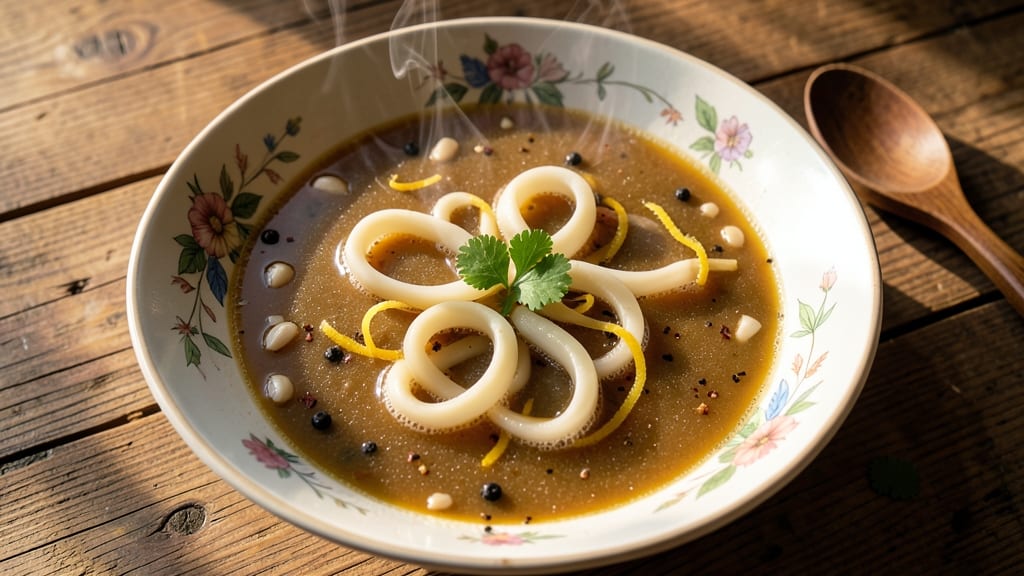
This thick egg drop soup recipe delivers restaurant-quality silkiness and depth in just 20 minutes. The secret lies in a rich chicken broth base and the right thickening technique—cornstarch creates those signature ribbons without making the soup gluey.
I've perfected this version after years of trial and error, balancing simplicity with authentic flavor.
What sets this recipe apart is the two-stage thickening process: first building flavor with ginger and garlic, then adding the cornstarch slurry while the broth simmers. This creates the ideal texture—thick enough to coat a spoon but still light enough to let the egg ribbons glide through effortlessly.
The egg incorporation happens at the very end, where gentle swirling creates those delicate strands.
By the time you're done, you'll have a steaming bowl of egg drop soup with perfectly balanced flavors—savory broth, tender egg ribbons, and just enough umami from the mushrooms and chicken.
The aroma alone will have everyone gathered around the table, and each spoonful delivers that satisfying contrast of silky egg against the rich, flavorful broth.
For extra depth, I recommend adding sliced shiitake mushrooms and a sprinkle of scallions before serving. This soup is equally comforting as a light lunch or a quick dinner—perfect for when you want something satisfying without the heavy effort. Let's get cooking!
Ingredients for thick egg drop soup
Four cups of rich broth kickstarts this restaurant-style egg drop soup with silky ribbons and layered flavors.
| Ingredient | Amount | Notes |
|---|---|---|
| Vegetable Chicken Broth 🍲 | 4 cups | Homemade or high-quality store-bought |
| Large Eggs 🥚 | 4 whole | Fresh, room temperature preferred |
| Cornstarch 🌾 | 1 tbsp | For silky ribbons, not flour |
| Cold Water 💧 | 2 tbsp | Mix with cornstarch first |
| Fresh Ginger 🌿 | 1 tbsp | Finely grated, aromatic |
| Garlic Cloves 🧄 | 3 cloves | Minced, not powdered |
| Vegetable Oil 🫒 | 1 tbsp | For sauteing aromatics |
| Soy Sauce 🍶 | 1 tbsp | For umami depth |
| Sesame Oil 🫒 | ½ tbsp | Toasted, for aroma |
| Shiitake Mushrooms 🍄 | 4 whole | Sliced thin, for umami |
| Green Onions 🧅 | 3 whole | Sliced, for garnish |
| Salt 🧂 | 1 tsp | Adjust to taste |
| White Pepper 🌶️ | ¼ tsp | Freshly ground for heat |
The broth is your foundation—homemade is ideal, but Pacific Foods or Imagine brands work in a pinch. Look for vegetable broth with no added salt (you'll control seasoning). Fresh ginger and garlic are non-negotiable here—they build the aromatic base that makes this soup sing. Costco or Asian markets often have pre-grated ginger if you're short on time, but fresh always wins. For mushrooms, shiitake slices from Trader Joe's are a game-changer—they add meaty texture without overpowering. If you can't find them, cremini mushrooms in thin slices work too.
No sesame oil? Toasted peanut oil at half the amount adds similar depth. Cornstarch is critical—flour makes the soup gluey. Eggs should be fresh but room temperature for perfect ribbons. Short on shiitake? Oyster mushrooms or even extra cremini will work. The soy sauce adds umami, but if you're avoiding it, vegetable bouillon powder (1 tsp dissolved in 2 tbsp hot water) is a great substitute. For extra richness, a splash of vegetable stock powder mixed with hot water can elevate the broth without extra effort.
This soup reheats beautifully—just warm gently on the stove with a splash of water. Store leftovers in airtight containers for 3-4 days in the fridge or 3 months frozen. For freezer prep, cool completely before freezing in single-serving portions. The egg ribbons lose their texture when reheated, so it's best to make fresh each time. Garnish with green onions right before serving—they add freshness that wilted herbs can't match.
Why You'll Love This Recipe
- I’ll be real: this soup costs me pennies per serving, and it’s the kind of thing that makes me feel like I’m treating myself. Chicken broth stretches for days, eggs are cheap, and ginger lasts forever if you freeze it. Not the prettiest, but the taste makes up for it—especially when you’re wrapping up leftovers for lunch the next day. My wallet and my taste buds both win.
- Five-Ingredient Magic: I swear, this soup is the kind of recipe where you almost feel guilty for how little effort it takes. Warm broth, beaten eggs, a splash of cold water, cornstarch, and ginger—no fancy prep, just swirling and simmering. That’s it. The eggs transform from runny to silky ribbons with zero fuss, and the ginger? It’s the secret weapon that makes this taste like something you’d order at a dim sum spot, not throw together after work.
- Silky Perfection: Between us, the texture here is chef’s kiss—that crispy edge on the egg strands with a creamy center that melts in your mouth. The cornstarch slurry does all the heavy lifting, turning the broth into a velvety base that clings to every spoonful. Honestly, I’ve made this soup for picky eaters, and even they ask for seconds. That’s saying something.
- Weeknight & Meal Prep: This is my go-to when I need something hearty but don’t want to slave over it. Double the broth, store it in jars, and reheat with a fresh egg drop when needed—it’s my secret for lazy Sundays or busy weeknights. (Yes, even on a Tuesday night.) Plus, it’s the kind of dish that feels fancy enough for company but unfussy enough that you won’t stress if the kids "help" stir.
Step-by-step instructions for thick egg drop soup
Here's how to transform simple ingredients into restaurant-quality egg drop soup with perfectly silky ribbons.
Prepare the Egg Mixture for Silky Ribbons
In a small bowl, whisk together the 4 whole large eggs until fully combined. In a separate bowl, mix 1 tablespoon cornstarch with 2 tablespoons cold water until smooth—this slurry is what creates those signature ribbons. Here's the thing: the cornstarch needs to be dissolved completely, so whisk vigorously for about 30 seconds until no lumps remain. I like to strain it through a fine-mesh sieve just to be sure. Keep both mixtures at room temperature while you prep the broth.
The cold water is crucial—it prevents the cornstarch from cooking immediately when it hits the hot broth. This delayed reaction creates those beautiful, wispy strands instead of clumpy blobs. Set both mixtures aside while you build the flavor base.
Build Flavor with Aromatics and Mushrooms
Heat 1 tablespoon vegetable oil in a large pot over medium heat until shimmering. Add the 4 whole shiitake mushrooms (sliced thin) and cook for 3-4 minutes until they release their moisture and begin to soften. Add the 3 minced garlic cloves and 1 tablespoon finely grated fresh ginger, cooking for another 30 seconds until fragrant—you should smell that bright, fresh aroma wafting up.
Here's where the umami magic happens: pour in 1 tablespoon soy sauce and let it cook for 1 minute, allowing the flavors to meld. The mushrooms will release their juices, creating a flavorful base for the soup. Don't walk away—this is when the foundation gets built.
Simmer the Broth and Prepare for Egg Ribbons
Pour in the 4 cups vegetable chicken broth and bring to a gentle simmer over medium-low heat. Add 1 teaspoon salt and 0.25 teaspoon freshly ground white pepper, stirring until dissolved. The broth should be hot but not boiling vigorously—you want small bubbles breaking the surface, not a rolling boil that would scramble the eggs.
While the broth heats, slice the 3 whole green onions into 1-inch pieces for garnish. The key here is patience: let the broth simmer for 5 minutes to let the flavors meld. You'll know it's ready when the aroma is rich and the mushrooms are tender but still holding their shape.
Create the Signature Egg Ribbons
With the broth simmering gently, slowly drizzle the egg mixture into the center of the pot using a small ladle or spoon. The heat from the broth will immediately begin to cook the eggs, creating those beautiful ribbons as they swirl through the liquid. Here's the critical part: stir gently but constantly in a figure-eight motion to distribute the eggs evenly.
Once the eggs are mostly set (about 1 minute), add the cornstarch slurry in a thin stream while continuing to stir. The soup should thicken slightly—you're aiming for a velvety consistency where the broth coats the back of a spoon. If it thickens too much, add 1-2 tablespoons hot broth to adjust the texture.
Finish with Aromatic Oil and Garnish
Remove the pot from heat and stir in 0.5 tablespoon toasted sesame oil. This final touch adds incredible aroma and depth of flavor—you'll smell that nutty, toasty scent immediately. Taste and adjust seasoning if needed, then divide the soup among bowls.
Garnish each serving with sliced green onions and an extra drizzle of sesame oil. The contrast of the bright green onions against the rich, creamy soup makes it visually stunning. Serve immediately while the egg ribbons are still silky and warm—this soup doesn't wait!
Pro Tips For Making Thick Egg Drop Soup
- Boil Broth to 180°F: I learned this the hard way—cold broth makes your egg ribbons turn to mush. Use a thermometer to hit 180°F (just below a rolling boil) before adding the egg mixture. The heat difference is what keeps those silky strands intact.
- Whisk Eggs with Ginger Juice: Skip the plain water slurry—blend your egg mixture with a splash of freshly squeezed ginger juice (from minced ginger) instead. It adds depth without extra prep, and the acidity helps the eggs emulsify better into the broth.
- Use Cold Water for Slurry: I was skeptical until I tried it: mix your cornstarch with ice water before adding it to the broth. The cold slurry hits the hot liquid gradually, preventing clumping and giving you that restaurant-quality, glossy thickener.
- Simmer Ginger First: Toss raw ginger slices into the broth before heating. Let them steep for 5 minutes while the broth comes to temperature—this extracts more flavor than just slicing it at the end. (Yes, even if you’re impatient like me.)
Regional styles of thick egg drop soup
Northern Chinese Style
In Beijing and Tianjin, egg drop soup often features a lighter broth with a focus on ginger and scallion aromatics. The key difference is using less cornstarch—just ½ teaspoon—for a more delicate texture.
I like to add 1 teaspoon of Shaoxing wine when sautéing the mushrooms to enhance the umami depth. Garnish with thinly sliced scallions and a sprinkle of white pepper for that classic Northern Chinese touch. 🌿
Southern Chinese Twist
Southern regions like Guangdong and Fujian take egg drop soup in a richer direction, often incorporating dried shrimp or oyster sauce for extra umami. For this version, add ½ teaspoon of oyster sauce with the soy sauce and 1 tablespoon of preserved vegetable (ya cai) for a tangy-sweet contrast.
The broth should be slightly thicker—use 1.5 tablespoons of cornstarch—and finish with crispy fried shallots for texture. 🍤
Japanese Egg Drop Soup
In Japan, this dish is called "tamago drop" and often includes dashi broth instead of chicken or vegetable broth. For an authentic version, substitute the broth with 4 cups of dashi (or 3 cups dashi + 1 cup water).
Add ½ teaspoon of mirin when simmering the broth and use 1 tablespoon of ponzu sauce instead of soy sauce. Garnish with thinly sliced green onions and a sprinkle of furikake for a nutty, savory finish. 🍜
Taiwanese-Inspired Version
Taiwanese egg drop soup often includes soft tofu and bamboo shoots for added texture and a slightly sweeter profile. Sauté ½ cup of sliced bamboo shoots with the mushrooms and add 1 teaspoon of brown sugar when simmering the broth.
Use silken tofu cut into small cubes and gently fold it into the soup just before serving. The result is a creamy, hearty version that’s perfect for cooler weather. 🥬
Vietnamese-Inspired Adaptation
For a Vietnamese-inspired take, use pho broth as your base and add 1 teaspoon of fish sauce for depth. Incorporate thinly sliced lemongrass (infused into the broth) and cilantro for a bright, herbal note.
The egg ribbons should be slightly thicker, so use 1.25 tablespoons of cornstarch. Finish with fresh Thai basil and a squeeze of lime for a refreshing twist. 🍋
Korean Egg Drop Soup
In Korea, this dish is often called "gyeran-jjigae" and includes gochujang (Korean chili paste) for heat. For a spicy version, add ½ teaspoon of gochujang with the soy sauce and 1 teaspoon of gochugaru (Korean red pepper flakes) at the end.
Use 1 tablespoon of cornstarch for a slightly thicker consistency and garnish with sesame seeds and thinly sliced green onions. Serve with kimchi on the side for extra flavor. 🌶️
Nutrition facts
Frequently asked questions
Why does my egg drop soup turn out gluey instead of silky?
Gluey texture happens when the cornstarch cooks too quickly or isn't properly dissolved first. Always mix cornstarch with cold water and whisk until completely smooth before adding to hot broth. Also, keep the broth at a gentle simmer—not a rolling boil—when adding the cornstarch slurry.
Can I make this soup vegetarian without chicken broth?
Use vegetable broth (homemade or store-bought) and add extra umami with 1 teaspoon soy sauce or ½ teaspoon mushroom powder. For deeper flavor, sauté 1 tablespoon of dried shiitake pieces in the oil before adding fresh mushrooms. The texture will be just as rich and satisfying!
What's the secret to getting perfect egg ribbons every time?
Three key factors: room temperature eggs, gentle stirring, and timing. Use a ladle to slowly drizzle eggs into the center of simmering broth while stirring continuously in a figure-eight motion. The ribbons form as the eggs cook against the hot liquid—don't let them sit too long or they'll scramble.
How can I make this soup spicier without overpowering the flavors?
Add ½ teaspoon of red pepper flakes when sautéing the mushrooms, then finish with ¼ teaspoon of cayenne or 1 teaspoon of gochujang (Korean chili paste) stirred into the broth at the end. For heat control, serve with extra chili oil on the side. Start with less—you can always add more!
Can I prepare this soup ahead of time?
Yes, but make it fresh when ready to serve. Store the broth base (without eggs) in airtight containers for 3-4 days in the fridge or 3 months frozen. Reheat gently, then add the cornstarch slurry and eggs just before serving—they won't reheat well. For best texture, prepare completely fresh each time.