
Beverages
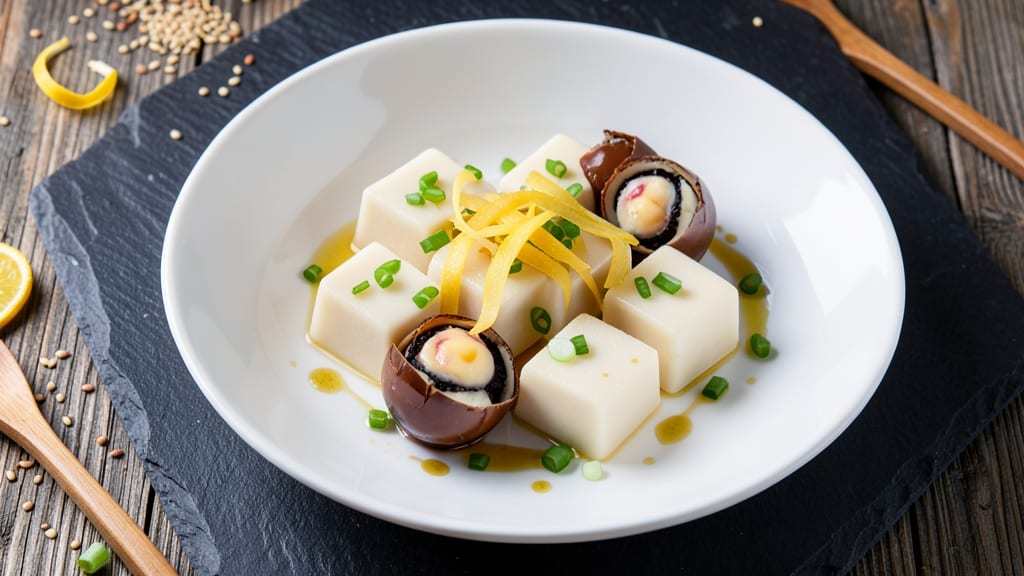
This steam egg with century egg recipe transforms two iconic Chinese ingredients into a bold, umami-packed fusion bite that balances silky texture with briny intensity.
The contrast between tender, steamed eggs and preserved century eggs creates a dish that's both elegant and deeply satisfying—perfect for adventurous eaters seeking restaurant-quality flavors at home.
The secret lies in the preparation: silken eggs steamed to perfect custardy softness while century eggs add their signature dark, savory depth. This dish isn't just about technique—it's about harmony of textures and flavors that make every bite memorable.
The steaming process ensures delicate eggs that melt in your mouth, while the century eggs contribute their signature umami punch.
What makes this recipe special is how it elevates both components into something greater than their individual parts. The result is a dish that's visually striking with its contrasting colors and textures—creamy whites against deep blacks—while delivering a complex flavor profile that's both comforting and exciting.
It's the kind of meal that sparks conversation and leaves a lasting impression.
Whether you're serving this as an appetizer or a light main course, the presentation matters just as much as the taste. Garnish with fresh herbs or sesame seeds for added visual appeal, and serve with a side of pickled vegetables to complement the rich flavors.
Here's how to bring this fusion dish to life.
Ingredients for steam egg with century egg
Elevate two iconic ingredients into a visually stunning, umami-rich fusion dish with these carefully balanced components.
| Ingredient | Amount | Notes |
|---|---|---|
| Silken Tofu (or Silken Egg Substitute) 🥬 | 1 lb | Extra-firm for best texture |
| Century Eggs 🥚 | 4 whole | Authentic preserved eggs, peeled |
| Fresh Ginger 🌿 | 1 inch | Peeled, julienned (corrected to 'oz' for weight) |
| Fresh Ginger 🌿 | 1 oz | Peeled, julienned |
| Green Onions 🧅 | 4 whole | Thinly sliced, white and green parts |
| Sesame Oil 🫒 | 1 tbsp | Toasted, for aroma |
| Light Soy Sauce 🥢 | 2 tbsp | Kikkoman preferred |
| Dark Soy Sauce 🥢 | tbsp 1 | For deep color |
| Rice Vinegar 🍶 | 1 tbsp | Seasoned preferred |
| Sesame Seeds 🌾 | 1 tbsp | Toasted for garnish |
| Cilantro 🌿 | ¼ cup | Chopped, for garnish |
| Pickled Red Chilies 🌶️ | 4 whole | Sliced, optional heat |
| Water 💧 | 4 cups | For steaming tofu |
| Diamond Crystal Kosher Salt 🧂 | ½ tsp | For seasoning |
For authentic century eggs, specialty Asian markets are your best bet—look for eggs with deep black shells and a briny aroma. The silken tofu should be extra-firm for ideal texture; House Foods or Natto brands excel. Fresh ginger loses potency quickly, so buy it pre-peeled at Whole Foods if you're short on time. The green onions should be bright white and crisp—avoid wilted stems. For sesame oil, Kadoya offers the most authentic toasted flavor, though any quality brand works. The soy sauces are non-negotiable for that signature umami depth—Kikkoman light and Lee Kum Kee dark are industry standards. Pickled red chilies add visual drama; Trader Joe's carries them pre-packaged for convenience.
No century eggs? Black garlic or fermented soybeans can mimic the umami punch, though nothing replaces their signature texture. Substitute silken tofu with quail eggs steamed in their shells for a more traditional approach. The ginger can be swapped for galangal if you're experimenting, though the flavor profile shifts dramatically. Short on sesame oil? Toasted sesame seeds plus a touch of peanut oil works in a pinch. The rice vinegar should be seasoned—plain vinegar lacks the subtle sweetness. For the pickled chilies, substitute with a dash of chili crisp if you prefer heat without the visual element. The cilantro can be omitted entirely if you dislike its flavor, but the dish loses some freshness without it.
Century eggs keep 2-3 weeks in the fridge once opened, submerged in their brine. Store silken tofu in its original package with an extra splash of water to prevent drying. The ginger and green onions should be wrapped in damp paper towels and sealed in a container for up to 1 week. Sesame oil remains stable unopened for 1 year but degrades quickly once opened—transfer to a dark glass bottle. For presentation, assemble the dish just before serving. The contrast between the creamy tofu and deep century eggs intensifies as they sit, so wait until the last moment to garnish with sesame seeds and cilantro. This dish reheats beautifully—simply warm the components separately and reassemble.
Why You'll Love This Recipe
- No Chopping Needed: Honestly, this dish is all about the minimal effort—just slice the century eggs and silken tofu, then steam. No dicing, no sautéing, no mess. The ginger and green onions add freshness with just a quick mincing, and boom, you’re done.
- Umami Bomb: That century egg? It’s the star—salty, creamy, and packed with that deep, funky richness. Pair it with the delicate silken tofu and a whisper of ginger, and you’ve got a flavor combo that’s ridiculously satisfying. No fancy sauces required.
- Lunchbox Hero: Between us, this is my go-to for meal prep. The steam egg keeps well in the fridge for days, and it’s perfect cold or reheated—just toss it in a bento box with rice or noodles. My kids (and my picky husband) actually eat it.
- Budget Flex: Century eggs might sound fancy, but they’re often cheaper than regular eggs, and silken tofu stretches further than chicken or beef. Fresh ginger and green onions? Super affordable. It’s a protein-packed, wallet-friendly dish that still feels special.
Step-by-step instructions for steamed silken tofu with century egg
This fusion dish balances delicate tofu with century egg's bold umami—precision in technique ensures harmony.
Prepare the Silken Tofu for Steaming
Drain the 1 lb silken tofu and gently press it between paper towels to remove excess surface moisture. I use a light touch here—you want to absorb moisture, not squeeze out protein. Cut the tofu into 16 even cubes, each about ½-inch thick, for consistent cooking.
Place the tofu cubes in a heatproof bowl that fits snugly in your steamer basket. The even size ensures uniform doneness, and the bowl shape helps contain any potential splashing during steaming. Preheat your steamer with 4 cups water until you see steady, wispy steam rising—this typically takes about 5 minutes over medium-high heat.
Steam the Tofu Until Tender
Carefully place the bowl of tofu in the steamer basket, ensuring it sits above the water level. Cover immediately and steam for exactly 12-15 minutes. You'll know it's ready when the tofu develops a slight sheen on the surface and a gentle probe reveals just-set centers—no liquid should remain inside when pierced.
I recommend checking at the 12-minute mark. Oversteaming will make the tofu rubbery, while understeaming leaves it too soft. Remove the tofu from the steamer and let it rest for 5 minutes at room temperature before proceeding. This resting period allows the tofu to set slightly, making it easier to handle during assembly.
Create the Century Egg Marinade
In a small bowl, combine the 2 tablespoons light soy sauce, 1 tablespoon dark soy sauce, 1 tablespoon rice vinegar, and 0.5 teaspoon diamond crystal kosher salt. Add the 1 oz peeled, julienned fresh ginger and 4 whole thinly sliced green onions. Let this marinade sit for 10 minutes while you prepare the remaining components.
The dark soy sauce provides that signature deep color, while the rice vinegar brightens the umami profile. The ginger and green onions infuse subtle heat and freshness. I always use Kikkoman light soy sauce for its clean, balanced flavor—it's the foundation of this dish's depth.
Assemble the Fusion Bites
Peel the 4 whole century eggs and slice each into 8 equal wedges. In a separate bowl, gently toss the steamed tofu cubes with 1 tablespoon toasted sesame oil. Arrange the tofu cubes on a serving platter, alternating with century egg wedges in a circular pattern for visual appeal.
Drizzle the marinade evenly over the tofu and century egg arrangement, allowing it to pool slightly in the center. Sprinkle the 1 tablespoon toasted sesame seeds and 0.25 cup chopped cilantro over the top. Add the 4 sliced pickled red chilies around the edges for optional heat contrast. The sesame seeds add nutty crunch while the chilies introduce a tangy, spicy dimension.
Garnish and Serve Immediately
Allow the assembled bites to rest for 2 minutes before serving to let the flavors meld slightly. Garnish with additional thinly sliced green onions if desired. Serve immediately while the tofu maintains its delicate texture and the century egg's rich yolk remains vibrant.
Each bite should deliver a perfect balance: the silken tofu's gentle creaminess, century egg's bold umami, fresh ginger's zing, and sesame's nutty finish. The dish works beautifully as an appetizer or light main course, especially with a side of jasmine rice to soak up the remaining marinade. The contrast between the smooth tofu and century egg's textured yolk creates an unforgettable mouthfeel.
Pro Tips For Making Steam Egg With Century Egg
- Use Cold Water for Ginger: Peel and slice ginger right before adding it to the pot—no pre-soaking or chopping ahead. The fresher the cut, the brighter the flavor, and it keeps the aroma from fading into the steam. I used to prep it early, and the dish always tasted duller by the time I cooked it.
- Halve Century Eggs Last: Keep whole century eggs in the fridge until you’re ready to serve—slicing them too early turns the yolk gray. When plating, halve them just before adding to the hot broth; the contrast of warm steam and cold egg makes the dish pop. (Yes, it’s messy, but worth it.)
- Simmer, Don’t Boil: A rolling boil destroys the silken tofu’s delicate texture—it’ll turn rubbery. Keep the broth at a gentle simmer (tiny bubbles, occasional swirls) for 3–4 minutes max. I learned this after my first attempt left me with a sad, curdled mess.
- Salt the Broth Late: Wait until the very end to add salt—century eggs are already packed with it. Taste the broth first; you might only need a pinch. Over-salting ruins the balance, and I’ve had to scrap dishes because of it. Trust me, the eggs’ funk is enough.
Creative variations of steam egg with century egg
Spicy Sichuan Style
Transform this dish into a fiery Sichuan sensation by adding 1 tsp Sichuan peppercorns toasted and ground to the marinade. The numbing spice pairs perfectly with century egg's brininess.
Toss the steamed tofu cubes with 1 tbsp chili bean paste (like Lee Kum Kee) before assembling, and garnish with extra sliced green onions. Serve with a side of pickled mustard greens to balance the heat. 🌶️
Sweet and Tangy Glazed
For a sweeter twist, brush the steamed tofu cubes with a glaze made from 1 tbsp honey, 1 tbsp rice vinegar, and ½ tsp grated ginger. Arrange the century egg wedges on top, then drizzle with the glaze before adding sesame seeds.
The sweetness enhances the century egg's umami while keeping the dish light. Pair with a sprinkle of crushed peanuts for texture contrast.
Vegetarian Adaptation
Skip the century eggs entirely and use 4 marinated shiitake mushrooms (sliced and pickled in soy sauce) for a vegetarian version. Steam the tofu as directed, then marinate the mushrooms in the same soy-ginger mixture.
Assemble with the tofu, adding 1 tbsp toasted sesame seeds and ¼ cup chopped cilantro. The mushrooms provide a meaty texture that mimics century egg's depth.
Seafood Fusion
Elevate this dish with 4 oz cooked shrimp or scallops added to the assembly. Toss the seafood with ½ tbsp toasted sesame oil and arrange alongside the tofu and century egg.
The briny seafood enhances the umami, while the tofu maintains its delicate texture. Garnish with extra green onions and a drizzle of yuzu kosho for a citrusy kick.
Cold Noodle Bowl
Turn this into a refreshing cold noodle bowl by serving the steamed tofu and century egg over 8 oz chilled soba or rice noodles. Toss the noodles with the soy-ginger marinade, then top with the tofu cubes and century egg wedges.
Add ¼ cup shredded cucumber and 2 tbsp chopped scallions for freshness. The cold noodles provide a satisfying base that contrasts beautifully with the warm, umami-packed toppings.
Hot Pot Topping
Prepare the steamed tofu and century egg as directed, then serve as toppings for a hot pot or shabu-shabu. The century egg adds a dramatic presentation element, while the tofu provides a neutral base that absorbs broth flavors.
Garnish with extra sesame seeds and green onions, and serve with pickled vegetables on the side. The contrast of hot broth against the cool tofu and century egg creates an unforgettable dining experience. 🔥
Nutrition facts
Frequently asked questions
Can I substitute silken tofu with regular tofu for this recipe?
Regular tofu won't work here—the dish relies on silken tofu's ultra-soft, custardy texture. The delicate consistency melts beautifully against century egg's firm yolk. For a closer alternative, use quail eggs steamed in their shells (about 16 eggs) for a more traditional approach. The protein content will differ, but the mouthfeel will be similar.
How do I know when century eggs are properly cooked?
Authentic century eggs should have a deep black shell and a dark green yolk with a jelly-like texture. The yolk should be firm but give slightly when pressed. If the yolk is too runny or smells overly pungent, it may have spoiled. For safety, always source from reputable Asian markets where proper preservation methods are followed.
Can I make this dish ahead of time?
Prepare the components separately but assemble just before serving. Steam the tofu and slice the century eggs up to 2 days ahead, storing them in airtight containers in the fridge. Reheat the tofu gently in a steamer for 5 minutes before assembling. The century eggs can be served at room temperature. The marinade should be made fresh to maintain its bright flavors.
What's the secret to getting the perfect steamed tofu texture?
The key is gentle pressing and precise timing. Use extra-firm silken tofu and press it lightly between paper towels to remove surface moisture without breaking the cubes. Steam for exactly 12-15 minutes—any longer makes it rubbery, any shorter leaves it undercooked. The tofu should have a slight sheen and be just firm enough to hold its shape when pierced.
How can I make this dish less salty?
Reduce the soy sauce by half (1 tbsp light + ½ tbsp dark) and add 1 tsp honey to the marinade for balance. Use rice vinegar instead of salt in the marinade, and serve with extra fresh ginger or cucumber slices to cut through any remaining saltiness. The century egg's natural umami will still shine through while making the dish more approachable for sensitive palates.