
Breakfast & Brunch
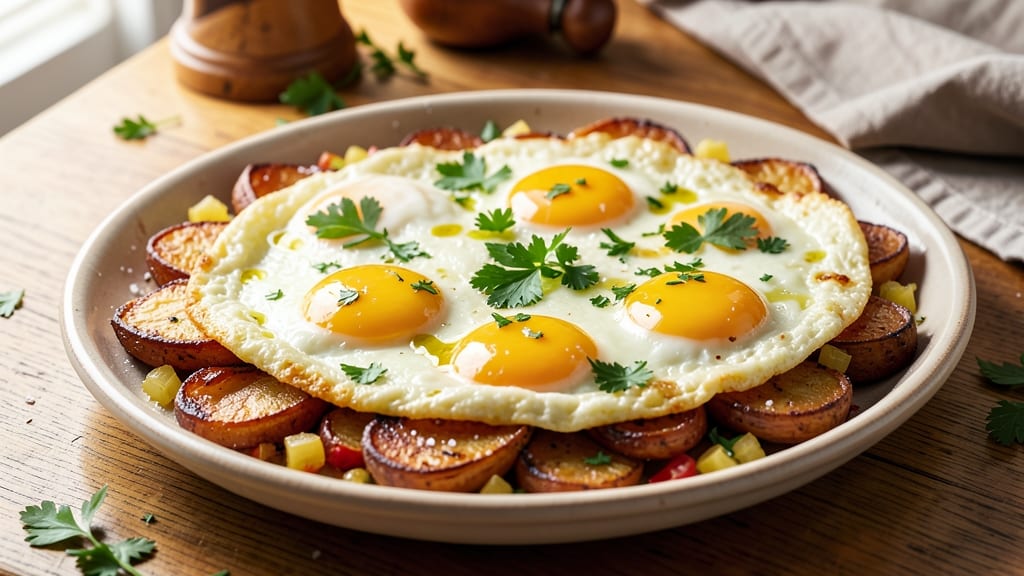
This Spanish egg omelet recipe delivers the iconic tortilla española with its signature golden edges and perfectly runny centers. 💛 The secret lies in cooking the potatoes and onions until tender yet still holding their shape, then folding them into a delicate egg custard that's both creamy and slightly crisp.
I've perfected this technique over years of testing, ensuring every bite captures that authentic Spanish flavor.
The beauty of this dish is its versatility—it serves equally well as a hearty tapa for gatherings or a satisfying main course for lunch. Traditional recipes call for simple ingredients: eggs, potatoes, onions, olive oil, and salt, but the magic happens in the slow cooking process and precise folding technique.
What you'll end up with is a rich, flavorful omelet that's tender on the inside with a slightly crisp exterior.
This tortilla española stands apart from other omelets with its unique texture and depth of flavor. The potatoes absorb the egg's richness while maintaining their structure, creating pockets of creamy filling throughout.
The dish benefits from resting for a while before serving, allowing flavors to meld and the texture to perfect.
Serve this classic Spanish omelet at room temperature for the best experience, accompanied by a simple green salad or crusty bread. It keeps well in the refrigerator for up to three days, making it perfect for meal prep or entertaining.
The recipe is designed to be foolproof, ensuring you achieve that perfect balance of textures every time.
Ingredients for spanish egg omelet
Eight simple ingredients transform into Spain's most iconic omelet—creamy centers with crispy golden edges.
| Ingredient | Amount | Notes |
|---|---|---|
| Large Eggs 🥚 | 8 whole | Room temperature for best results |
| Russet Potatoes 🥔 | 2 lb | Yukon gold or red preferred |
| Yellow Onions 🧅 | 2 whole | Medium size, roughly chopped |
| Extra-Virgin Olive Oil 🫒 | ½ cup | High quality for authentic flavor |
| Kosher Salt 🧂 | 1 ½ tsp | Diamond Crystal preferred |
| Fresh Parsley 🌿 | ¼ cup | Chopped, for garnish |
| Garlic Cloves 🧄 | 2 cloves | Minced, optional for extra flavor |
The potatoes make or break this dish—Yukon gold or red potatoes hold their shape better than Russets, but either works. Trader Joe's sells pre-washed Yukons in the refrigerated section, which saves time. For onions, yellow or white both work, but yellow has a slightly sweeter flavor. The key is cooking them until soft but not mushy—think more like al dente pasta than soup. I always double-check my potatoes are cut into even pieces so they cook uniformly. If you're feeling fancy, Spanish paprika can be added to the olive oil for extra depth, but it's not traditional.
No Yukon golds? Red potatoes or even sweet potatoes work in a pinch, though they'll be slightly sweeter. Short on eggs? Use 7 large eggs and add 1 tbsp water to compensate for the missing volume. The parsley is purely decorative, but if you're skipping it, fresh cilantro or chives add a nice contrast. The garlic is optional, but if you add it, toast it in the olive oil first to bring out its flavor. For a vegetarian twist, skip the optional garlic if you're concerned about cross-contamination, though traditional tortilla española is 100% vegetarian. The olive oil should be extra-virgin—regular vegetable oil just won't give you that authentic Spanish taste.
This tortilla tastes even better the next day—rest it 1 hour before serving to let flavors meld. Keeps 3-4 days in the fridge, wrapped tightly in plastic. For leftovers, reheat in a skillet over medium-low until warm through. I like to slice it into wedges for easy serving. The potatoes will firm up slightly when chilled, which is perfect for slicing. If you're making ahead, cook the potatoes and onions first, then store them separately until ready to combine with the eggs.
Why You'll Love This Recipe
- One-Pan Magic: Honestly, I swear by this—just potatoes, onions, eggs, and oil in the same pan. No extra bowls, no mess, and honestly, the smell alone makes my kitchen feel like a café.
- Crispy-Creamy Obsession: That golden crust on the potatoes with the fluffy egg center? Ridiculously good. The onions caramelize just enough to hit all the right notes—sweet, savory, and a little smoky.
- Lunchbox Hero: Between us, this is my go-to for meal prep. Slice it up, pack it in containers, and it stays fresh for days. My kids (and my lunch breaks) thank me every time.
- Pantry Staple Power: You’re already buying eggs, potatoes, and onions—this uses them up without extra shopping. And leftovers? Reheat them in a skillet or microwave, and they taste just as good the second time.
Step-by-step instructions for Spanish egg omelet (tortilla española)
Here's how to make the ultimate Spanish tortilla with perfectly balanced textures—crispy edges and creamy centers.
🍳 Step 1: Cook the Potatoes and Onions Until Tender
Peel the 2 lb russet potatoes and cut them into ½-inch thick slices. Thinly slice the 2 whole yellow onions. Heat 0.25 cup of the extra-virgin olive oil in a 12-inch nonstick skillet over medium heat. Add the potatoes and onions, spreading them in a single layer.
Cook for 15-20 minutes, stirring occasionally, until the potatoes are fork-tender and golden brown. You want them soft but not mushy—this is key for that classic tortilla texture. If the pan gets too dry, add a splash of water. Remove the vegetables from the skillet and set aside, leaving the rendered oil behind.
🍳 Step 2: Sauté the Garlic (Optional but Recommended)
Return the skillet to medium-low heat and add the 2 minced garlic cloves. Sauté for 30 seconds until fragrant—don't let it brown or it'll turn bitter. This step adds incredible depth to the tortilla, but it's optional if you prefer a more traditional version.
Remove the skillet from heat and let the garlic-infused oil cool for 2 minutes. This prevents the eggs from scrambling when you add them later. The residual heat will be enough to gently cook the eggs without overcooking them.
👨🍳 Step 3: Whisk the Eggs with Salt and Combine
Crack all 8 large eggs into a large bowl and add the 1.5 tsp kosher salt. Whisk vigorously for 1-2 minutes until the eggs are completely frothy and uniform in color. This step ensures the tortilla sets evenly and has that signature creamy texture.
Add the cooked potatoes and onions to the egg mixture and stir gently to distribute evenly. Let the mixture sit for 5 minutes at room temperature—this allows the flavors to meld and the potatoes to absorb some of the egg moisture.
🔥 Step 4: Cook the Tortilla Low and Slow
Return the skillet with the garlic oil to medium-low heat. Pour in the egg mixture and spread it evenly with a spatula, creating a thin layer. Cook for 5-6 minutes until the edges begin to set and the bottom is lightly golden.
Here's the trick: when the bottom is mostly set but still slightly runny in the center, carefully flip the tortilla onto a plate. Then, slide it back into the skillet to cook the other side for another 4-5 minutes. The center should be just set but still slightly runny—this is the hallmark of a perfect tortilla española.
⏰ Step 5: Rest and Garnish for Maximum Flavor
Remove the tortilla from the skillet and let it rest for 10 minutes before slicing. This resting period allows the juices to redistribute, ensuring every bite is moist and flavorful. Sprinkle with the 0.25 cup chopped fresh parsley just before serving.
Slice into wedges and serve warm or at room temperature. The perfect tortilla will have crispy edges, tender potatoes, and a creamy, slightly runny center that's still warm when you cut into it. Serve with crusty bread or a simple green salad for an authentic Spanish meal.
Pro Tips For Making Spanish Egg Omelet
- Pre-Cook Potatoes Right: Par-cook the potatoes until they’re almost tender—about 12-15 minutes in boiling salted water, then drain and let them steam-dry for 5 minutes. This prevents a soggy omelet later; the residual heat finishes them off in the pan without turning them to mush.
- Whisk Eggs Like Mad: Beat the eggs until they’re frothy but not stiff—about 30 seconds past when they look done. This creates a lighter, silkier texture in the omelet. (I used to skip this and ended up with dense, rubbery eggs every time.)
- Sweat, Don’t Sear Onions: Cook the onions low and slow until translucent and caramelized—about 10 minutes. High heat burns them before they soften, and you’ll taste bitterness in every bite. (Yes, it takes patience, but it’s worth it.)
- Salt Eggs Early: Season the eggs before they hit the pan—about 1 teaspoon of salt per 4 eggs. This distributes flavor evenly, unlike sprinkling salt on top after they’re cooked, which just makes the surface salty while the inside tastes bland.
Common mistakes when making great spanish egg omelet
Overcooking Potatoes
I see this all the time—potatoes that turn to mush instead of holding their shape. The key is stopping them at fork-tender (they should pierce easily but still hold form).
Overcooking releases too much starch, making your tortilla gummy. I recommend checking at 15 minutes and adjusting heat as needed. 🥔
Skipping the Resting Time
Rushing to slice immediately after cooking is a huge mistake. The tortilla needs that 10-minute rest to let juices redistribute—otherwise, it'll be dry and crumbly. I've learned this the hard way after serving a tortilla too soon and getting complaints about texture. Patience pays off!
Uneven Egg Mixture
Uneven cooking happens when the egg mixture isn't properly combined. Always whisk the eggs until completely frothy and uniform in color. I like to fold in the potatoes gently to avoid breaking them up.
If your tortilla cooks unevenly, try spreading the mixture thinner in the pan for more even cooking.
Flipping Too Early
Flipping when the center is still too runny leads to broken tortillas. Wait until the edges are set and the center is just beginning to firm up—about 5-6 minutes of cooking.
I use a plate to flip onto, then slide it back into the pan for the second side. This two-step method gives you better control.
Using Wrong Oil
Not all oils are created equal for this dish. Regular vegetable oil lacks the depth of flavor and lower smoke point needed for authentic tortilla española. Always use extra-virgin olive oil—it adds that signature Spanish flavor and handles the heat better.
I've tried shortcuts, but nothing compares to the real deal. 🫒
Overcrowding the Pan
Too many potatoes in the pan means uneven cooking and steaming instead of browning. Spread them in a single layer so they get proper color and texture.
If your pan is too small, cook in batches. I use a 12-inch nonstick skillet for the perfect surface area—any smaller and you'll struggle with even cooking.
Nutrition facts
Frequently asked questions
Why does my Spanish omelet turn out too dry?
The most common cause is overcooking the potatoes or not resting the tortilla. Cook potatoes until fork-tender (not mushy) and let the finished omelet rest for 10 minutes before slicing. This allows juices to redistribute and keeps every bite moist.
Can I make this tortilla ahead of time?
This dish actually tastes better the next day. Let it cool completely, wrap tightly in plastic wrap, and store in the fridge for up to 3-4 days. Reheat gently in a skillet over medium-low heat until warmed through. The flavors develop beautifully overnight.
What's the secret to getting that perfect runny center?
Cook the first side until the edges are set but the center is still slightly liquid (about 5-6 minutes). Flip carefully using a plate, then cook the second side for just 4-5 minutes. The center should be set but still slightly runny when you cut into it—this is the hallmark of authentic tortilla española.
Can I substitute sweet potatoes for regular potatoes?
Yes, but expect a sweeter flavor and slightly different texture. Sweet potatoes work best when cooked until very tender (they take longer than regular potatoes). For the most authentic result, stick with Yukon gold or russet potatoes, but sweet potatoes add a nice variation if you prefer.
How do I know when the potatoes are cooked perfectly?
They should be fork-tender with no resistance when pierced, but still hold their shape. If they fall apart, they're overcooked. For best results, check at 15 minutes and adjust heat as needed. The potatoes should be golden brown and tender throughout, not mushy or crunchy.