
Breakfast & Brunch
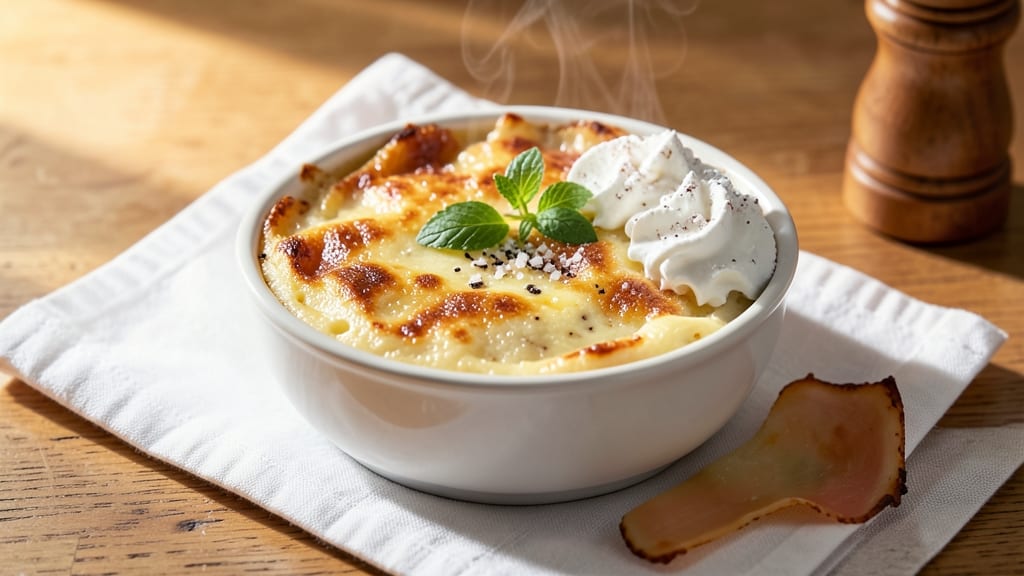
This baked custard recipe with egg yolks delivers that signature velvety texture and golden caramel top without a single crack. ✨ The secret lies in proper yolk separation, gentle heating, and a precise baking technique that transforms simple ingredients into a restaurant-worthy dessert.
I've perfected this method after years of trial and error—no more weeping custards or rubbery textures here.
What sets this recipe apart is the foolproof technique for achieving silky smoothness while preventing curdling. We'll use a double boiler for initial heating, then transfer to a water bath for even baking at 350°F—the perfect temperature for creating that creamy interior with a beautifully set exterior.
The key ingredients—egg yolks, cream, and sugar—work together to create a dessert that's both rich and delicate.
By following these steps, you'll end up with a custard that's perfectly set—not too soft, not too firm—with a glossy, crack-free surface that's irresistible to slice into.
The aroma alone will have everyone gathering in the kitchen as it bakes, promising a dessert that's smooth, indulgent, and completely satisfying. Ready to master this classic?
Whether you're serving it alone, topped with caramel, or nestled in a pastry crust, this custard delivers restaurant-quality results at home. The technique is simple enough for beginners but refined enough to impress even experienced bakers. Let's get started on creating your perfect custard.
Ingredients for baked custard recipe with egg yolks
Eight essential ingredients transform into restaurant-quality custard with silky texture and crack-free perfection.
| Ingredient | Amount | Notes |
|---|---|---|
| Large Egg Yolks 🥚 | 8 whole | Freshly separated from pasteurized eggs |
| Heavy Cream 🥛 | 2 cups | Whole milk fat for richness |
| Granulated Sugar 🍚 | ¾ cup | Superfine preferred for smooth texture |
| Vanilla Extract 🌿 | 1 tbsp | Pure Madagascar bourbon preferred |
| Salt 🧂 | ¼ tsp | Diamond Crystal kosher salt |
| Unsalted Butter 🧈 | 2 tbsp | Cold, cubed for caramelized top |
| All-Purpose Flour 🌾 | 1 tbsp | For thickening custard base |
| Whole Milk 🥛 | ½ cup | Warmed to room temperature |
| Cornstarch 🌾 | 1 tsp | Prevents graininess |
The egg yolks are the foundation—use pasteurized eggs for safety without compromising texture. Whole milk fat cream (36-40%) ensures maximum richness; anything lighter risks separation. Sugar choice matters: superfine sugar dissolves faster, preventing graininess. For vanilla, Madagascar bourbon extract offers the deepest flavor profile. The butter should be cold and cubed—this creates the signature caramelized crust. If you can't find Diamond Crystal salt, Morton kosher salt works but measure slightly less—it's denser.
No heavy cream? Whole milk plus 2 tbsp melted butter works in a pinch, though texture will be slightly lighter. Substitute vanilla with 1 tsp vanilla bean paste for intensity, or 1/2 tsp vanilla sugar if you're in a bind. For the sugar, if superfine isn't available, pulse granulated sugar in a food processor for 30 seconds to achieve similar fineness. The flour and cornstarch can be swapped one-to-one, but cornstarch provides slightly better thickening power. Always warm the milk to room temperature—cold milk causes curdling during the heating process.
Store prepared custard in an airtight container in the refrigerator for up to 5 days. For best texture, bring to room temperature before serving. Freeze for up to 3 months using ice cube trays for single servings—thaw overnight in the fridge. The custard can be baked ahead and refrigerated for 24 hours before serving, which actually enhances the flavor as ingredients meld. Always cover with plastic wrap directly on the surface to prevent skin formation.
Why You'll Love This Recipe
- Here’s what sold me: the vanilla extract doesn’t just happen to be there. It lingers—warm, sweet, and just shy of overpowering—while the sugar caramelizes at the edges. The salt? A tiny pinch, but it cuts through the richness like a whisper. That balance is what makes it crave-worthy.
- No Whisking Wars: I swear by this recipe because it’s the only custard I’ve ever made where the yolks and cream blend without fighting me. Just whisk the yolks with sugar until they’re pale—no arm workout required—and the heavy cream folds in like a dream. That first pour into the ramekins feels like cheating.
- Silky Vanilla Kiss: Here’s what sold me: the vanilla extract doesn’t just happen to be there. It lingers—warm, sweet, and just shy of overpowering—while the sugar caramelizes at the edges. The salt? A tiny pinch, but it cuts through the richness like a whisper. That balance is what makes it crave-worthy.
- Dessert or Breakfast: Between us, I’ve served this chilled with berries for brunch and reheated with a drizzle of honey for an after-dinner treat. It’s the same base, different vibes. Honestly, the only thing holding me back is my own willpower—once it’s in the oven, I start planning my next serving.
Step-by-step instructions for silky baked custard
Master this technique and you'll achieve a flawless custard with velvety texture and no cracks.
🍳 Step 1: Whisk Egg Yolks and Sugar Until Ribbon Stage
In a heatproof mixing bowl large enough to fit your ramekins, whisk together the 8 whole large egg yolks and 0.75 cup granulated sugar over a double boiler until the mixture reaches 160°F on an instant-read thermometer. You're aiming for a pale, slightly thickened consistency where the mixture forms ribbons when the whisk is lifted—this ensures proper emulsification.
Here's the thing—superfine sugar dissolves faster and creates a smoother texture. If using regular sugar, whisk for an extra 2-3 minutes to fully dissolve all crystals. The mixture should be completely smooth with no graininess, as even tiny undissolved sugar crystals can create texture issues later.
👨🍳 Step 2: Temper the Egg Mixture with Cream and Milk
Remove the bowl from the heat and let it cool slightly for 2 minutes. While it cools, warm the 2 cups heavy cream and 0.5 cup whole milk together in a saucepan over medium-low heat until just steaming (160°F). This gentle warming prevents the custard from curdling when combined.
Slowly pour the warm cream-milk mixture into the egg yolk mixture while whisking constantly. This tempering process gradually raises the egg temperature to prevent scrambling. The mixture should thicken noticeably but remain pourable. Add the 1 tbsp vanilla extract and 0.25 tsp salt now—they'll distribute evenly through the custard.
🥘 Step 3: Thicken with Cornstarch and Flour Mixture
In a small bowl, whisk together the 1 tbsp all-purpose flour and 1 tsp cornstarch to create a smooth paste. Gradually whisk this into the custard mixture until fully combined. The cornstarch acts as a stabilizer that prevents graininess while the flour adds subtle body. Return the bowl to the double boiler and cook for 8-10 minutes, stirring constantly with a wooden spoon.
You'll know it's ready when the custard thickens to a pudding-like consistency that coats the back of a spoon. It should leave a clear path when you drag your finger through it—this is the perfect set point. Remove from heat immediately to prevent overcooking, which can cause the custard to separate.
🔥 Step 4: Prepare Ramekins for Baking
Preheat your oven to 325°F. Generously butter 4 ramekins (about 6-ounce size) using the 2 tbsp unsalted butter, rubbing it on all interior surfaces. The butter creates a nonstick barrier and adds rich flavor. Place the buttered ramekins in a deep baking dish and pour the custard mixture into them, filling each about ¾ full. This prevents overflow during baking.
Here's where precision matters: place the baking dish with ramekins in a water bath. Fill the dish with hot water until it reaches midway up the sides of the ramekins. The water bath ensures gentle, even heating that prevents cracking. Tap the dish gently on the counter to release any air bubbles that might have formed on the surface.
⏰ Step 5: Bake to Perfect Set with Water Bath
Bake for 35-40 minutes until the custards are just set but still slightly wobbly in the center. They should pull away from the edges but still have a slight quiver when gently shaken. The water bath should remain hot throughout—add boiling water if it cools significantly during baking.
This is the moment that matters: remove the custards from the water bath and let them cool completely at room temperature for 1 hour. Then refrigerate for at least 4 hours (overnight is best). The gradual cooling prevents cracks and allows the custards to set properly. When done, they should be firm but still silky smooth with no separation.
Pro Tips For Making Baked Custard Recipe With Egg Yolks
- Whisk Like You Mean It: I learned this the hard way—when the yolks and sugar aren’t fully blended, you end up with grainy custard. Use a hand mixer for at least 2 minutes until the mixture is pale, thick, and coats the back of a spoon. No shortcuts here; this is the thing that matters most for a silky texture.
- Chill the Cream First: Cold heavy cream whips better and keeps the custard from curdling. Take it out of the fridge 10 minutes before whipping, but don’t let it sit too long—room temperature is the enemy. (Yes, even if you’re impatient like me.)
- Skip the Crowding in the Oven: Baking multiple custards at once? Resist the urge to stack them. They’ll steam instead of set properly, leading to watery centers. Space them at least 2 inches apart on the tray—your future self will thank you.
- Test for Doneness with a Toothpick: The custard is done when the center jiggles barely and the toothpick comes out clean—but not wet. Overbaking dries it out; underbaking leaves it raw. If you’re unsure, err on the side of slightly underdone; it’ll firm up as it cools. (I know, I know, but trust the process.)
Best sauces and condiments for this dish
Classic Caramel Sauce
Nothing elevates baked custard like a rich caramel drizzle. I use a simple 2:1 sugar-to-water ratio—heat 1 cup granulated sugar with ½ cup water in a saucepan until amber-colored, then whisk in ½ cup heavy cream and 1 tbsp butter.
Pour over chilled custards just before serving. For extra depth, add ½ tsp vanilla extract to the caramel. 🍯
Citrus Zest Glaze
Brighten up your custard with a zesty glaze made from 2 tbsp lemon juice, 1 tbsp orange zest, and 1 tbsp honey. Whisk together until smooth and drizzle over the top.
This works beautifully with vanilla custard, balancing its richness with a refreshing citrus note. For added elegance, sprinkle with edible gold leaf before serving.
Spiced Rum Reduction
For a boozy twist, simmer ½ cup dark rum with 2 tbsp brown sugar and 1 cinnamon stick for 8 minutes until reduced by half. Strain and drizzle over custards.
This pairs especially well with spiced custards—think cinnamon or nutmeg. Always use high-proof rum (80 proof or higher) to prevent burning during reduction.
Chocolate Ganache
A simple chocolate ganache takes custard to new heights. Melt ½ cup dark chocolate (60-70% cocoa) with ½ cup heavy cream over a double boiler, then cool slightly before pouring.
For extra decadence, fold in 1 tbsp whipped cream before spreading. This works with both vanilla and coffee-infused custards. Use Valrhona chocolate for the smoothest texture.
Fresh Berry Compote
For a fruity contrast, cook 1 cup mixed berries (raspberries, blueberries, or strawberries) with 2 tbsp sugar and 1 tsp lemon juice until softened. Mash slightly and spoon over custards.
This adds vibrant color and a burst of freshness. I like to use organic berries when in season for the best flavor. 🍓
Toasted Nut Crunch
Add texture with a nutty topping. Toast ½ cup chopped hazelnuts or pecans in a dry pan until golden, then sprinkle over custards. For extra crunch, mix with 1 tbsp brown sugar before toasting.
This works especially well with caramel or chocolate pairings. Store nuts in the freezer to maintain freshness between uses.
Nutrition facts
Frequently asked questions
Why do my custards always crack on top?
Cracking happens when custards cool too quickly or aren't properly rested. Always let them cool at room temperature for 1 hour before refrigerating, and never open the oven door during the last 15 minutes of baking. The water bath should reach midway up the ramekins to ensure even heat distribution.
Can I use whole eggs instead of just yolks?
No—whole eggs will cause the custard to curdle. The yolks provide natural emulsifiers that create that signature silky texture. For a similar effect, you could substitute with 1 tbsp cornstarch per egg yolk, but the flavor won't be as rich. Stick to yolks for authentic results.
How do I fix a custard that's too thin?
If your custard isn't set properly, return it to a double boiler and cook for 2-3 more minutes, stirring constantly. For a quick fix, mix 1 tsp cornstarch with 1 tbsp cold water, stir into the custard, then heat gently until thickened. Always check for doneness by inserting a knife—it should come out clean but slightly wet.
What's the best way to reheat baked custard?
Never microwave! For a smooth texture, place chilled custard in a 325°F oven for 8-10 minutes with a water bath. Or, for individual servings, warm in a heatproof bowl over simmering water until just heated through. This prevents the surface from drying out or becoming grainy.
Can I make this custard ahead of time?
Bake the custards 24 hours ahead and store them in an airtight container in the fridge. The flavors actually deepen over time. For best texture, bring to room temperature before serving. If freezing, use ice cube trays for single servings—thaw overnight in the fridge.