
Breakfast & Brunch
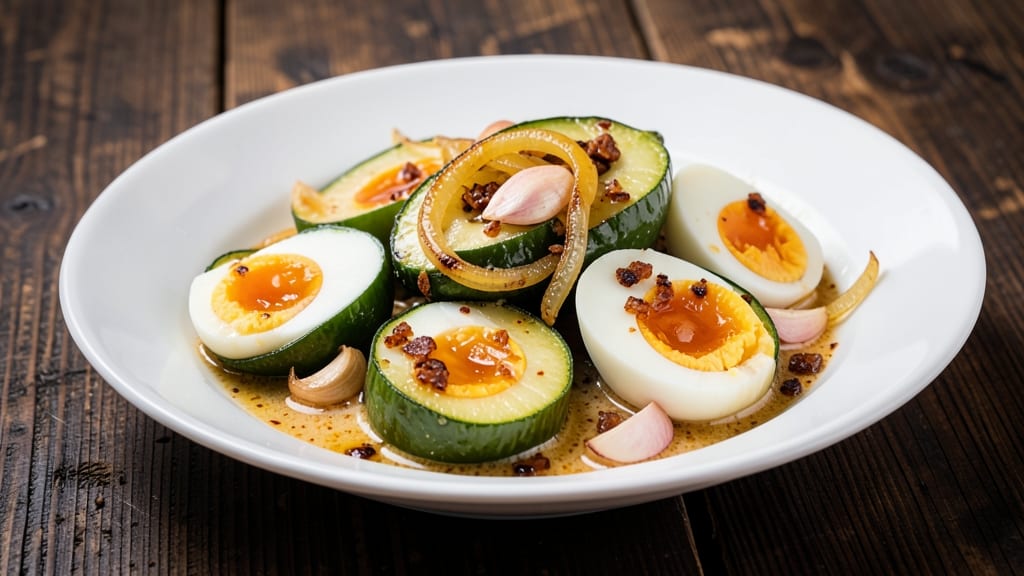
Ampalaya with salted egg transforms bitter melon into a velvety, aromatic dish where the rich, creamy yolk of salted egg creates perfect balance. This Filipino classic combines the earthy depth of ampalaya with the salty-sweet crunch of salted egg, creating a harmony that's both comforting and sophisticated. The secret lies in properly preparing the bitter melon—removing its bitterness while preserving its natural sweetness—so it melts into a luxurious, green curry sauce.
The recipe begins with sautéing garlic and onions until fragrant, then simmering the ampalaya in coconut milk until tender. Salted egg, sliced into delicate rounds, adds a luxurious texture and salty contrast that elevates every bite.
The dish is finished with a touch of sugar to balance the flavors, resulting in a dish that's creamy, savory, and just slightly sweet—a perfect balance of Filipino home cooking.
What makes this dish truly special is how the textures and flavors come together: the silky ampalaya, the creamy coconut milk, and the rich, briny salted egg create a symphony of tastes. It's a dish that feels indulgent yet remains light enough for breakfast or a midday meal.
The aroma alone—warm coconut, garlic, and the faint bitterness of ampalaya—will have everyone at the table eager for their first bite.
This recipe is perfect for those who appreciate the depth of Filipino flavors, offering a dish that's both nostalgic and refined. Whether served with steamed rice or crusty bread, it's a meal that feels like a warm embrace. Let's get cooking—your taste buds will thank you.
Ingredients for ampalaya with salted egg
Here's what you need to create this velvety, aromatic Filipino classic that balances bitter melon with rich salted egg.
| Ingredient | Amount | Notes |
|---|---|---|
| Ampalaya (Bitter Melon) 🥒 | 1 ½ lb | Seeds and bitter parts removed |
| Salted Eggs 🥚 | 4 whole | Filipino-style, hard-boiled |
| Coconut Milk 🥥 | 1 ½ cups | Full-fat, canned preferred |
| Fresh Ginger 🌿 | 2 tbsp | Grated, about 1-inch piece |
| Garlic Cloves 🧄 | 6 cloves | Minced, about 1 tbsp |
| Yellow Onion 🧅 | 1 whole | Thinly sliced, about 1 cup |
| Tomatoes 🍅 | 2 medium | Diced, about 1 cup |
| Sugar 🍚 | 1 tbsp | Granulated, adjust to taste |
| Salt 🧂 | 1 tsp | Kosher or sea salt |
| Black Peppercorns 🌶️ | ½ tsp | Freshly ground |
| Vegetable Oil 🫒 | 2 tbsp | For sautéing |
| Freshly Ground White Pepper 🌶️ | ¼ tsp | Optional, traditional touch |
The ampalaya is the star, so pick firm, green melons with no soft spots. Filipino markets or Asian grocery stores usually carry them—look for ones labeled 'ampalaya' or 'bitter melon'. The salted eggs? Filipino brands like Goldilocks or Del Monte are the gold standard, but any hard-boiled salted egg will work. Fresh ginger and garlic? Grab them at the produce section—they should smell vibrant, not stale. The coconut milk needs to be full-fat for that creamy texture, so skip the light version. And if you can't find ampalaya, substitute with okra, though it won't be exactly the same.
No fresh ginger? Ground ginger at half the amount works in a pinch, but fresh is ideal. The tomatoes can be swapped for 1 tbsp tomato paste if you're in a rush. Running low on salted eggs? Hard-boiled quail eggs with a pinch of salt mimic the texture. For extra richness, add 1 tbsp cream at the end. The white pepper is optional but adds that classic Filipino touch—if you skip it, just use more black pepper. And if your coconut milk is watery, strain it first for a smoother sauce. The ampalaya needs to be prepped right—cut into bite-sized pieces, scoop out the seeds, and slice off any bitter rinds.
This dish tastes even better the next day, so make extra if you can. Store leftovers in an airtight container in the fridge for 3-4 days. The sauce thickens as it cools, so add a splash of coconut milk when reheating. Freezes beautifully for up to 3 months. Serve with steamed rice—it's the perfect vessel for soaking up every bit of that creamy, salty-sweet sauce. And if you're feeling fancy, garnish with fried garlic right before serving for an extra crunch.
Why You'll Love This Recipe
- One-Pot Magic: I swear by this recipe when I’m too tired to wash a million dishes—just slice the ampalaya, fry the garlic, and let the coconut milk do the heavy lifting. The salted egg yolks melt right into the sauce, so you’re basically making a creamy, rich stew with zero fuss.
- Umami Bomb: That first bite of crisp-tender ampalaya with the salty, buttery salted egg yolk? It’s like a flavor explosion in your mouth. The ginger and garlic add a sharp kick, but the coconut milk smooths it all out—creamy, salty, bitter, and sweet all at once.
- Leftover Hero: Between us, this dish begs to be made in bulk. The flavors actually get better the next day—more mellow, the ampalaya softer, and the salted egg taste even more pronounced. I freeze portions for lazy nights, and it reheats like a dream.
- Budget Flex: Honestly, this recipe is my go-to when I need to stretch a meal without breaking the bank. Ampalaya is cheap, salted eggs last forever, and coconut milk is versatile. Plus, it’s filling enough for a family dinner but still feels special enough for guests. Win-win.
Step-by-step instructions for ampalaya with salted egg
Transform bitter melon into a luxurious dish with this simple yet magical recipe.
🍳 Step 1: Sauté Aromatics Until Fragrant
Heat the 2 tablespoons vegetable oil in a large pot over medium heat. Add the 1 whole yellow onion and cook for 3-4 minutes until softened and translucent. This is your flavor foundation—don't rush it.
Add the 6 cloves garlic cloves and 2 tablespoons fresh ginger to the pot. Stir constantly for 1-2 minutes until the garlic turns golden and the ginger releases its zesty aroma. You'll know it's ready when the entire pot smells like a tropical garden. This step builds the complex flavor base that makes this dish so addictive.
🍳 Step 2: Cook Tomatoes and Season
Add the 2 medium tomatoes and cook for 3-4 minutes until they soften and break down into the aromatic oil. Stir in the 1 tablespoon sugar, 1 teaspoon salt, and 0.5 teaspoon black peppercorns, mixing well to distribute the seasoning.
Cook for another 2 minutes until the tomatoes have cooked down and the mixture thickens slightly. This step balances the bitterness of the bitter melon with natural sweetness. The sugar also helps caramelize the aromatics, deepening their flavor. Taste and adjust seasoning if needed—this is where you can personalize the dish.
🍳 Step 3: Add Ampalaya and Simmer
Add the 1.5 pounds ampalaya (bitter melon) to the pot, stirring to coat it evenly with the aromatic mixture. Pour in the 1.5 cups coconut milk and bring the mixture to a gentle simmer over medium-low heat. The bitter melon will release its water content, so keep the heat low to prevent boiling.
Simmer uncovered for 15-20 minutes, stirring occasionally, until the bitter melon softens and the sauce thickens. You'll know it's ready when the bitter melon slices are tender and the sauce has reduced slightly. This slow cooking process transforms the bitter melon into a silky, velvety texture that's completely irresistible.
🍳 Step 4: Add Salted Eggs and Finish
Carefully peel the 4 whole salted eggs and add them to the pot. The heat will gently melt the yolks, creating those beautiful, creamy ribbons that make this dish so special. Stir gently to distribute the egg yolks throughout the sauce without breaking them too much.
Cook for another 2-3 minutes just until the egg yolks are warm but still slightly set. Add the 0.25 teaspoon freshly ground white pepper and stir well. The white pepper adds a subtle, earthy note that complements the richness of the salted eggs and the coconut milk. Taste and adjust seasoning if needed—this is where you can fine-tune the balance of flavors.
🍽️ Step 5: Serve Warm and Enjoy
Ladle the ampalaya with salted egg into serving bowls, making sure each portion gets a generous helping of those creamy egg ribbons. Serve immediately while still warm—this dish is best enjoyed right out of the pot when the egg yolks are still silky and the flavors are at their peak.
Pair with steamed rice to soak up every last bit of that luxurious sauce. The contrast of the warm, creamy dish with the cool, fluffy rice makes each bite even more satisfying. This is comfort food at its finest—a perfect balance of rich, creamy, and slightly sweet flavors that will have you coming back for seconds.
Pro Tips For Making Ampalaya With Salted Egg
- Sear the Ampalaya First: Cut the bitter melon lengthwise and sear the flesh side down in hot oil for 2-3 minutes before adding other ingredients. This softens the texture and cuts the bitterness—trust me, it makes a real difference when the melon’s sharp edge mellows into the sauce.
- Peel Salted Eggs Cold: Chill the salted eggs for 15 minutes before peeling to keep the yolks intact. Warm eggs crack under pressure, and you don’t want yolk shards turning your coconut milk into a murky mess. Run a knife along the shell first, then tap gently—no brute force.
- Simmer Ginger-Garlic Base: Sauté minced ginger and garlic in oil until fragrant but not browned—just golden. Overcooking turns them bitter, and that bitterness clashes with the coconut milk’s creaminess. Keep the heat medium and move the pan often.
- Stir in Coconut Milk Slowly: After frying the ampalaya and salted eggs, pour coconut milk in a thin stream while stirring constantly. This prevents curdling and lets the sauce thicken evenly. If you dump it all at once, you’ll end up with a split sauce—no one wants that.
Dietary considerations for these flavors
Gluten-Free Adaptations
This dish is naturally gluten-free as written, making it perfect for those avoiding gluten. The key ingredients—ampalaya, coconut milk, salted eggs, and fresh vegetables—contain no gluten. Always double-check your salted egg brand (Filipino brands like Goldilocks are typically safe), but some may contain additives.
For extra safety, use certified gluten-free salted eggs or make your own by hard-boiling eggs and seasoning them with salt. 🌱
Salted Egg Allergies
If you or someone at your table has a egg allergy, this recipe needs a complete overhaul. The salted eggs are the heart of the dish, so consider substituting with tofu cubes (firm or extra-firm) for texture and richness.
Marinate the tofu in soy sauce and a touch of sugar to mimic the salted egg's flavor. Alternatively, use salted shrimp (ensure it's safe for allergies) for a similar briny, umami kick. Always confirm substitutions are allergy-friendly before serving.
Vegetarian Options
For vegetarians, the recipe is already plant-based except for the salted eggs. Replace them with vegan salted eggs (available in Asian markets) or marinated tofu as mentioned above. The coconut milk and ampalaya provide all the necessary protein and creaminess.
If you want to boost protein further, stir in ½ cup cooked chickpeas or lentils at the end for a heartier dish. The flavors remain rich and satisfying without animal products. 🌿
Lower Sodium Adjustments
Salted eggs are high in sodium, so if you're watching your intake, reduce the 1 teaspoon salt in the recipe to just ½ teaspoon. For extra flavor without salt, add 1 teaspoon fish sauce (ensure it's gluten-free if needed) or ½ teaspoon soy sauce to deepen the umami.
The coconut milk and tomatoes already provide natural saltiness, so the dish won't lose its depth. Taste as you go—you might not need any extra salt at all! 💡
Dairy-Free Note
This recipe is already dairy-free, but if you're serving it to guests with dairy sensitivities, confirm all ingredients are free of hidden dairy. Some brands of coconut milk contain additives, so choose a pure, 100% coconut milk product.
The salted eggs should also be dairy-free unless they're coated in a dairy-based seasoning (rare, but always check labels). The dish's creaminess comes entirely from coconut milk and egg yolks, so no dairy substitutes are needed. ✨
Nutrition facts
Frequently asked questions
Why does the recipe call for removing the bitter parts of ampalaya?
Fresh ampalaya has a naturally bitter taste that can overpower the dish if not properly prepared. The white, spongy rind and seeds contain the most bitterness, so removing them transforms the vegetable into a mild, slightly sweet ingredient that absorbs the coconut milk beautifully. Think of it like prepping kale—you remove the tough stems before cooking to focus on the tender leaves.
Can I substitute regular eggs for salted eggs?
Not recommended for authentic flavor, but if you must, try this: hard-boil 4 eggs, then mix the yolks with 1 tablespoon soy sauce and ½ teaspoon salt to mimic the salted egg taste. The whites can be chopped and added separately for texture. For best results, though, use Filipino-style salted eggs—their rich, briny yolks are irreplaceable in this dish.
How do I know when the ampalaya is fully cooked?
The ampalaya is done when it's fork-tender with no resistance—pierce a piece and check for softness (15-20 minutes of simmering). The sauce should also thicken slightly and coat the back of a spoon. If it's still crunchy, simmer 5 more minutes—overcooking turns it mushy. Pro tip: Taste a small piece (spit it out!) to check for bitterness.
What if I don't have fresh ginger?
Use 1 teaspoon ground ginger instead, but fresh is ideal for that bright, zesty flavor. If you have ginger paste, thaw it first and measure 2 teaspoons—the texture won't be identical, but it'll still add warmth. For a ginger-free version, boost the garlic to 8 cloves—it'll compensate for the missing depth.
Can I make this dish ahead of time?
Yes! This dish tastes even better the next day. Store leftovers in an airtight container for 3-4 days—the flavors meld beautifully. Reheat gently on low heat, adding a splash of coconut milk if the sauce thickens too much. For freezing, portion before adding salted eggs (add them fresh when reheating) and freeze for up to 3 months—thaw overnight in the fridge.