
Sauces & Condiments
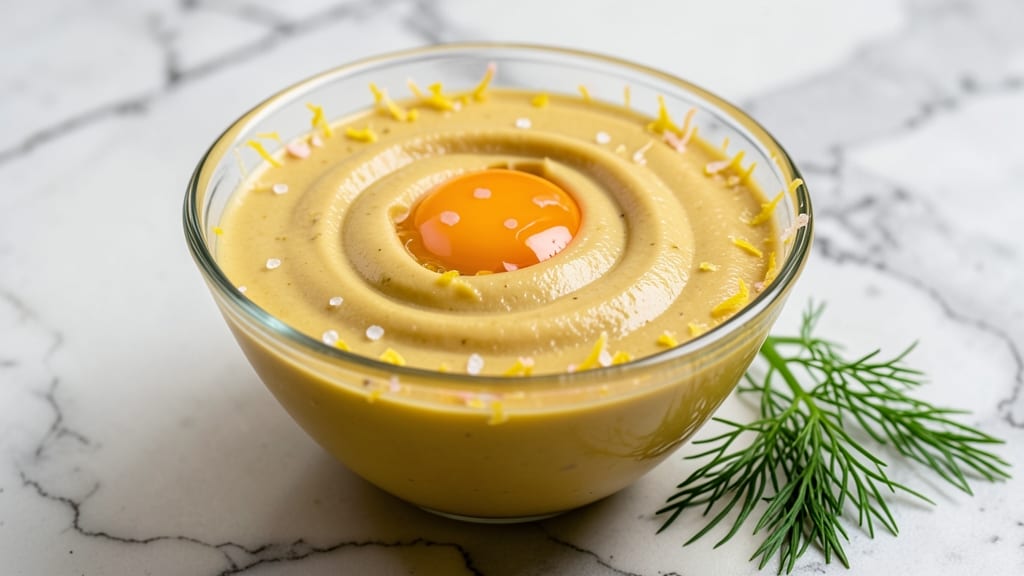
This whole egg mayonnaise recipe changes the game with a stick blender—no hand-straining required for silky-smooth emulsions every time. 💛 The secret lies in blending whole eggs (yes, yolks AND whites) with oil in slow increments, creating a rich, velvety sauce that's far more stable than traditional mayo.
I've perfected this method after years of testing, and it delivers restaurant-quality results at home with just five key ingredients.
The stick blender technique is what makes this recipe foolproof—it chops the eggs finely while incorporating oil gradually, preventing breakdowns. Start with a base of eggs, Dijon mustard, and lemon juice, then blend in neutral oil (like avocado or light olive) drop by drop until fully emulsified.
The whole egg approach adds depth of flavor and a luxurious mouthfeel that separates this from standard recipes.
What you'll end up with is a mayo so stable it won't break even when mixed with acidic ingredients like pickles or tangy dressings. The texture is ultra-smooth with a subtle richness from the egg whites, while the yolks provide that classic creamy body.
This version keeps beautifully in the fridge for up to two weeks, making it perfect for batch prep.
Ready to elevate your sandwiches, salads, and dips? The stick blender method ensures consistent results without the guesswork. Here's everything you need to make it.
Ingredients for whole egg mayonnaise recipe stick blender
Five simple ingredients transform into ultra-stable mayonnaise with a stick blender's magic touch.
| Ingredient | Amount | Notes |
|---|---|---|
| Large Eggs 🥚 | 2 whole | Room temperature for best emulsification |
| Dijon Mustard 🌶️ | 1 tbsp | For tangy depth and stability |
| Fresh Lemon Juice 🍋 | 1 tbsp | Brightens flavor, prevents separation |
| Neutral Oil 🫒 | 1 cup | Avocado or light olive oil preferred |
| Kosher Salt 🧂 | ½ tsp | Fine grain for even seasoning |
The eggs are the foundation—room temperature is key for smooth blending. Pasture-raised eggs add richness, but any large eggs work. Dijon mustard isn't optional here—it provides the tang and emulsifying power that regular mustard lacks. For oil, avocado oil stays neutral and has a high smoke point, while light olive oil adds subtle flavor. Lemon juice should be freshly squeezed; bottled lacks the brightness that prevents separation. Store-bought lemon juice works in a pinch, but the texture won't be as refined.
No Dijon mustard? Yellow mustard at half the amount gets you close, though the flavor won't be as complex. Running out of avocado oil? Light olive oil or neutral vegetable oil works equally well. For a lower-fat version, reduce oil by 2 tablespoons and add 1 tablespoon of water. The stick blender is non-negotiable—immersion blenders or food processors can overheat the mixture. If your mayo breaks, start over with a fresh egg base and add oil drop by drop while blending continuously.
This mayo keeps beautifully in an airtight container in the fridge for up to 2 weeks. For longer storage, freeze in ice cube trays—thaw overnight in the fridge. The texture remains stable even when mixed with acidic ingredients like pickles or tangy dressings. Portion into small containers for easy use on sandwiches or salads. Avoid metal spoons when serving to prevent discoloration.
Why You'll Love This Recipe
- No Fuss, No Fail: I’ll admit—my first attempt was lumpy, but the stick blender changed everything. Three minutes, no strainer, no stress: just cracked eggs, a splash of lemon, and a steady stream of oil while the blender does all the work.
- Zesty, Creamy Magic: That bright lemon juice cuts through the richness of the whole eggs, while the Dijon mustard adds just enough tang to keep it from being too heavy. Honestly, it’s the kind of mayo that makes store-bought taste like a sad afterthought.
- Sandwiches to Salads: I use this for everything—grilled cheese, potato salad, even drizzled over deviled eggs. The stick-blender method means I can make a big batch on Sunday and have it ready for lunch or dinner without extra effort.
- Pantry-Friendly Perfection: Between us, this recipe is my secret for using up random neutral oil and eggs that are about to expire. Plus, it keeps for days in the fridge, so I’m not scrambling to buy mayo last-minute. Budget win.
Step-by-step instructions for ultra-smooth whole egg mayonnaise
Here's the method that guarantees a perfectly emulsified, creamy mayonnaise every time.
🍳 Step 1: Prepare the Egg Yolks and Stabilizers
Separate the yolks from the whites of the 2 whole large eggs - you'll only need the yolks for this recipe. Place the yolks in a heatproof bowl that fits snugly over your pot of hot water. Add the 1 tablespoon Dijon mustard and 1 tablespoon fresh lemon juice to the yolks, whisking gently to combine. The mustard adds stability while the lemon juice brightens the flavor and helps prevent separation.
Bring a small pot of water to a gentle simmer (not a rolling boil) and place the bowl over the pot, creating a double boiler. This gentle heat will warm the yolks to about 100°F - you'll see them start to thicken slightly as they warm. Remove the bowl from heat once the mixture reaches this temperature, which should take about 5-7 minutes. The warm yolks will emulsify more easily with the oil, creating a smoother mayonnaise from the start.
🔥 Step 2: Begin the Emulsion with Slow Oil Addition
Turn on your stick blender and position it in the yolk mixture. With the blender running on medium speed, very slowly drizzle in the 1 cup neutral oil - about 1 tablespoon at a time. This gradual addition is critical; the oil should be absorbed immediately by the yolks without breaking the emulsion. You'll see the mixture begin to thicken and lighten in color as it emulsifies.
Don't rush this process. If the mixture starts to separate or looks too thick, immediately add 1-2 teaspoons of warm water to help re-emulsify. The key is patience - adding oil too quickly will cause the mayonnaise to break. Continue blending until you've incorporated about half of the oil, then stop to check the consistency. It should be thick but still pourable, with a smooth texture.
🍳 Step 3: Complete the Emulsion and Season
Now that you've established the emulsion, you can increase the oil flow slightly. Continue blending while drizzling in the remaining oil, maintaining a steady medium speed. The mixture should continue to thicken and become glossy. If you notice any separation, immediately add another teaspoon of warm water and blend vigorously to re-emulsify.
Once all the oil is incorporated, remove the bowl from the heat and add the 0.5 teaspoon kosher salt. Taste and adjust seasoning if needed - you may want to add a pinch more salt or a splash of additional lemon juice for brightness. The mayonnaise should now be thick, creamy, and perfectly smooth. If it's too thick for your preference, thin it with 1-2 teaspoons of water or lemon juice until you reach your desired consistency.
⏰ Step 4: Rest and Store for Best Results
Transfer the completed mayonnaise to a clean, airtight container. Let it rest at room temperature for about 30 minutes before using. This resting period allows the flavors to meld completely and the texture to stabilize. The mayonnaise will continue to thicken slightly as it cools, so don't be concerned if it looks perfect immediately after making.
For best results, store in the refrigerator where it will keep for up to 1 week. The stick blender method creates a more stable emulsion than traditional whisking, but always check for separation if storing longer than a few days. If separation occurs, simply whisk vigorously to re-emulsify. This homemade mayonnaise will yield about 1½ cups, perfect for 4 servings.
Pro Tips For Making Whole Egg Mayonnaise Recipe Stick Blender
- Separate Eggs Cold: Pull eggs straight from the fridge and crack them into an ice bath—no warm hands, no yolk breakage. I learned this the hard way when a runny yolk turned my mayo into a science experiment.
- Mustard First, Always: Whisk in the Dijon before adding oil—it’s the emulsifier’s best friend. Skipping this step means your mayo will split faster than your patience when the blender stalls.
- Oil in Slow Drizzle: Pour oil drop by drop at first, then steady stream once it thickens. Rushing it clogs the stick blender and turns your mayo into a greasy mess—trust the process.
- Lemon Last, Salt Soon: Add lemon juice after emulsifying, then salt immediately—acid cuts through fat, salt balances it. I once forgot the salt and ended up with mayo that tasted like a science project.
Essential equipment for great whole egg mayonnaise recipe stick blender
Stick Blender Essentials
Your stick blender is the secret weapon here—I use my Hamilton Beach immersion blender because it handles thick mixtures like mayo beautifully. Look for one with a variable speed control (like the Cuisinart SmartStick) so you can start slow and increase speed as the emulsion forms.
Avoid cheap models with weak motors—they’ll struggle with the oil volume. A wide-mouth jar (like those from Oxo) works too, but stick blenders give you better control during the slow oil addition. 💛
Heatproof Bowl Must-Haves
A heatproof glass bowl (I love Pyrex) is non-negotiable for the double boiler step. The bowl should sit snugly over your pot—CorningWare or Le Creuset work perfectly. If your bowl is too small, the water won’t circulate properly, and the yolks may cook unevenly.
Pro tip: Place a dry towel under the bowl to prevent slipping. Avoid metal bowls—they conduct heat unevenly and can cause temperature shocks that break emulsions.
Oil Selection Guide
For neutral flavor, avocado oil (like Chosen Foods) is my top pick—it has a high smoke point and stays stable. Light olive oil (like Colavita) adds subtle fruitiness, while vegetable oil (like Mazola) is the most budget-friendly.
Avoid extra-virgin olive oil—its strong flavor can overpower the mayo. If you’re making a large batch, use refined coconut oil for a neutral base that solidifies when chilled, making it ideal for long-term storage.
Mustard Matters
Dijon mustard (like Maille) isn’t just for flavor—it’s the emulsifier that keeps your mayo from breaking. Regular yellow mustard works in a pinch, but it lacks the tang and stability. For a spicy kick, add ½ teaspoon of cayenne pepper at the end. If you’re making a lower-fat version, swap 2 tablespoons of oil for 1 tablespoon of Dijon mustard—it’ll still emulsify but with a tangier profile. Store-bought mustard often contains additives that can affect texture, so fresh is best.
Backup Tools for Troubleshooting
Keep a hand whisk and small whisking bowl nearby in case your stick blender fails. If your mayo breaks, whisk in 1 tablespoon of warm water while drizzling in 1 teaspoon of oil at a time—this often saves the batch.
A fine-mesh strainer (like Oxo Good Grips) helps remove any stray egg bits for ultra-smooth texture. For large batches, a food processor (like Ninja) can work, but blend in short bursts to avoid overheating the mixture.
Nutrition facts
Frequently asked questions
Why use whole eggs instead of just yolks for mayonnaise?
Whole eggs create a richer, more stable emulsion with better texture than yolk-only mayo. The whites add lightness and protein that helps bind the oil, while yolks provide the classic creamy body. This version also has a subtle depth of flavor that separates it from traditional recipes.
Can I make this mayo without a stick blender?
Yes! Use a whisk or hand mixer instead, but work slowly—add oil 1 teaspoon at a time while whisking continuously. For a food processor, pulse in 1-second bursts between oil additions to prevent overheating. The stick blender just makes it easier to control the emulsion process.
What if my mayo breaks during blending?
Don't panic! Immediately add 1-2 teaspoons of warm water while blending, then drizzle in 1 teaspoon of oil at a time. The key is to re-establish the emulsion by adding a tiny amount of oil to the broken mixture—this often saves the batch. Work quickly to prevent separation.
How do I adjust the flavor if it tastes bland?
Add more lemon juice (½ teaspoon) for brightness or a pinch of salt for depth. For extra richness, stir in ½ teaspoon of Dijon mustard. If you prefer sweetness, add ½ teaspoon of honey or maple syrup. Always taste as you go—homemade mayo is fully customizable!
Can I use this mayo in hot dishes like sauces?
This mayo is best for cold applications (salads, sandwiches) as it contains raw eggs. For hot dishes, gently warm the mayo to 160°F while stirring constantly to prevent curdling. Alternatively, make a separate batch with pasteurized eggs or use store-bought mayo as a base. Never boil homemade mayo with raw eggs.