
Breakfast & Brunch
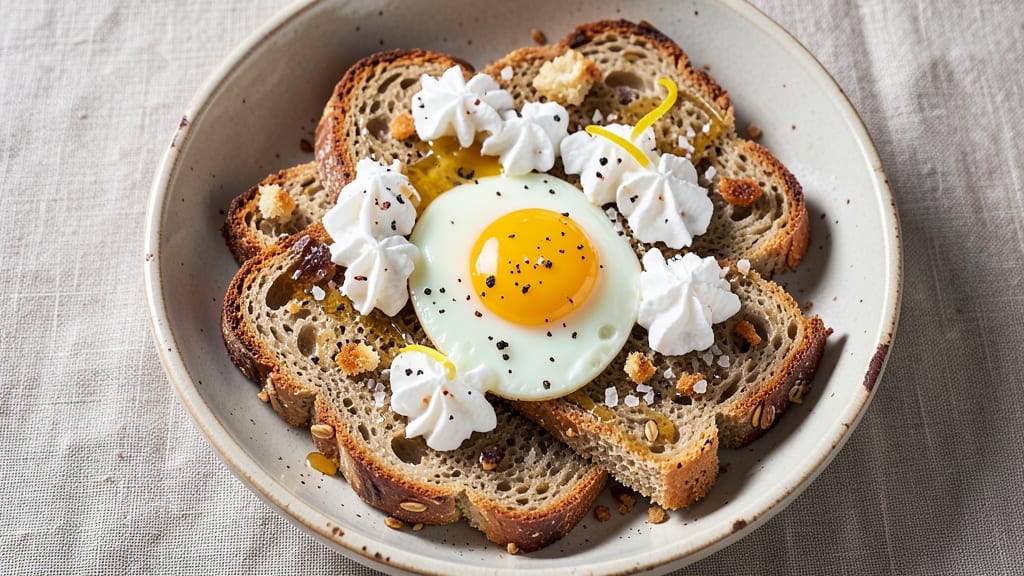
This wheat bread with egg recipe transforms simple pantry staples into a rich, fluffy loaf with a golden, crackly crust—thanks to the magic of egg wash. The egg doesn’t just add shine; it enriches the dough, creating a tender crumb that’s perfect for toast, sandwiches, or serving warm with butter.
I perfected this version after years of baking, balancing wheat flour’s heartiness with the egg’s binding power for a loaf that’s both rustic and refined.
The process is straightforward but rewarding: mix warm water, yeast, and a pinch of sugar to activate the leavening, then combine with wheat flour and the egg for structure and richness. Kneading develops gluten for that signature soft texture, while proofing lets the dough rise dramatically.
The egg wash—beaten egg brushed on before baking—gives that coveted golden finish and extra crispness. No special equipment is needed, just time and patience for the dough to transform.
What you’ll end up with is a homemade loaf that’s lighter than store-bought, with a crisp crust and a tender, slightly chewy interior. The egg’s richness rounds out the wheat’s earthy flavor, making every slice satisfying.
This recipe works equally well for savory loaves or lightly sweet versions with honey or cinnamon. The best part? It keeps well for days, so you can bake once and enjoy for a week.
Whether you’re a beginner or an experienced baker, this recipe delivers professional-quality results with minimal fuss. The egg’s role is critical—it’s what elevates this bread from basic to exceptional. Let’s get started on creating your perfect loaf.
Ingredients for wheat bread with egg
These 12 ingredients transform simple pantry staples into a golden, fluffy wheat loaf with a crisp crust.
| Ingredient | Amount | Notes |
|---|---|---|
| Wheat Flour 🌾 | 4 cups | All-purpose or bread flour preferred |
| Large Eggs 🥚 | 2 whole | Room temperature for best mixing |
| Active Dry Yeast 🍞 | 2 ¼ tsp | Ensure yeast is fresh and active |
| Warm Water 💧 | 1 ¼ cups | 110°F for optimal yeast activation |
| Granulated Sugar 🍚 | 1 tbsp | Feeds yeast for better rise |
| Salt 🧂 | 1 ½ tsp | Kosher or sea salt preferred |
| Unsalted Butter 🧈 | ¼ cup | Cold, cubed for dough enrichment |
| Milk 🥛 | ½ cup | Warm for softer dough texture |
| Olive Oil 🫒 | 1 tbsp | For dough elasticity |
| Honey 🍯 | 1 tbsp | Optional for subtle sweetness |
| Egg Wash 🥚 | 1 whole | Beaten egg for golden crust |
| Cornmeal 🌽 | ¼ cup | For dusting baking sheet |
The wheat flour is the heart of this recipe—King Arthur or Bob’s Red Mill brands are my go-tos for consistent results. The egg is non-negotiable; it’s what gives this bread its signature tenderness and that irresistible golden crust when brushed on top. For the yeast, check the expiration date—old yeast won’t activate properly. Warm water is key here; it should feel like a warm bath (around 110°F). Too hot and you’ll kill the yeast, too cold and it won’t activate. The butter adds richness, but use cold cubes—they’ll melt into the dough during kneading, creating pockets for that fluffy texture. If you’re short on butter, extra olive oil works in a pinch.
No wheat flour? Substitute with whole wheat or white flour at a 1:1 ratio, though texture will vary slightly. Egg allergies? Replace with 2 tbsp ground flaxseed + 6 tbsp water (let sit 5 minutes to thicken). For a sweeter loaf, add 1 tbsp cinnamon or 2 tbsp maple syrup to the dough. The honey is optional but worth it—it feeds the yeast and adds a subtle depth of flavor. If you’re in a hurry, instant yeast can be used at the same amount, but active dry yeast gives the best rise. The egg wash is your secret weapon for that restaurant-quality crust—don’t skip it!
This dough needs time to develop flavor—let it rise for 1-2 hours until doubled in size. Store any leftovers in an airtight container for 3-4 days at room temperature or freeze for up to 3 months. For reheating, wrap slices in foil and warm in a 350°F oven for 5-10 minutes. Pro tip: Sprinkle breadcrumbs on top before baking for extra crunch. The egg wash can be prepped ahead and stored in the fridge for 2 days—just whisk before using. This loaf freezes beautifully too; bake straight from frozen with an extra 10 minutes.
Why You'll Love This Recipe
- No-Knead Magic: I swear by this method—just mix the wheat flour, yeast, and warm water, let it rest, then fold in beaten eggs before baking. The dough practically does the work while you sip your coffee.
- Golden Crust Promise: That egg wash? It’s the secret weapon. The bread turns out with a shatteringly crisp crust and a tender crumb inside—like a bakery loaf without the fuss.
- Weeknight Wonder: Toss it in a sandwich for lunch, toast it with butter for breakfast, or serve it with soup when the kids get home. The same loaf becomes three meals before it’s gone.
- Pantry Staple Power: You already have everything—flour, eggs, yeast—so it’s budget-friendly and never feels like a chore. Plus, slices freeze beautifully for days when you’d rather microwave than bake.
Step-by-step instructions for wheat bread with egg recipe
Here's how to make a light, airy loaf with a perfect golden crust—every slice will be tender and delicious.
Activate the Yeast for Maximum Rise
In a small bowl, combine the 1.25 cups warm water (about 110°F), 1 tbsp granulated sugar, and 2.25 tsp active dry yeast. Let it sit for 5-10 minutes until it becomes frothy and bubbly—this means your yeast is alive and ready to work. If it doesn’t bubble, your yeast might be inactive, and you’ll need to start over.
Real talk: yeast is finicky. If you’re in a cold kitchen, warm the water slightly more—just enough to feel comfortably warm to your wrist. The sugar helps feed the yeast, giving your bread that extra lift. Once it’s bubbly, you’re ready for the next step—don’t let it sit too long, or it’ll lose its potency.
Mix the Wet Ingredients for a Silky Dough
In a large mixing bowl, whisk together the 2 whole large eggs, 0.5 cup milk, 1 tbsp olive oil, and 1 tbsp honey until smooth. The honey adds subtle sweetness and helps keep the dough moist. Add the yeast mixture and stir gently to combine—this is your wet base, and it should look like a creamy, slightly thick custard.
I like to use room-temperature eggs because they mix more easily and create a smoother dough. If your eggs are cold, let them sit out for 10 minutes first. This step is all about creating a balanced foundation—too much liquid, and your dough will be sticky; too little, and it’ll be tough. We’re aiming for that perfect, elastic texture.
Combine Wet and Dry Ingredients for a Smooth Dough
Gradually add the 4 cups wheat flour and 1.5 tsp salt to the wet mixture, stirring with a wooden spoon or dough whisk until a shaggy dough forms. Once it comes together, turn it out onto a lightly floured surface and knead for 8-10 minutes by hand, or use a stand mixer with a dough hook for 5-6 minutes on medium speed.
Here’s the thing—you’ll know it’s ready when the dough is smooth, elastic, and springs back slowly when poked. If it’s sticky, add a little more flour, 1 tablespoon at a time, but don’t overdo it. The goal is a dough that’s soft but not gummy. Fold in the 0.25 cup cold, cubed unsalted butter during the last minute of kneading so it melts slightly and enriches the dough without making it greasy.
Let the Dough Rise Until Doubled in Size
Lightly grease a large bowl with a bit of olive oil, place the dough inside, and cover it with a clean kitchen towel or plastic wrap. Let it rise in a warm, draft-free spot for 1-1.5 hours, or until it’s puffy and has nearly doubled in size. You’ll see bubbles forming on the surface—that’s your sign it’s ready.
I usually place the bowl near the oven with the light on (just make sure it’s not too hot—you don’t want to cook the dough). If your kitchen is cold, pop the bowl in the oven with the light on for 10-15 minutes to help it warm up and rise faster. Patience here is key—rushing the rise will make your bread dense instead of light and airy.
Shape, Proof, and Bake for a Perfect Loaf
Punch down the risen dough to release any air bubbles, then shape it into a 9x5-inch loaf pan (greased with a bit of butter or olive oil). Brush the top with the 1 whole egg wash (beat the egg with a splash of water) for that golden, glossy crust. Sprinkle 0.25 cup cornmeal on the bottom of the pan to prevent sticking.
Let the dough proof for another 30-45 minutes until it’s just about to overflow the pan. Preheat your oven to 375°F while it proofs—this ensures it’s hot and ready when you’re done. Bake for 30-35 minutes until the top is golden brown and the internal temperature reaches 190°F. Tap the bottom—it should sound hollow, not dull.
Cool and Slice for Maximum Fluffiness
Remove the bread from the pan and let it cool on a wire rack for at least 15 minutes before slicing. This step is crucial—cutting it too soon will make it gummy. The crust will firm up as it cools, and the crumb will be light and tender, just like a bakery loaf.
Slice it thick—about ½-inch—and serve warm with butter or jam. The egg wash gives it that beautiful shine, while the honey adds just a hint of sweetness. Store leftovers in an airtight container for up to 3 days, or freeze for longer storage. Enjoy your homemade wheat bread—it’s worth every minute!
Pro Tips For Making Wheat Bread With Egg
- Weigh Your Flour: Grab a kitchen scale—yeast breads demand precision. Wheat flour packs differently than all-purpose, and eyeballing it leads to dough that’s either too slack or dense. A gram off throws off the whole structure, especially with eggs adding moisture. (Yes, even if you’re impatient like me, this is worth it.)
- Bloom Yeast in Sugar Water: Skip mixing yeast with flour first—it’s a waste. Instead, dissolve the sugar in warm water (110°F), sprinkle yeast on top, and let it foam for 5–7 minutes. This ensures your yeast is active and the dough rises reliably, especially with wheat’s heavier texture. (I learned this the hard way after a dough that took 4 hours to rise.)
- Knead Until Windowpane: Test dough elasticity by stretching a small piece—if it thins to translucent without tearing, you’re done. Wheat dough needs less kneading than all-purpose, but underworking it means a gummy loaf. Aim for 8–10 minutes by hand; over-kneading just toughens the gluten. (Your future self will notice the difference.)
- Egg Wash for Crust, Not Glaze: Brush the loaf with beaten egg before baking, not after. This creates a golden, crisp crust while keeping the interior soft. Save the extra egg wash for toasting—wheat bread dries out fast, and this trick keeps it fresh longer. (Sounds weird, but it works: no more sad, dry slices.)
Dietary considerations for this recipe
Gluten-Free Adaptation
For a gluten-free version, replace the 4 cups wheat flour with a 1:1 gluten-free flour blend like Bob’s Red Mill 1-to-1 or King Arthur Measure for Measure. Add 1 tsp xanthan gum to mimic gluten’s binding properties.
The egg remains essential—it compensates for the lack of gluten structure. Proofing times may extend slightly, so check dough readiness at 1.5-2 hours instead of 1 hour. 🌾
Egg-Free Substitutes
If avoiding eggs, replace them with 2 tbsp ground flaxseed + 6 tbsp water (let sit 5 minutes to thicken). For extra richness, add 2 tbsp olive oil to the dough. The texture will differ slightly—expect a denser crumb—but still delicious.
Flax "eggs" also add fiber, balancing the wheat’s heartiness. Always let the dough rest longer when using flax, as it absorbs moisture differently. 🥚
Dairy-Free Options
Swap the 0.5 cup milk and 0.25 cup butter for 0.5 cup unsweetened almond milk and 0.25 cup coconut oil (softened). The coconut oil adds richness without dairy.
For the egg wash, use 1 tbsp olive oil + 1 tbsp water brushed on top. These swaps keep the bread tender while accommodating lactose intolerance. 🥛
Lower-Carb Version
Reduce the wheat flour to 3 cups and stir in 1 cup almond flour for a lighter, lower-carb loaf. Keep the 2 eggs and 0.25 cup butter for moisture. The almond flour adds nuttiness and reduces gluten, so knead for 2-3 minutes longer to develop structure.
Proofing may take 10-15 minutes extra due to the almond flour’s absorption. 💪
Allergen-Friendly Tips
For nut allergies, use a gluten-free oat flour instead of almond flour. Always check labels on yeast and cornmeal for cross-contamination warnings. Store baked goods in a dedicated toaster or with separate utensils to avoid allergen transfer.
The egg wash can be pre-made with just water + 1 tsp vinegar for egg-free brushing. 🛡️
Nutrition facts
Frequently asked questions
Why does this recipe use eggs in wheat bread?
The eggs serve three key purposes: they bind the dough for a tighter crumb, enrich the flavor with their natural richness, and create that signature golden, crackly crust when used as an egg wash. The fat in eggs tenderizes the wheat flour, preventing a dense texture that often happens with whole grain breads. Without eggs, you’d need extra fat (like oil) or a longer kneading time to achieve similar results.
Can I make this bread without a stand mixer?
This recipe works perfectly by hand. After combining wet and dry ingredients, knead the dough on a lightly floured surface for 8-10 minutes until it’s smooth and elastic. Press down hard with the heels of your hands and fold the dough over itself—this builds gluten just as effectively as a mixer. The key is patience; hand-kneaded dough needs more time to develop structure.
What if my dough doesn’t rise properly?
Check three things first: yeast freshness (test with warm water + sugar—it should bubble in 5 minutes), water temperature (110°F is ideal), and a warm proofing environment. If your kitchen is cold, place the dough bowl near the oven with the light on (not too close—you don’t want to cook it!). For extra insurance, add ½ tsp more yeast if your first batch was slow. Cold climates may require 10-15 minutes extra proofing time.
How do I store this bread to keep it fresh?
Wrap cooled slices in plastic wrap or store the whole loaf in an airtight container at room temperature for 3-4 days. For longer storage, freeze the bread (sliced or whole) for up to 3 months. To reheat, wrap slices in foil and warm in a 350°F oven for 5-10 minutes until crisp. The egg wash helps preserve freshness—it creates a moisture barrier that prevents drying. Pro tip: Toast stale slices for 2 minutes to revive texture!
Can I add seeds or nuts to this recipe?
Yes! Stir in ½ cup seeds (sunflower, pumpkin) or chopped nuts (walnuts, pecans) during the final 2 minutes of kneading. For extra flavor, toast the nuts/seeds in a dry pan for 3-5 minutes first. Keep portions under ⅓ cup total to avoid weighing down the dough. If using wet ingredients (like chia seeds), reduce milk by 1-2 tbsp to maintain dough consistency.