
Desserts
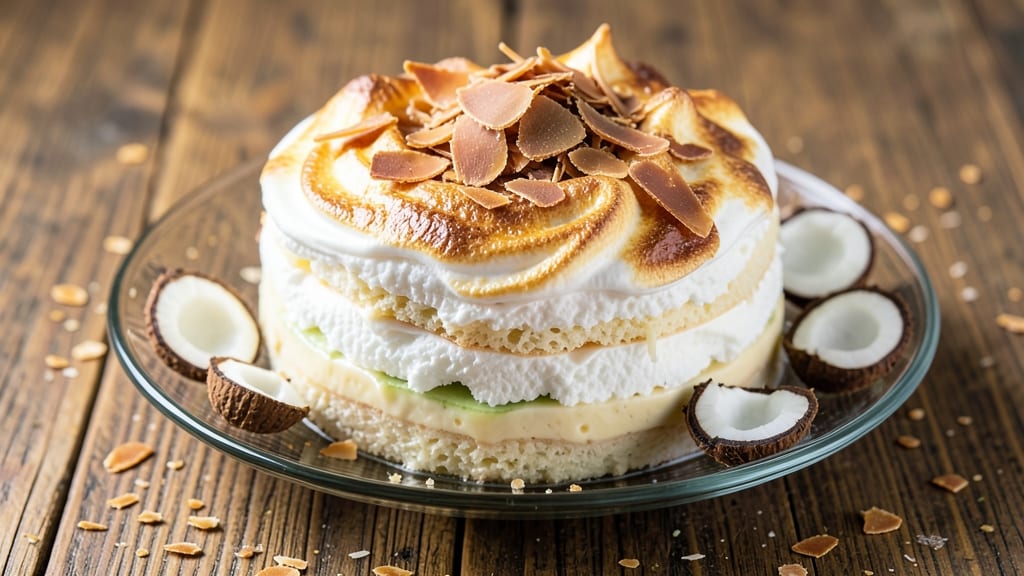
This Vietnamese egg cake recipe delivers layers of tender, fluffy goodness with coconut and pandan—steamed to perfection for a dessert that tastes like a hug from Vietnam. 💛 The secret lies in the delicate balance of egg whites and coconut milk, creating a light yet rich texture that’s impossible to resist.
I’ve perfected this recipe over years of baking, ensuring every slice is moist, fragrant, and just sweet enough to satisfy any craving.
The process is simpler than it looks: whisk eggs until frothy, fold in coconut milk and pandan extract, then steam in layers for 30–45 minutes until set. No fancy equipment needed—just a steamer or oven-safe dish. The result?
A golden, jiggly cake with a hint of floral pandan and the creamy richness of coconut, all cut into neat squares for serving. This is the kind of dessert that elevates any meal or celebration.
What makes this recipe special is its versatility—serve it warm with a sprinkle of toasted coconut flakes or chilled with a drizzle of honey. It’s naturally vegetarian, making it perfect for all dietary preferences.
The aroma alone will have everyone gathering around the table, eager for a taste of this beloved Vietnamese treat.
Whether you’re baking for a family gathering or treating yourself to a homemade indulgence, this egg cake is sure to impress. Let’s get started—your taste buds will thank you.
Ingredients for vietnamese egg cake
Gather these fragrant ingredients for a Vietnamese egg cake that's light, golden, and bursting with coconut-pandan flavor.
| Ingredient | Amount | Notes |
|---|---|---|
| Large Egg Whites 🥚 | 12 whole | Room temperature preferred |
| Large Whole Eggs 🥚 | 4 whole | Room temperature preferred |
| Coconut Milk 🥥 | 1 ½ cups | Full-fat canned, well-shaken |
| Granulated Sugar 🍚 | ¾ cup | White or light brown |
| Pandan Extract 🌿 | 1 tbsp | Pure, not flavored syrup |
| Toasted Coconut Flakes 🥥 | ½ cup | Unsweetened, lightly toasted |
| Vegetable Oil 🫒 | 2 tbsp | For greasing layers |
| All-Purpose Flour 🌾 | ¼ cup | For dusting layers |
| Honey 🍯 | 2 tbsp | For drizzling (optional) |
| Salt 🧂 | ½ tsp | Fine sea salt |
| Vanilla Extract 🌸 | ½ tsp | Pure vanilla preferred |
| Baking Powder 🍞 | ½ tsp | For extra fluffiness |
The coconut milk is non-negotiable here—full-fat canned gives that rich, creamy texture. Thai Kitchen or Goya brands are my go-tos, but any well-shaken can works. Pandan extract can be tricky to find, but Asian markets or online stores like Pan-Asian Foods carry it. If you can't find pure extract, pandan paste works too (use half the amount). The egg whites need to be room temp—cold ones won't whip properly. Pro tip: separate them over a bowl to catch any sneaky yolks. Toast your own coconut flakes for 3-4 minutes in a dry pan—they'll smell amazing and add crunch.
No pandan extract? Vanilla extract at double the amount gives a similar floral note, though not identical. Short on coconut milk? Substitute with equal parts coconut cream plus a splash of water. The baking powder is optional but makes the cake extra light—skip it if you prefer a denser texture. For the sugar, light brown adds subtle caramel notes, but white keeps it classic. And if you're feeling fancy, swap the honey drizzle for coconut sugar syrup (simmer coconut sugar with water). The cake's versatility means it's hard to mess up—just don't skip the steaming time!
This cake keeps beautifully—3 days in the fridge wrapped tightly, or 1 month frozen between layers of parchment. Reheat slices in the microwave for 10-15 seconds to restore that warm, jiggly texture. I like to make double batches because it disappears fast—leftovers make amazing toast. For serving, dust with more toasted coconut flakes or drizzle with honey right before eating. The aroma alone will have your whole house smelling like a Vietnamese bakery!
Why You'll Love This Recipe
- No Whisk Fatigue: I swear by this recipe because it’s all about the eggs—just whites and yolks, separated and folded with coconut milk until it’s light as a breeze. No overmixing, no waiting for dough to rest, just a few minutes of gentle folding and you’re golden.
- Pandan Magic: That little bottle of pandan extract is the secret weapon here. It turns this cake into something floral and subtly sweet, like a whisper of coconut and vanilla had a baby. Honestly, it’s the kind of flavor that makes you go back for seconds without even thinking.
- Steam-Pan Hack: One pot, two uses. I make this in a steamer basket over boiling water—no fancy equipment needed—and it’s ready in under an hour. Leftovers? They stay moist for days, perfect for breakfast or dessert when you’re too tired to bake.
- Budget Breakfast: Eggs and sugar are cheap, coconut milk is a pantry staple, and you won’t need anything else. It’s my go-to for feeding a crowd without breaking the bank, and the kids (yes, even picky ones) always clear their plates. That’s a win.
Step-by-step instructions for Vietnamese egg cake
Let's create those signature fluffy layers with just the right balance of coconut and pandan.
👨🍳 Step 1: Prepare the Egg Mixture
In a large mixing bowl, combine the 12 whole large egg whites and 4 whole large whole eggs at room temperature. This ensures they whip up beautifully without any resistance. Add the 0.75 cup granulated sugar, 1 tbsp pandan extract, 0.5 tsp salt, 0.5 tsp vanilla extract, and 0.5 tsp baking powder to the eggs. Mix gently with a silicone spatula until everything is evenly incorporated.
Here's the thing—pandan extract is potent, so start with just 1 tbsp and taste as you go. You can always add more, but you can't take it out. The mixture should be smooth and slightly thick but still pourable. This base will give your cake that signature floral aroma and vibrant green hue.
🥘 Step 2: Layer and Assemble the Cake
Lightly grease an 8-inch round cake pan with 1 tbsp vegetable oil and dust the bottom and sides with 0.25 cup all-purpose flour. Tap out any excess flour so it doesn't interfere with the layers. Pour about ⅓ of the egg mixture into the pan and smooth the top with a spatula.
Sprinkle ⅓ of the 0.5 cup toasted coconut flakes evenly over the first layer. Repeat this process, adding another ⅓ of the egg mixture followed by another ⅓ of the coconut flakes, and finish with the final ⅓ of the egg mixture. This layering technique creates those beautiful striped patterns and keeps the cake moist.
🔥 Step 3: Steam the Cake to Perfection
Place the assembled cake pan in a larger pot or steamer with about 1 inch of boiling water at the bottom. Cover with a tight-fitting lid and bring the water to a full rolling boil over high heat. Once boiling, reduce the heat to medium-low and steam for 40-45 minutes.
You'll know it's done when the top is slightly golden and springs back when gently pressed with a finger. The cake should have risen about 1-2 inches and have a jiggly, almost wobbly center—this is what gives it that signature texture. Don't peek during steaming or you'll lose heat and steam.
⏰ Step 4: Rest and Serve
Remove the cake from the steamer and let it cool in the pan for 10 minutes. Then, carefully invert it onto a wire rack to cool completely. For that extra touch, drizzle 2 tbsp honey over the top while it's still warm. The honey will caramelize slightly and add a beautiful glossy finish.
This cake tastes best at room temperature, so if you're making it ahead, cover it loosely with plastic wrap and let it sit for 1-2 hours before serving. Each slice should be light, airy, and bursting with coconut flavor—perfect with a cup of strong Vietnamese coffee or tea.
Pro Tips For Making Vietnamese Egg Cake
- STEAM IT RIGHT: Vietnamese egg cake needs gentle heat—cover the pan with a tight lid and steam over medium-low heat (not boiling). I learned this the hard way: high heat makes the top rubbery instead of fluffy. Keep the water in the pot simmering, not roaring, and check the cake after 45 minutes. If the sides are dry but the center wobbles, it’s done.
- WHISK EGGS COLD: Beat the egg whites and yolks separately over an ice bath while mixing. Cold eggs stabilize better, and you’ll get stiffer peaks—no sad, flat cake. I used to skip this and ended up with a dense, gummy mess. If your kitchen’s warm, chill the bowl first. Trust me, the texture difference is night and day.
- SWEETEN THE COCONUT MILK: Mix 1-2 tablespoons extra sugar directly into the coconut milk before folding it in. This balances the pandan flavor and prevents the cake from tasting one-note. I was skeptical until I tried it—now it’s non-negotiable. Stir well so the sugar dissolves completely, or you’ll get gritty pockets.
- DON’T OVERMIX THE BATTER: Combine wet and dry ingredients just until combined—no vigorous stirring. Overmixing deflates the egg whites and makes the cake dense. Use a spatula to gently fold in the coconut milk mixture in three quick motions. The batter should look like thick pudding, not pancake batter. Your future self will thank you.
Dietary considerations for this vietnamese egg cake
Vegetarian-Friendly Base
This Vietnamese egg cake is naturally vegetarian, relying entirely on eggs, coconut milk, and plant-based ingredients like pandan extract. The recipe skips meat entirely, making it perfect for plant-based diets or those avoiding animal products.
Even the optional honey drizzle can be swapped for agave syrup or maple syrup to keep it vegan-friendly.
Gluten-Free Adaptation
For a gluten-free version, simply omit the all-purpose flour used for dusting the pan. Instead, lightly grease the pan with extra vegetable oil or use a gluten-free flour blend like Bob's Red Mill 1:1 to create a thin slurry for dusting.
The cake’s structure comes from the eggs and coconut milk, so gluten isn’t essential—just ensure your pandan extract is certified gluten-free.
Nut-Free Considerations
This recipe is naturally nut-free, but always double-check your pandan extract and toasted coconut flakes for cross-contamination warnings. If you're avoiding coconut entirely, substitute the coconut milk with full-fat coconut cream (for richness) or cashew cream (blend soaked cashews with water).
The texture will be slightly denser, but the flavor remains delightful.
Dairy-Free Options
The recipe is already dairy-free, but if you’re sensitive to coconut, replace the coconut milk with almond milk or oat milk for a neutral base. Be aware that coconut milk’s richness is key to the cake’s signature texture—so expect a slightly lighter result.
For extra creaminess, add 1 tbsp cornstarch to thicken the milk substitute.
Low-Sugar Modifications
To reduce sugar, cut the granulated sugar to 0.5 cup and boost the vanilla extract to 1 tsp for depth. Alternatively, use coconut sugar (same amount) for a lower-glycemic option.
The cake will still be sweet but with a more balanced flavor. For a diabetic-friendly version, reduce sugar to 0.25 cup and add 1 tsp stevia (adjust to taste).
Allergen Safety
Always verify that your pandan extract and vanilla extract are free from common allergens like soy or gluten. If using toasted coconut flakes, ensure they’re processed in a dedicated facility if you have severe allergies.
For egg-free versions, replace eggs with a flaxseed gel (1 tbsp ground flax + 3 tbsp water per egg) or aquafaba (3 tbsp per egg), though texture may vary slightly.
Nutrition facts
Frequently asked questions
Can I make this Vietnamese egg cake without pandan extract?
If you can't find pandan extract, use 1.5 teaspoons vanilla extract for a floral note or 1 teaspoon lemongrass paste for a citrusy twist. The cake will still taste delicious—just with a different aromatic profile. For a more authentic flavor, try pandan paste (use half the amount of extract).
Why did my egg cake turn out dense instead of light and fluffy?
Overmixing the egg whites or understeaming are the most common culprits. Whip the egg whites just until soft peaks form—don't overbeat to stiff peaks. Also, ensure you steam for the full 40-45 minutes at medium-low heat. If your cake still feels dense, try adding 1 extra egg white next time for more volume.
How do I store leftover Vietnamese egg cake?
Wrap the cake tightly in plastic wrap and store it in the fridge for up to 3 days or freeze it for 1 month between layers of parchment. To reheat, microwave slices for 10-15 seconds until warm. For best texture, let it sit at room temperature for 30 minutes before serving.
Can I bake this cake instead of steaming?
Yes, but you'll need to adjust the method. Preheat your oven to 350°F (175°C) and bake the cake in a water bath (place the pan in a larger pan with 1 inch of hot water) for 35-40 minutes. Cover the cake with foil after 20 minutes to prevent overbrowning. The texture will be slightly denser than steamed cake.
What's the best way to cut this cake for neat slices?
Chill the cake in the fridge for 15-20 minutes before slicing to firm it up. Use a sharp, hot knife (dip in hot water between cuts) for clean edges. Cut into 8 equal wedges or smaller squares for easy serving. The layers will separate beautifully if you let the knife glide through gently.