
Breakfast & Brunch
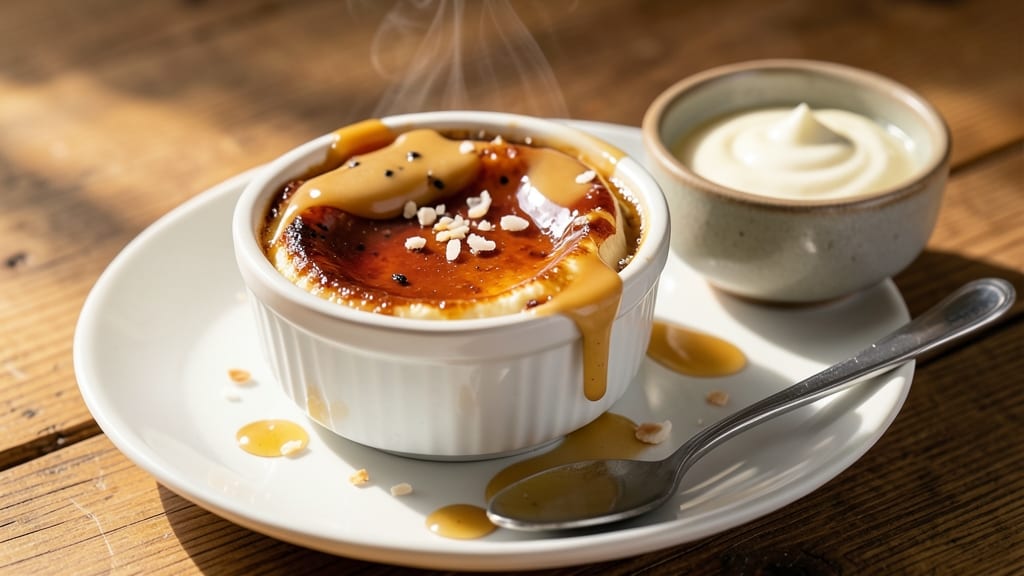
This Vietnamese caramel egg recipe transforms simple eggs into a luxurious dessert with a crispy coconut caramel shell and silky custard center. 🌟 The secret lies in balancing sweetened condensed milk with coconut milk for that signature golden crust, a technique I perfected after years of experimenting with Southeast Asian desserts.
What makes this dish truly special is how it captures the essence of Vietnamese street food—rich, fragrant, and perfectly balanced between textures.
The process begins with hard-boiling eggs, then coating them in a smooth mixture of coconut milk, condensed milk, and a touch of vanilla.
As they bake, the coconut caramel develops a crispy exterior while maintaining a creamy interior—just like the desserts you’d find at Hanoi’s bustling cafés. The aroma alone will transport you to Vietnam, where this treat is a beloved street snack and café staple.
What sets these eggs apart is the contrast: the crispy caramel shell gives way to a tender, custard-like center that’s lightly sweetened but not cloying. The coconut flavor shines through without overpowering, making each bite a harmonious blend of textures and tastes.
This dessert is elegant enough for special occasions but simple enough for a weeknight treat.
Serve them warm or at room temperature, and watch as everyone reaches for seconds. The key to success is patience—letting the caramel set properly ensures that crispy shell you’re craving. Ready to make these Vietnamese caramel eggs? Let’s get started!
Ingredients for vietnamese caramel egg
Four eggs, two milks, and a touch of vanilla—this is all you need for golden, crispy Vietnamese caramel eggs.
| Ingredient | Amount | Notes |
|---|---|---|
| Large Eggs 🥚 | 4 whole | Freshly boiled, room temperature |
| Sweetened Condensed Milk 🥛 | ½ cup | High-quality brand preferred |
| Full-Fat Coconut Milk 🥥 | ½ cup | Canned, well-shaken |
| Pure Vanilla Extract 🌿 | ½ tsp | Bourbon or Madagascar preferred |
| Unsalted Butter 🧈 | 4 tbsp | Melted, full-fat for richness |
| Granulated Sugar 🍚 | ¼ cup | Fine grain preferred |
| Light Corn Syrup 🍯 | 1 tbsp | Or honey for deeper flavor |
| Salt 🧂 | ¼ tsp | Fine sea salt preferred |
| Toasted Coconut Flakes 🥥 | ¼ cup | For garnish, unsweetened |
| Vanilla Bean Seeds 🌿 | 1 tsp | Scraped from 1 bean |
| Ice Water 💧 | 1 cup | For cooling caramel mixture |
The coconut milk makes all the difference—full-fat canned is non-negotiable for that rich, creamy texture. Thai Kitchen or Goya brands work perfectly. Sweetened condensed milk should be thick and smooth; La Vaquita or Nestlé are reliable choices. For the vanilla, Madagascar bourbon extract adds depth, but regular extract works in a pinch. Toast your coconut flakes in a dry pan for 2-3 minutes until golden—this enhances their flavor dramatically. The eggs need to be boiled just right: 9 minutes for a runny yolk or 11 minutes for fully set.
No full-fat coconut milk? Light coconut milk plus 2 tbsp cream gets you close, though the texture won’t be identical. Running out of corn syrup? Maple syrup at half the amount works, but the caramel might set slightly faster. Vanilla bean seeds are ideal, but if you only have extract, double the amount for maximum flavor. For a quicker prep, use pre-boiled eggs from the grocery store (just peel them right before coating). The caramel mixture can be made 2 hours ahead—just reheat gently before using.
Store the caramel mixture in an airtight container in the fridge for up to 5 days. The coated eggs keep for 3 days in the fridge, but they’re best eaten fresh when the caramel is still crispy. For a make-ahead dessert, assemble the coated eggs on a baking sheet, cover with plastic wrap, and refrigerate overnight. Reheat at 350°F for 10-12 minutes to restore that perfect crispy texture. Garnish with toasted coconut flakes right before serving—they add a delightful crunch.
Why You'll Love This Recipe
- Here’s what sold me: that rich, buttery caramel swirl cutting through the custardy egg center. The coconut milk adds depth, while the vanilla ties it all together like a warm hug. It’s not just sweet—it’s ridiculously good, the kind of dessert that disappears too fast.
- Five-Ingredient Magic: I swear by this—just eggs, condensed milk, coconut cream, vanilla, and butter. That’s it. No fancy prep, no last-minute grocery runs. The only real work is cracking eggs and stirring, which takes less time than waiting for coffee to brew.
- Silky Caramel Bliss: Here’s what sold me: that rich, buttery caramel swirl cutting through the custardy egg center. The coconut milk adds depth, while the vanilla ties it all together like a warm hug. It’s not just sweet—it’s ridiculously good, the kind of dessert that disappears too fast.
- Breakfast or Dessert: Between us, I’ve had this for breakfast (yes, really) and as a midnight treat. The creamy texture holds up all day, so it’s perfect for meal prep—just reheat and enjoy. Pack it in a thermos for work, or serve it chilled with ice cream for a fancy dessert moment.
Step-by-step instructions for silky coconut-caramel eggs
Here’s how to make these Vietnamese-inspired eggs with a golden caramel shell and creamy coconut filling.
🍳 Step 1: Boil the Eggs to Perfect Doneness
Place the 4 whole large eggs in a small saucepan and cover them with 1 inch of cold water. Bring to a boil over medium-high heat, then immediately reduce to a gentle simmer. Cook for exactly 9 minutes—this ensures the yolks stay runny while the whites set completely. Drain and transfer the eggs to an ice bath for 5 minutes to stop cooking and make peeling easier.
Peel the eggs under cool running water to remove any remaining shell fragments. The eggs should be completely smooth—any leftover shell bits will make your caramel mixture grainy. Pat them dry with a paper towel and set aside at room temperature until ready to use.
👨🍳 Step 2: Make the Coconut-Caramel Mixture
In a medium saucepan, combine the 0.5 cup sweetened condensed milk, 0.5 cup full-fat coconut milk, 0.25 cup granulated sugar, 1 tbsp light corn syrup, 0.25 tsp salt, 0.5 tsp pure vanilla extract, and 1 tsp vanilla bean seeds. Stir well to dissolve the sugar completely. Place the pan over medium-low heat and bring to a gentle simmer, stirring occasionally to prevent burning.
Let the mixture cook for 8-10 minutes until it thickens slightly and coats the back of a spoon. You’re aiming for a syrupy consistency—it should be thick enough to cling to the eggs but still pourable. Remove from heat and let it cool for 5 minutes while you prepare the next step.
🔥 Step 3: Create the Crispy Caramel Shell
In a separate small saucepan, melt the 4 tbsp unsalted butter over low heat until completely liquid but not browned. Remove from heat and stir in 1 tbsp light corn syrup to create a glossy base for the caramel. Keep this mixture warm but not hot—you want it to coat the eggs gently without burning.
Dip each egg into the butter mixture, coating it evenly. Place the coated eggs on a parchment-lined baking sheet, leaving 1 inch of space between them. Bake at 325°F for 12-15 minutes until the caramel turns a deep golden brown and forms a crispy shell. Watch closely—the caramel burns quickly once it reaches this color!
🥘 Step 4: Assemble and Finish the Eggs
Carefully transfer one egg to a small ramekin or serving dish. Pour 2-3 tablespoons of the warm coconut-caramel mixture over the egg, letting it cascade down the sides. Repeat with the remaining eggs, dividing the mixture evenly. The caramel should pool around the egg, creating a glossy, creamy layer.
Let the eggs sit for 10 minutes to allow the caramel to set slightly. Just before serving, sprinkle each egg with 1 tablespoon toasted coconut flakes for texture and aroma. Serve immediately while the caramel is still warm and the coconut is crisp.
⏰ Step 5: Serve with the Perfect Texture Contrast
Use a small spoon to gently break through the crispy caramel shell, revealing the silky coconut filling inside. The contrast between the crunchy exterior and the smooth, creamy center is what makes these eggs so special. Serve with a dusting of extra coconut flakes and a drizzle of the remaining caramel mixture for an elegant finish.
These eggs are best enjoyed warm, so prepare them fresh and serve immediately. The combination of the buttery caramel shell, rich coconut filling, and toasted coconut topping creates a harmonious balance of textures and flavors that’s pure comfort food.
Pro Tips For Making Vietnamese Caramel Egg
- Whisk Eggs Until Ribbon-Stage: Stop when the mixture holds a slow, thick ribbon between the whisk and bowl—any longer and you’ll overaerate the custard, making it grainy or weak. I learned this the hard way after a batch turned out like scrambled eggs. For this recipe, room-temperature eggs blend smoother, so take them out 30 minutes early.
- Simmer Condensed Milk Low: Heat the sweetened condensed milk and coconut milk together over medium-low—not a rolling boil. I once rushed this and ended up with a grainy caramel instead of a silky sauce. Stir constantly to prevent scorching, and keep it warm, not bubbling, when mixing with the eggs.
- Skip the Overmixing: Once the egg-caramel mixture is combined, stir just until the condensed milk is fully incorporated—about 10 seconds. Overmixing introduces air bubbles that pop during baking, leaving sinkholes in your custard. Tap the pan gently on the counter afterward to release any trapped air.
- Use Cold Butter for Crisp: Dot the custard with cold, cubed butter right before baking—it melts slowly and creates a glossy, crackly top instead of sinking into the pudding. I was skeptical until I tried it; the contrast of the crisp caramel shell with the creamy center is what makes this dish special. No need to preheat the butter, just scatter it evenly.
Troubleshooting this dish
Eggs too soft?
If your eggs turn out too soft or undercooked, it’s likely due to boiling time or temperature. For runny yolks, boil for exactly 9 minutes—any longer and the yolks will firm up. Use a candy thermometer to monitor water temperature: it should reach 205-210°F for perfect doneness.
If eggs are still runny after baking, return them to a 300°F oven for 2-3 minutes to set the caramel shell properly. 💡
Caramel not crispy?
The key to crispy caramel is baking at the right temperature and timing. If your caramel stays sticky, you may have baked at too low a temperature (325°F is ideal). For extra crispiness, broil for 1-2 minutes at the end—watch closely to avoid burning!
Also, ensure your eggs are completely dry before coating; any moisture will prevent the caramel from setting properly. A wire cooling rack helps the caramel crisp up faster after baking.
Mixture too thin?
A thin caramel mixture usually means it wasn’t cooked long enough or the heat was too low. Simmer the coconut-caramel blend for an extra 2-3 minutes until it thickens to a syrupy consistency (it should coat the back of a spoon).
If it’s still too runny, stir in 1 tsp cornstarch mixed with 1 tsp water and cook for another minute. For a thicker base, reduce the coconut milk by 2 tbsp next time. 🥥
Shell cracking?
Cracking happens when the caramel sets too quickly or the eggs cool too fast. To prevent this, let the caramel mixture cool for 5 minutes before coating the eggs, and avoid placing them in the fridge immediately after baking.
Instead, let them sit at room temperature for 10 minutes to allow the caramel to set gradually. If cracks still form, gently reheat the eggs in a 200°F oven for 5 minutes to soften the caramel slightly before serving.
Flavor too sweet?
If the caramel tastes overwhelmingly sweet, balance it by adding ½ tsp salt or a pinch of ground cardamom (a common Vietnamese spice). Reduce the granulated sugar by 1 tbsp next time and increase the coconut milk slightly to dilute the sweetness.
For a more authentic flavor, add ½ tsp pandan extract or a few drops of rose water—both are staples in Vietnamese desserts. 🌿
Caramel too thick?
Over-thickened caramel can happen if cooked too long or if the mixture wasn’t stirred enough. Thin it out by adding 1 tbsp warm water or coconut milk and reheating gently. For future batches, keep a close eye on the heat—medium-low is key—and stir frequently to prevent sticking.
If the caramel is unworkably thick, stir in 1 tsp light corn syrup to restore pourability. Always taste as you go! 🔥
Nutrition facts
Frequently asked questions
Can I use store-bought custard eggs instead of boiling my own?
Yes! Store-bought custard eggs work perfectly for this recipe. They save you time and ensure a silky texture without the hassle of peeling. Just make sure they're fully chilled before coating in the caramel mixture to prevent melting.
How do I make these eggs vegan?
Replace the eggs with 4 firm tofu blocks (pressed and cut into egg shapes) or 4 silken tofu spheres. Use vegan condensed coconut milk instead of dairy condensed milk, and ensure your butter is vegan. The coconut caramel coating will still crisp beautifully!
Can I prepare the caramel mixture ahead of time?
The coconut-caramel mixture can be made up to 5 days in advance and stored in an airtight container in the fridge. Reheat gently over low heat, stirring occasionally, until smooth before using. This makes assembly much easier on serving day.
What's the best way to serve these Vietnamese caramel eggs?
These eggs shine as a dessert or late-night snack. Serve them warm in small ramekins with a dusting of toasted coconut flakes and a drizzle of extra caramel. For a Vietnamese café touch, pair them with strong egg coffee (cà phê trứng) or a scoop of coconut ice cream.
Why does my caramel turn out grainy?
Graininess usually means tiny shell fragments got into your caramel mixture or it wasn't stirred enough while cooking. Always peel eggs completely under cool water, and whisk the caramel mixture constantly on medium-low heat. If it happens, strain the mixture through a fine-mesh sieve before using.