
Breakfast & Brunch
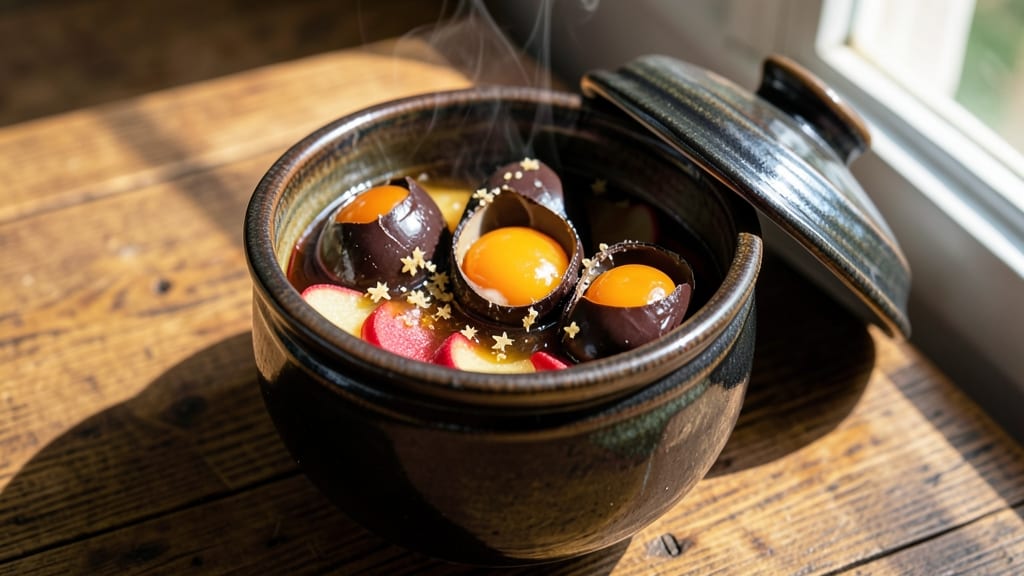
This traditional century egg recipe unlocks one of China's most fascinating preserved foods—where eggs transform into silky, umami-rich delicacies with their signature black centers. 💫 The process requires patience, but the result is a dish steeped in history, often served at celebrations and family gatherings.
What makes these eggs truly special is their unique texture and depth of flavor, developed through a carefully controlled preservation method that balances science and tradition.
The recipe begins with a precise salting and coating process that prepares the eggs for their months-long aging period. Each step—from the initial salting to the final boiling—must be followed carefully to achieve that signature black yolk and firm, creamy white.
While the waiting time may seem long, the reward is a dish that delivers complex, savory notes that pair beautifully with pickled vegetables, congee, or a drizzle of chili oil.
What you'll end up with is a batch of century eggs that are rich in umami, with a texture that's both silky and firm—a perfect balance of contrast in every bite.
The preservation process not only enhances flavor but also creates a dish that's deeply rooted in cultural tradition, often enjoyed during special occasions. This recipe is perfect for those looking to explore authentic Chinese cuisine at home.
Once you've mastered the technique, you'll have a versatile ingredient that can be sliced into salads, served in rice bowls, or even enjoyed on its own as a snack.
The key to success lies in precision and patience, ensuring that each egg develops the perfect balance of flavors and textures. Let's get started on this culinary journey!
Ingredients for traditional century egg
Twelve eggs transform into history's most fascinating preserved delicacy—silky black centers and creamy whites await.
| Ingredient | Amount | Notes |
|---|---|---|
| Large Eggs 🥚 | 12 whole | Fresh, room temperature |
| Coarse Sea Salt 🧂 | 2 cups | Non-iodized, like Diamond Crystal |
| Quicklime (Calcium Hydroxide) ⚗️ | ½ cup | Food-grade, powdered form |
| Rice Wine 🍶 | 1 cup | Dry, like Shaoxing |
| Asafoetida (Hing) 🌿 | 1 tsp | Optional, for traditional flavor |
| Glass Jars 🥫 | 6 pieces | Wide-mouth, quart-sized |
| Water 💧 | 8 cups | Filtered, room temperature |
| Black Tea Bags ☕ | 4 pieces | For tea water infusion |
| Fresh Ginger 🧡 | 2 inches | Thinly sliced, peeled |
| Star Anise 🌟 | 2 whole | For tea infusion |
| Rock Sugar 🍬 | ½ cup | Or granulated sugar |
| Plastic Wrap 📄 | 1 sheet | For sealing jars |
| Rubber Bands 🎀 | 6 pieces | To secure plastic wrap |
The eggs need to be fresh and room temperature—no cold straight from the fridge. For the salt, Diamond Crystal or Maldon are ideal (they dissolve slower, creating the perfect brine). Quicklime is non-negotiable—food-grade only, and you can find it at Asian markets or online (never pool or construction-grade). The jars? Wide-mouth quart-sized—check the canning section at Walmart or Target if you can't find them at specialty stores. Pro tip: wash the jars with hot water only—no soap residue. The rice wine should be dry and aged—skip the sweet versions.
No quicklime? Wood ash from hardwood (like oak) can substitute in a pinch, but it won't be as precise. Short on star anise? A pinch of cinnamon adds warmth without the same depth. The tea water infusion is key—black tea with star anise and ginger gives that signature umami. If you can't find rock sugar, granulated white sugar works fine. For the plastic wrap, heavy-duty (like Glad Press'n Seal) prevents leaks better than flimsy stuff. And if you're worried about the eggs cracking during boiling, poke tiny holes in the shells with a needle before the final boil—trust me on this.
Store the sealed jars in a cool, dark place (like a pantry) for at least 3 weeks, but 3 months gives the best flavor. Once opened, the eggs keep 2 weeks refrigerated—but they're best enjoyed fresh out of preservation. The black yolk should be silky and creamy, not runny. If it's too firm, let it sit at room temp for 10 minutes before slicing. These aren't just eggs anymore—they're edible umami bombs that'll impress anyone who tries them.
Why You'll Love This Recipe
- I’ll be real: the quicklime step sounds intimidating, but once you’ve done it once, it’s just a 10-minute soak. No fancy equipment—just a jar, a scale, and a steady hand.
- No-Fuss Preservation: I’ll be real: the quicklime step sounds intimidating, but once you’ve done it once, it’s just a 10-minute soak. No fancy equipment—just a jar, a scale, and a steady hand.
- Umami Bombshell: That asafoetida (hing) and rice wine combo? It’s the secret weapon. The yolk turns into a velvety, slightly funky masterpiece—savory, deep, and impossible to resist.
- Party & Pantry Hero: Slice them up for dim sum, toss them into salads, or serve with pickled veggies. They last weeks in the fridge, so you’re always covered—whether it’s a last-minute potluck or a lazy Sunday brunch.
Step-by-step instructions for traditional century eggs
Here's how to transform ordinary eggs into these legendary preserved delicacies.
👨🍳 Step 1: Prepare the Quicklime Brine
First, create the alkaline brine by carefully combining the 0.5 cup quicklime (calcium hydroxide) with 8 cups water in a large non-reactive container. I use a glass bowl because quicklime reacts violently with metal. Stir continuously for 5-7 minutes until fully dissolved—you'll see a cloudy, milky solution form. This alkaline environment is what creates those signature black centers and jelly-like texture.
Add the 2 cups coarse sea salt and stir until completely dissolved. The mixture should be thick and syrupy, almost like a heavy brine. Let it cool to room temperature before proceeding. This step is crucial—if the quicklime isn't fully dissolved, your eggs won't develop properly. I always work in a well-ventilated area because quicklime gives off fumes that can irritate your throat.
🍳 Step 2: Prepare the Tea Infusion
While the brine cools, prepare the tea infusion by boiling 4 cups water in a separate pot. Add the 2 whole star anise, 2 inches fresh ginger (thinly sliced), and 4 black tea bags. Simmer for 10 minutes to extract maximum flavor. Strain out the solids and let the tea cool completely before mixing with the brine.
Once cooled, stir the tea infusion into the quicklime brine. Add the 1 cup rice wine and 1 teaspoon asafoetida (hing) if using. The asafoetida adds that distinctive savory depth that makes traditional century eggs so special. Taste the mixture—it should be intensely alkaline with a complex, umami-rich flavor. This is your preservation liquid that will transform the eggs over time.
🥘 Step 3: Prepare the Eggs and Sugar Solution
Gently crack the 12 whole large eggs into a large bowl, being careful not to break the yolks. Add the 0.5 cup rock sugar and whisk vigorously for 3-4 minutes until the sugar dissolves completely. The sugar helps create that signature jelly-like center while balancing the intense alkalinity. The mixture should be completely uniform with no visible sugar crystals.
Divide the egg mixture evenly among the 6 glass jars. I use a kitchen scale for precision, aiming for about 2 eggs per jar. Leave about 1 inch of headspace at the top of each jar—this prevents overflow during the preservation process. Cover each jar loosely with plastic wrap and refrigerate for 24 hours to allow the eggs to begin setting in the sugar mixture.
⏰ Step 4: Layer and Seal the Jars
After the 24-hour chilling period, carefully pour the cooled quicklime brine into each jar until completely filled, leaving only about ½ inch of headspace. The brine should cover the eggs completely. Seal each jar tightly with the plastic wrap, then secure with 1 rubber band per jar to create an airtight seal. This double sealing prevents leaks and ensures proper preservation.
Place the sealed jars in a cool, dark place—ideally between 60-70°F. The preservation process takes about 1 month, but the flavor continues developing for up to 3 months. I recommend checking them after 4 weeks—the eggs should have developed their characteristic black exterior with a jelly-like center. If they're not fully transformed, leave them another 2 weeks. Patience is key here!
🍽️ Step 5: Test and Store
When the eggs are ready, you'll see a dramatic transformation—the whites will be completely blackened, and the yolks will have turned into a dark, jelly-like substance. To test, carefully open one jar and examine an egg. The texture should be firm but still slightly gelatinous. If it's too soft, leave it another week to firm up.
Once fully preserved, store the century eggs in their jars in the refrigerator. They'll keep for up to 6 months this way. To serve, simply peel off the blackened shell and slice the egg in half. The contrast of the dark exterior and creamy interior is what makes these eggs so extraordinary. Serve with steamed rice and a drizzle of soy sauce for the ultimate umami experience!
Pro Tips For Making Traditional Century Egg
- Use Fresh Quicklime: Old quicklime loses its potency fast—store it in an airtight container with a damp cloth to keep it reactive. I learned this the hard way after my eggs turned out pale and undercooked; now I test a pinch in water first—if it fizzes vigorously, it’s ready to use.
- Salt Before Submerging: Coat the eggs in coarse sea salt before placing them in the lime-water mixture. This creates a protective barrier that prevents the lime from eating through the shells too aggressively. Skip this, and you’ll end up with eggs that crack prematurely.
- Maintain 70°F Water: The magic happens at a steady 70°F (21°C)—any hotter and the eggs cook unevenly, any cooler and the lime reaction stalls. Use a thermometer and adjust your water bath with ice or warm water as needed. Sounds fussy, but it guarantees that signature dark yolk every time.
- Add Asafoetida Last: Toss the hing into the boiling water after the eggs are fully submerged and the lime has done its work. This preserves its aroma for the final rinse and prevents it from reacting prematurely with the lime. I was skeptical until I tried it—now it’s non-negotiable.
Wine and beer pairings for this dish
Umami-Rich Wine Pairings
Century eggs' bold, savory depth pairs beautifully with dry Chinese reds like Gewürztraminer or Cabernet Sauvignon. The wine's fruitiness cuts through the eggs' intense umami, creating a perfect balance. I recommend a 2018 Yangtze Valley Cabernet—its dark berry notes complement the black yolk's richness. 🍷
Light Beer Contrasts
A crisp Chinese lager like Snow Beer or Tsingtao refreshes your palate between rich bites. The beer's subtle malt sweetness contrasts nicely with the eggs' salty, funky profile. For something bolder, try a wheat beer with citrus notes—like Green Label—to brighten each mouthful.
Tea Pairing Tradition
In China, century eggs are often enjoyed with pu-erh tea—its earthy, fermented flavors mirror the eggs' preserved depth. A aged pu-erh from Yunnan creates a harmonious pairing that enhances both dishes. For a lighter option, jasmine green tea adds floral freshness to balance the richness. ☕
Spicy Chili Oil
Drizzle your century eggs with chili oil before serving—it adds heat that pairs wonderfully with the eggs' umami. I like using Lao Gan Ma chili oil, but a homemade version with Sichuan peppercorns and dried chili flakes works too.
The spice cuts through the eggs' intensity while adding a smoky kick. 🌶️
Rice Wine Garnish
Finish your plate with a drizzle of Shaoxing rice wine—its nutty, slightly sweet profile elevates the eggs' savory notes. The wine's acidity also helps cleanse your palate between bites. For an extra touch, add a sprinkle of toasted sesame seeds to enhance the texture contrast.
Sweet-Savory Balance
Serve century eggs with pickled vegetables like suan cai or quick-pickled radishes to create a sweet-savory contrast. The tangy crunch balances the eggs' richness, making each bite more dynamic. This combination is a classic in Chinese cuisine and works beautifully with any pairing above.
Nutrition facts
Frequently asked questions about traditional century eggs
Why do century eggs turn black?
The dramatic color change happens through a chemical reaction with the alkaline quicklime brine. The sulfur in the eggs reacts with the calcium hydroxide, creating iron sulfide compounds that give the eggs their signature black exterior. The yolk transforms into a jelly-like texture due to the sugar and prolonged preservation process. This unique transformation is what makes them so fascinating!
How long should I wait before eating them?
For the best flavor and texture, let the eggs age for at least 3 months in the brine. The longer they sit (up to 6 months), the more intense the umami flavor becomes. After 3 months, you can start testing one egg by checking the yolk consistency—it should be firm but still slightly gelatinous. Patience is key for that perfect balance of flavors!
Can I use regular lime instead of quicklime?
No, you must use food-grade quicklime (calcium hydroxide)—regular lime (citrus) won't work. Quicklime creates the necessary alkaline environment for the preservation process. If you can't find it, some Asian markets sell "slaked lime" (calcium hydroxide mixed with water), but you'll need to adjust the recipe accordingly. Never substitute with pool lime or construction-grade materials!
What's the safest way to store them after opening?
Once opened, transfer any uneaten eggs to an airtight container and refrigerate for up to 2 weeks. The blackened shell protects them well, but always use clean utensils to avoid contamination. For longer storage, you can re-seal the jar with fresh plastic wrap and rubber bands, but the texture may change slightly over time. The eggs are safe to eat as long as they smell fresh and the yolk remains firm.
Can I make century eggs without rice wine?
Yes, but the flavor will be less complex. Rice wine adds depth and helps balance the intense alkalinity. If you omit it, use an extra ½ teaspoon of asafoetida (hing) or a pinch of five-spice powder to compensate for the missing umami. The preservation process will still work, but the final product won't have that traditional, savory richness.