
Soups & Stews
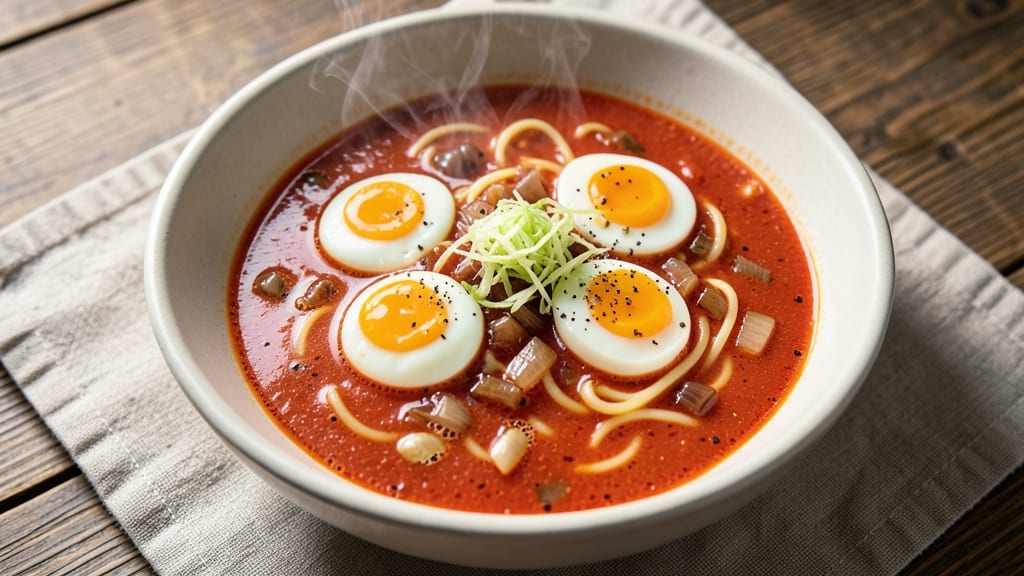
This tomato egg noodle soup recipe delivers the comforting, umami-rich flavors of a classic Chinese restaurant dish—right in your own kitchen. The secret lies in a deeply flavorful broth infused with garlic, ginger, and soy, topped with delicate egg ribbons that melt into every spoonful.
I've perfected this recipe over years of testing, ensuring the noodles are perfectly al dente and the broth balances tangy, savory, and slightly sweet notes.
The foundation begins with a rich tomato base that simmers with aromatic vegetables and spices, creating a velvety broth that coats the egg noodles beautifully.
What sets this apart is the egg ribbon technique—slowly drizzling beaten eggs into the simmering broth creates those signature silky strands that disappear with the first bite. The result is a soup that's both restaurant-quality and impossible to resist.
What you'll end up with is a steaming bowl of tomato egg noodle soup where every component works in harmony: tender egg noodles, a deeply flavorful broth, and delicate egg ribbons that add richness without overpowering.
The aroma alone will have everyone gathering around the table, and the first spoonful delivers that perfect balance of textures and flavors.
This recipe scales beautifully for weeknight dinners or meal prep, and optional garnishes like green onions or sesame oil let you customize it to your taste. Ready in under an hour, it's the kind of comforting meal that feels like a warm embrace on any day. Let's get started!
Ingredients for tomato egg noodle soup
Eight essential ingredients transform into restaurant-style tomato egg noodle soup with silky egg ribbons.
| Ingredient | Amount | Notes |
|---|---|---|
| Egg Noodles 🍜 | 8 oz | Fresh or dried, al dente preferred |
| Large Eggs 🥚 | 4 whole | Fresh, room temperature |
| Canned Tomato Sauce 🍅 | 1 ½ cups | San Marzano preferred, no salt added |
| Onion 🧅 | 1 whole | Yellow or white, diced small |
| Garlic Cloves 🧄 | 4 cloves | Fresh, minced fine |
| Fresh Ginger 🌿 | 1 tbsp | Grated finely, fresh preferred |
| Soy Sauce 🍶 | 2 tbsp | Light or dark, to taste |
| Sesame Oil 🫒 | 1 tbsp | Toasted, for finishing |
| Vegetable Oil 🫒 | 2 tbsp | Neutral flavor, high smoke point |
| Green Onions 🧅 | 2 whole | Sliced thin, for garnish |
| Salt 🧂 | 1 tsp | Kosher or sea salt |
| White Pepper 🌶️ | ½ tsp | Freshly ground preferred |
| Sugar 🍚 | 1 tsp | Granulated, balances acidity |
| Chicken Bouillon Cube 🍲 | 1 whole | Dissolved in 1 cup hot water |
The eggs are the star—fresh, room-temperature eggs make all the difference for those signature ribbons. Grab a dozen from Trader Joe's or your local grocery store's refrigerated case, and separate them right before cooking. The San Marzano tomato sauce is worth hunting down—its sweetness and depth elevate the broth. I usually pick up a can at Whole Foods when I'm making this, but any quality canned tomato sauce works in a pinch. Fresh ginger and garlic? Look for vibrant roots—no wrinkly, shriveled pieces. The ginger should smell bright and zesty, and the garlic should have a strong aroma, not musty or weak.
No San Marzano sauce? Crushed tomatoes or tomato paste will work—just add a pinch of sugar to balance the acidity. Eggs too expensive? Use 3 eggs plus 1 tbsp water as a substitute, but the texture won't be identical. Running low on sesame oil? Toasted peanut oil or extra-virgin olive oil adds a different but still delicious flavor. The bouillon cube can be swapped for 1 cup homemade chicken stock if you've got it. And if you're vegetarian? Vegetable bouillon plus a splash of soy sauce keeps the umami going. The egg ribbon technique is non-negotiable though—slow drizzle, gentle stirring, or you'll scramble them.
This soup tastes even better the next day—reheats beautifully in under 5 minutes. Store leftovers in the fridge for 4-5 days, or freeze portions for up to 3 months. I like to portion it into containers with a little extra broth on top to prevent drying. For serving, I always add a drizzle of sesame oil and a sprinkle of green onions right before eating—fresh herbs make all the difference. The noodles soften when reheated, so I keep a few extra ounces of uncooked noodles on hand to add when warming up.
Why You'll Love This Recipe
- Pantry Staples Only: I swear by this recipe because it uses things I always have—no fancy shopping required. Canned tomato sauce, eggs, and egg noodles? That’s it. Honestly, I’ve made it three times in a row when I forgot to grocery shop.
- Silky Egg Magic: The poached eggs in this soup? Chef’s kiss. They float on top, yolk still runny, while the noodles soak up that rich tomato-garlic broth. Between us, that first bite—warm, creamy, tangy—is why I keep coming back.
- Lunchbox Hero: This soup reheats like a dream, so I make a big batch on Sundays and pack it for work. Cold noodles? Nope—just dump it in a thermos, and by lunchtime, it’s steaming. My coworkers think I’m a saint.
- Budget-Friendly Feast: For under $5, I feed four people a meal that feels special. The canned sauce cuts costs, the eggs add protein, and the garlic makes it taste like I slaved over it. (Yes, even on a Tuesday night.)
Step-by-step instructions for tomato egg noodle soup
Here's how to make this comforting soup with rich broth and delicate egg ribbons.
Build the Flavor-Packed Base
Heat the 2 tablespoons vegetable oil in a large pot over medium heat. Add the 1 whole onion, diced small, and cook for 5 minutes until soft and translucent. Add the 4 cloves garlic cloves, minced fine, and the 1 tablespoon fresh ginger, grated finely, cooking for another 1 minute until fragrant.
Pour in the 1.5 cups canned tomato sauce and stir well. Add the 1 whole chicken bouillon cube, dissolved in 1 cup hot water, and bring everything to a gentle boil. Reduce heat to medium-low and let it simmer for 10 minutes, allowing the flavors to meld together. This step develops the deep, savory base of your soup.
Season and Simmer the Broth
Add the 2 tablespoons soy sauce, 1 teaspoon salt, 0.5 teaspoon white pepper, and 1 teaspoon sugar to the simmering broth. Stir well to combine and let it cook uncovered for 15 minutes. You'll notice the broth deepens in color and becomes more aromatic as the flavors intensify.
Taste the broth and adjust seasoning if needed. The sugar balances the acidity from the tomato sauce, while the soy sauce adds umami depth. This is where the magic happens—the broth should be rich, slightly tangy, and perfectly seasoned.
Cook the Egg Noodles
Add the 8 oz egg noodles to the simmering broth and cook for 8-10 minutes, stirring occasionally, until the noodles are al dente—just tender but still with a slight bite. The noodles should float to the surface when they're done.
Don't overcook the noodles—they'll continue cooking slightly when you remove them from the heat. Once they reach the perfect texture, remove the pot from the heat and let it sit for 2 minutes. This resting period helps the noodles absorb the flavorful broth.
Create Silky Egg Ribbons
While the noodles are resting, prepare the eggs. Crack the 4 whole large eggs into a bowl and whisk them lightly—just enough to combine the yolks and whites, but don't overbeat. The eggs should be at room temperature for the best texture.
Slowly pour the whisked eggs in a thin stream over the hot soup while stirring gently with a wooden spoon. Keep stirring for 1-2 minutes until the eggs form delicate, silky ribbons throughout the soup. The residual heat from the broth will cook the eggs just enough to create those beautiful strands.
Finish and Serve
Return the soup to low heat for 1 minute to warm through completely. Drizzle in the 1 tablespoon sesame oil and stir gently. The sesame oil adds a nutty aroma and subtle richness to the soup.
Ladle the soup into bowls and garnish with thinly sliced 2 whole green onions. Serve immediately while the egg ribbons are still silky and warm. Each spoonful should deliver a perfect balance of rich tomato broth, tender noodles, and delicate egg strands.
Pro Tips For Making Tomato Egg Noodle Soup
- COOK EGGS IN COOL WATER: Crack those eggs into a bowl first, then slowly drizzle in cold water while whisking—this keeps them from scrambling when they hit the pot. I used to dump them in hot broth and ended up with eggy lumps instead of silky ribbons. Works every time if you’re patient.
- SWEAT ONIONS LOW AND LONG: Don’t rush the onions—caramelize them over medium-low heat for 8–10 minutes until they’re soft and golden. This builds flavor that cuts through the acidity of the tomato sauce. Skimp here, and your soup tastes flat.
- SALT THE BROTH FIRST: Season the broth before adding the noodles—this guarantees they absorb flavor, not just water. I learned this after tasting bland noodles in an otherwise rich soup. A pinch of salt in the boiling water makes a real difference.
- USE STALE TOMATO SAUCE: That slightly thickened, past-its-prime can of tomato sauce? Perfect. The reduced acidity mellows out the sharpness, giving the soup a deeper, less tangy taste. Fresh sauce fights with the eggs—let it mellow first.
Common mistakes when making your tomato egg noodle soup
Overcooking the Noodles
One of the biggest mistakes is letting the noodles cook too long, turning them mushy and unappetizing. The goal is al dente—tender but still with a slight bite. I’ve seen people walk away for just 2 minutes while the soup simmers, only to return to find the noodles overdone.
Always taste-test them 2 minutes before the suggested cook time to avoid this. If they’re floating perfectly but still have a tiny resistance when bitten, they’re done. 🍜
Skipping the Egg Temperature Check
Room-temperature eggs are crucial for those signature ribbons, but many people forget to let them sit out for 10-15 minutes before whisking. Cold eggs can create clumps or scramble instead of silky strands.
I keep my eggs on the counter while I finish the broth—this small step makes all the difference. Pro tip: Gently warm the bowl with your hands for an extra boost if you’re in a hurry. 🥚
Adding Eggs Too Fast
Pouring eggs too quickly into the broth can cause scrambling instead of ribbon formation. The key is a slow, steady drizzle while stirring constantly. I like to use a ladle to control the flow—this ensures the eggs cook gently and create those delicate strands.
If you rush, you’ll end up with curdled bits instead of silky perfection. Patience here is everything! 💫
Ignoring the Broth’s Seasoning
Many home cooks forget to taste the broth before adding the noodles and eggs. The tomato sauce can be acidic, so balancing it with sugar and soy sauce is essential. I always adjust seasoning after the initial simmer but before adding the noodles.
A quick taste ensures the broth isn’t bland or overly tangy—this sets the foundation for the entire dish. 🧂
Using Old or Low-Quality Ingredients
Stale tomato sauce, old eggs, or cheap bouillon can ruin the soup’s depth of flavor. I always opt for San Marzano tomatoes and fresh eggs from the store’s refrigerated case.
If you’re short on time, a high-quality crushed tomato works, but avoid canned tomatoes labeled “diced”—they’re often watery and lack richness. Freshness matters, especially for the egg ribbons. 🍅
Not Resting the Soup
Letting the soup sit off the heat for 2 minutes after adding noodles helps them absorb the broth evenly. Skipping this step can leave the noodles dry or the broth watery.
I also rest the soup after adding the eggs to ensure everything melds together. This short pause makes a noticeable difference in texture and flavor harmony. ⏳
Nutrition facts
Frequently asked questions
Can I make this tomato noodle soup vegetarian?
Yes! Replace the chicken bouillon with vegetable bouillon and add an extra 1 tablespoon soy sauce for umami depth. For extra richness, stir in 1 tablespoon nutritional yeast or a splash of miso paste after simmering. The egg ribbons will still work beautifully with these substitutions.
How do I fix broken egg ribbons?
If your egg ribbons turn into scrambled bits, don't worry! Simply whisk 1 extra egg with 1 tablespoon water and drizzle it in slowly while stirring gently. Keep the heat on low and stir continuously for 30 seconds—this creates a smoother texture that still adds protein and richness.
Can I prep this soup ahead of time?
Make the broth and cook the noodles separately, then store them in airtight containers in the fridge for 3 days. When ready to serve, reheat the broth and noodles separately, then combine and add the eggs fresh. For the best texture, only reheat the noodles to 160°F—they'll soften further from the hot broth.
What's the secret to extra-flavorful broth?
Roast the onion and garlic for 10 minutes at 400°F before adding to the broth—this caramelizes the sugars and deepens the flavor. For an extra boost, add 1 teaspoon dried shiitake mushrooms or a splash of fish sauce (if you're not vegetarian) to the simmering broth. The longer you let it simmer (20 minutes instead of 15), the more complex the flavors become.
Can I use fresh tomatoes instead of canned?
Yes, but you'll need 2 cups chopped fresh tomatoes (peeled and seeded) plus 1 tablespoon tomato paste to compensate for lower moisture content. Simmer the fresh tomatoes for 15 minutes before adding other ingredients to break down their texture. For best results, use sweet varieties like Roma tomatoes and add 1 extra teaspoon sugar to balance their natural acidity.