
Breakfast & Brunch
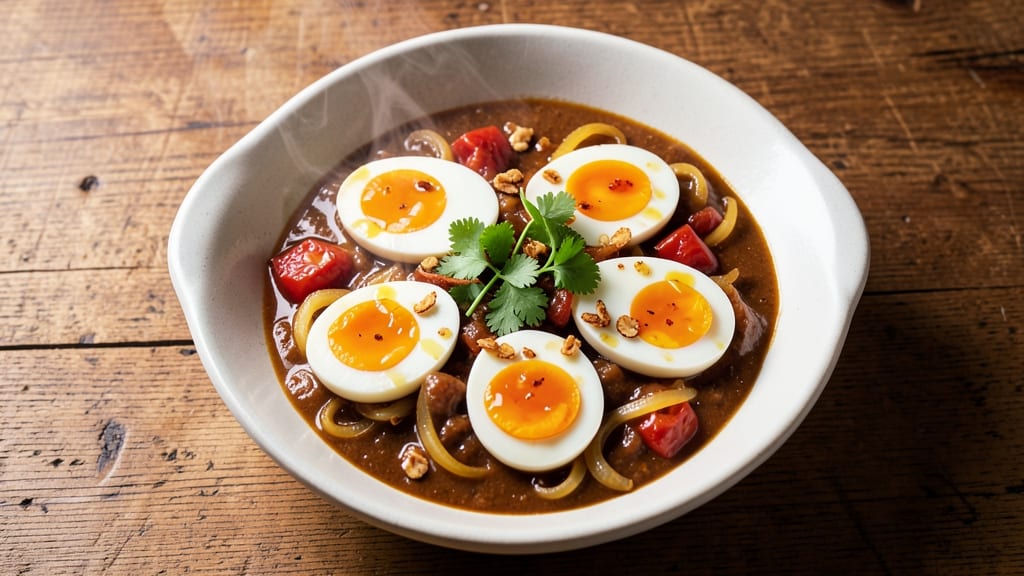
This thick egg curry recipe transforms simple eggs into a luxurious, velvety dish where spices and coconut milk create a rich, gravy-like texture. The secret lies in slow cooking and proper thickening techniques that balance creaminess with bold flavors—no lumps or thin sauces here.
I've perfected this version after years of testing, ensuring every bite delivers that perfect harmony of spice and richness.
The foundation starts with aromatic spices toasted in oil until fragrant, then building layers of flavor through tomatoes and coconut milk. Hard-boiled eggs are gently folded in to maintain their shape while soaking up the spiced sauce, creating a dish that's both hearty and elegant.
This isn't your average scrambled egg curry—it's a restaurant-quality meal with depth and complexity.
By the time you're done, you'll have a curry so thick it coats every spoonful, with tender eggs swimming in a velvety sauce that's neither too sweet nor too spicy. The coconut milk adds natural sweetness that balances the heat, while the spices develop into a fragrant, aromatic base.
This dish pairs beautifully with steamed rice or warm naan to soak up every last drop.
What makes this recipe special is its versatility—adjust the spice level to your preference, or add vegetables like potatoes or peas for extra heartiness. The thickening method ensures a perfect consistency every time, making this curry impressive yet approachable for home cooks. Let's create this flavorful masterpiece together.
Ingredients for thick egg curry
Eight eggs plus spices and coconut milk make this velvety curry restaurant-worthy at home.
| Ingredient | Amount | Notes |
|---|---|---|
| Large Eggs 🥚 | 8 whole | Hard-boiled, peeled, cut in half |
| Vegetable Oil 🫒 | ½ cup | For spice toasting |
| Yellow Onion 🧅 | 1 whole | Finely chopped |
| Garlic Cloves 🧄 | 6 cloves | Minced |
| Canned Crushed Tomatoes 🍅 | 14 oz | San Marzano preferred |
| Full-Fat Coconut Milk 🥥 | 13 ½ oz | One 13.5 oz can |
| Ground Cumin 🌿 | 1 tbsp | Toasted for depth |
| Ground Coriander 🌿 | 1 tbsp | Freshly ground preferred |
| Turmeric Powder 🌿 | 1 tsp | Bright yellow color |
| Garam Masala 🌶️ | 1 tsp | Store-bought blend |
| Salt 🧂 | 1 ½ tsp | Kosher or sea salt |
| Lemon Juice 🍋 | 1 tbsp | Freshly squeezed |
| Fresh Cilantro 🌿 | ¼ cup | Chopped for garnish |
| Unsalted Butter 🧈 | 1 tbsp | For thickening |
The coconut milk is non-negotiable here—full-fat gives that luxurious texture. Thai Kitchen or Native Forest brands are my go-tos for consistency, but any canned full-fat works. For the tomatoes, San Marzano is ideal if you want that sweet, rich flavor, but regular crushed tomatoes work fine. The eggs? Large eggs hold up best when hard-boiled and halved. Pro tip: Toast your spices in oil for 30 seconds before adding onions—this wakes up their flavors and makes the whole curry sing. Penzeys spices are my secret weapon for bold, aromatic blends.
No coconut milk? Heavy cream at half the amount works in a pinch, but the flavor won't be the same. Short on garam masala? Mix 1/2 tsp each cumin, coriander, cinnamon, and cardamom—it's a decent stand-in. The butter at the end is key for that velvety finish. Don't skip it—it's what turns this from good to amazing. Fresh cilantro is ideal, but dried won't ruin it. If you're sensitive to heat, reduce the cayenne or add more coconut milk to balance. The lemon juice brightens everything up—freshly squeezed makes all the difference.
This curry tastes even better the next day as the flavors meld. Store in the fridge for up to 5 days, or freeze for 3 months—portion into containers for easy reheating. The sauce thickens as it cools, so you can thin it with a splash of water if needed. Serve with steamed basmati rice or warm naan to soak up every last bit of that rich, spiced sauce. Leftovers reheat beautifully—just stir in a splash of water or coconut milk if it gets too thick.
Why You'll Love This Recipe
- One-Pan Magic: I swear by this—just fry the onions and garlic in oil, toss in the eggs, then blanket everything with tomatoes. No extra pots, no mess. Honestly, I’ve made curries that needed five steps; this one’s my lazy-day hero.
- Rich Without Effort: That crushed tomato base? It’s the secret. Simmer it down with the eggs, and suddenly you’ve got a sauce so thick and velvety it feels like you slaved over it. (Between us, the garlic cloves get toasted until they’re just golden—trust me, that’s everything.)
- Lunchbox Hero: Make a double batch on Sunday, and you’ve got dinner covered for days. The eggs hold up perfectly in the fridge, and reheating it? Just a splash of water, a quick stir. My kids pack it in their lunches—yes, even on a Tuesday night.
- Pocketbook-Friendly Power: Eggs and canned tomatoes? Budget staples that punch above their weight. This curry feeds four for under $5, and I’ve never once felt like I compromised on flavor. Here’s what sold me—the simplicity doesn’t skimp on satisfaction.
Step-by-step instructions for thick egg curry
Let's create a rich, velvety curry with tender eggs and aromatic spices.
🍳 Step 1: Toast the Spices in Warm Oil
Heat the 0.5 cup vegetable oil in a large, heavy-bottomed pot over medium heat. Once the oil shimmers but isn't smoking, add the 1 tablespoon ground cumin and 1 tablespoon ground coriander. Toast for 1-2 minutes until fragrant—you'll smell that warm, earthy aroma that signals the spices are ready.
Next, add the 1 whole finely chopped yellow onion and cook for 5-6 minutes until softened and golden. Stir in the 6 minced garlic cloves and cook for another 30 seconds until the raw garlic smell disappears. This step builds the flavor foundation—don't rush it. If the onions start to brown too quickly, reduce the heat slightly to prevent burning.
🍳 Step 2: Build the Spiced Tomato Base
Add the 14 ounces canned crushed tomatoes, stirring to combine with the spice mixture. Increase heat to medium-high and let the tomatoes simmer uncovered for 8-10 minutes, stirring occasionally. This reduces the tomatoes slightly and deepens their flavor. You'll notice the mixture darkening and thickening—this is where the rich, concentrated tomato flavor develops.
Now stir in the 1 teaspoon turmeric powder, 1 teaspoon garam masala, and 1.5 teaspoons salt. Cook for another 2 minutes, allowing the spices to bloom and infuse the tomato mixture. The curry should smell complex—warm, slightly sweet, with hints of earthy cumin and citrusy coriander. If it starts to stick, add 1-2 tablespoons water to keep it moving.
🍳 Step 3: Simmer with Coconut Milk and Eggs
Pour in the 13.5 ounces full-fat coconut milk, stirring well to combine. Add the 8 halved hard-boiled eggs (peeled) and gently stir to coat them in the spiced coconut mixture. Reduce heat to low and let it simmer gently for 10-12 minutes. The eggs will absorb the flavors while the curry thickens—this is where the magic happens.
Here's the thing—don't stir constantly. Let the curry develop its own texture. You want the eggs to stay intact but tender, and the sauce to coat them beautifully. If the curry looks too thin after 10 minutes, increase heat slightly to reduce it further. The sauce should be thick enough to coat the back of a spoon but still coat the eggs when stirred.
🍳 Step 4: Finish with Butter and Lemon
Remove the pot from heat and stir in the 1 tablespoon unsalted butter and 1 tablespoon lemon juice. The butter will add richness while the lemon brightens all the flavors. Taste and adjust seasoning—you might need a pinch more salt or a splash more lemon juice to balance the richness of the coconut and eggs.
Return the curry to low heat for just 1-2 minutes to let the butter melt completely and the lemon juice mingle with the other flavors. The curry should be velvety, with a glossy sheen from the coconut milk. If you prefer an even thicker consistency, simmer uncovered for another 3-4 minutes to reduce it further.
🍽️ Step 5: Garnish and Serve Warm
Transfer the curry to serving bowls and let it rest for 5 minutes—this allows the flavors to meld even more. Garnish with the 0.25 cup chopped fresh cilantro just before serving. The bright green color contrasts beautifully with the rich, golden curry and adds a fresh finish.
Serve immediately with steamed basmati rice or warm naan bread. Each bite should deliver tender eggs in a thick, aromatic sauce that balances creamy coconut with warm spices and a bright lemon finish. The curry will continue to thicken slightly as it cools, so don't worry if it looks a bit loose right after cooking.
Pro Tips For Making Thick Egg Curry
- Cook Eggs Low and Slow: After cracking eggs into the simmering onion-tomato base, drop the heat to medium-low and let them poach gently. I used to rush this, and the whites turned rubbery—now I wait until they’re just set but still tender, about 5-6 minutes. The curry’s thickness depends on this step, so don’t rush it.
- Sauté Onions Until Golden: Don’t just soften the onions—cook them until they’re deep golden, almost caramelized, before adding garlic. I learned this the hard way when my curry tasted flat; the sweetness from properly browned onions makes the whole dish richer. Use about 2 tablespoons of oil and resist the urge to stir constantly.
- Crush Tomatoes by Hand: Skip the can’s pre-crushed tomatoes—drain and rough up the tomatoes with your fingers or a fork first. This releases more flavor and thickens the curry faster. I was skeptical until I tried it; the texture and depth improved instantly, and the curry didn’t need as much simmering.
- Balance Heat with Coconut Milk: If your curry’s too thin after cooking the eggs, stir in ¼ cup of coconut milk at the end. It thickens the sauce beautifully and adds creaminess without overpowering the egg flavor. I skip this when I’m lazy, but the dish is noticeably better when I don’t—it’s the thing that matters most for that restaurant-style finish.
Regional styles of this dish
Indian Style
In India, this curry takes on a rich, tomato-forward character with a touch of tanginess. I like adding ½ tsp Kashmiri red chili powder for color without excessive heat, along with 1-inch ginger grated into the spice toast.
The key difference? A 15-minute simmer with the eggs at the very end—just until they're heated through but still tender. Serve with jeera rice (cumin-infused basmati) and a side of boondi raita to balance the richness. 🌶️
Thai-Inspired Twist
Thai egg curry leans lighter with coconut milk as the star, often including 1 tbsp fish sauce (or soy sauce for vegetarian) and 1 stalk lemongrass pounded into the spice mix. I swap garam masala for 1 tsp Thai curry powder and add 1 red bell pepper for sweetness.
The Thai version finishes with lime zest and Thai basil instead of cilantro. Pair it with jasmine rice and a sprinkle of crushed peanuts for texture. 🥥
Middle Eastern Egg Curry
For a Middle Eastern take, I use 1 tbsp tahini instead of butter at the end and add ½ tsp cinnamon along with the garam masala. The curry gets a touch of pomegranate molasses (1 tbsp) for depth, and I finish with toasted pine nuts and pomegranate seeds.
Serve with warm pita bread or freekeh instead of rice. The texture remains thick but gains nutty complexity. 💛
South African Fusion
This version incorporates 1 tbsp curry powder (South African blend) and 1 tbsp apricot jam for sweetness, creating a unique balance. I add ½ cup diced butternut squash for heartiness and finish with chopped scallions.
The curry thickens with 2 tbsp cornstarch mixed with water instead of butter. Serve with roasted potato wedges for a hearty meal. 🌱
Japanese Egg Curry
Japanese egg curry (called "tamago kare") uses Japanese curry roux (like S&B Golden Curry) instead of fresh spices. I add 1 tbsp mirin and 1 tsp sugar to the coconut milk for balance.
The eggs are added whole and halved after cooking. Garnish with sesame seeds and serve with steamed white rice and pickled vegetables. The sauce is smoother and slightly sweeter. 🍚
Nutrition facts
Frequently asked questions
Can I use soft-boiled eggs instead of hard-boiled?
Yes, but with a few adjustments! Soft-boiled eggs will become fully cooked during the 10-12 minute simmer time, but they'll be slightly softer. For best results, add them at the 5-minute mark and let them cook through. The yolks will stay runny if you prefer that texture, but they'll absorb less flavor than hard-boiled eggs.
How do I make this curry even thicker?
For an ultra-thick consistency, simmer uncovered for an extra 5-7 minutes after adding the coconut milk. You can also mix 1 tbsp cornstarch with 2 tbsp water, stir it in, and cook for 1-2 minutes until thickened. The butter at the end also helps create that velvety texture.
Can I make this curry without coconut milk?
Replace the coconut milk with 1 cup heavy cream or 1 cup Greek yogurt for richness. For a lighter version, use 1 cup tomato sauce and reduce it longer. The flavor will be different but still delicious. The thickening technique remains the same—just adjust cooking times as needed.
Why did my curry separate?
This usually happens when coconut milk isn't fully incorporated or the heat is too high. Always stir gently when adding coconut milk, and keep the heat at low-medium. If it separates, whisk in 1 tbsp cornstarch mixed with 2 tbsp water and simmer for 1-2 minutes to restore smoothness.
What's the best way to store leftovers?
Let the curry cool completely, then store in an airtight container in the fridge for up to 5 days. For freezing, portion into containers and freeze for 3 months. Reheat gently on low heat, adding a splash of water or coconut milk if needed. The flavors actually improve overnight!