
Breakfast & Brunch
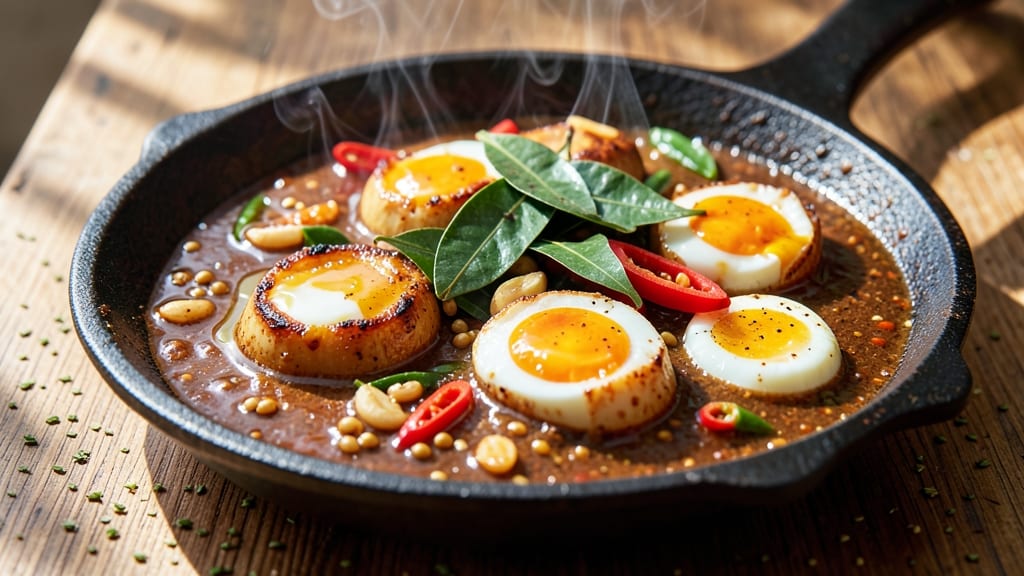
This South Indian egg masala recipe transforms simple eggs into a fragrant, spiced coconut curry that's tender and packed with traditional flavors. The secret lies in tempering mustard seeds and curry leaves in hot oil, creating an aromatic base that infuses every bite with warmth.
I developed this recipe after years of perfecting the balance between spice and coconut creaminess—it's the kind of dish that feels both comforting and celebratory.
The dish begins with lightly scrambled eggs that soak up the rich coconut gravy, becoming tender rather than rubbery. Traditional South Indian spices like turmeric, red chili powder, and coriander powder work together to create depth without overpowering the natural egg flavor.
The coconut milk adds a velvety texture that makes this curry feel luxurious, while fresh cilantro at the end brightens every spoonful.
What you'll achieve is a restaurant-quality egg curry that's ready in just 30 minutes—perfect for breakfast, brunch, or even a light dinner. The eggs remain tender and moist, coated in a fragrant coconut gravy that's neither too sweet nor too spicy.
This dish pairs beautifully with steamed rice or warm roti, making it a complete meal that's both satisfying and balanced.
One of the best aspects of this recipe is its versatility—it works equally well as a quick weeknight meal or a special Sunday brunch dish. The spices can be adjusted to taste, and you can even add vegetables like potatoes or peas for extra heartiness.
Let's get started on creating this tender, aromatic South Indian egg masala that will become a family favorite.
Ingredients for south indian egg masala
Simple ingredients, bold South Indian flavors—just six eggs and coconut magic transform this into a restaurant-worthy dish.
| Ingredient | Amount | Notes |
|---|---|---|
| Large Eggs 🥚 | 6 whole | Room temperature preferred |
| Extra-Virgin Coconut Oil 🫒 | ¼ cup | For tempering spices |
| Mustard Seeds 🌿 | 1 tbsp | Whole, for tempering |
| Curry Leaves 🌿 | ¼ cup | Fresh, lightly crushed |
| Garlic Cloves 🧄 | 6 cloves | Minced finely |
| Green Chili Peppers 🌶️ | 2 whole | Slit lengthwise, seeds removed |
| Shallots 🧅 | 3 whole | Finely chopped |
| Turmeric Powder 🌿 | ½ tsp | Freshly ground preferred |
| Red Chili Powder 🌶️ | 1 tsp | Adjust to taste |
| Ground Coriander 🌿 | 1 tsp | Freshly ground if possible |
| Light Coconut Milk 🥥 | 1 cup | Full-fat for creaminess |
| Water 💧 | ½ cup | For adjusting consistency |
| Fresh Cilantro 🌿 | ¼ cup | Chopped, for garnish |
| Salt 🧂 | ¾ tsp | Kosher or sea salt |
| Lemon Juice 🍋 | 1 tbsp | Freshly squeezed |
The mustard seeds and curry leaves are non-negotiable—they create that signature South Indian aroma. Whole mustard seeds from Indian grocery stores (like Patel Brothers) give the best flavor, but the tiny packets from Trader Joe's work in a pinch. Curry leaves? Fresh is essential—dried just won't cut it. If you can't find them, substitute 2 tbsp chopped cilantro, but it won't be the same. For the coconut oil, virgin, unrefined is key—it's what gives that authentic flavor. The green chilies should be fresh and vibrant—no wilted ones here.
No curry leaves? Skip them—this dish still works without. The coconut milk can be swapped for coconut cream (just thin it with water), but it'll be richer. Short on cilantro? Fresh parsley works in a bind. The spices are flexible: reduce red chili powder if you prefer mild heat, or add a pinch of black pepper for depth. For the eggs, room temperature makes all the difference—they scramble more evenly. And if you're feeling fancy, use duck eggs for extra richness (trust me, it's worth it).
This curry tastes even better the next day—the flavors meld beautifully when reheated gently. Store leftovers in the fridge for up to 4 days, or freeze for 3 months. I always make a double batch because it disappears fast—pairs perfectly with steamed basmati rice or warm roti. For meal prep, portion into containers with a little extra coconut milk on top to keep it moist. The cilantro can be added fresh when serving—no need to store it in the curry.
Why You'll Love This Recipe
- Foolproof Technique: I swear by the coconut oil—it’s the secret to that golden, fragrant base. No risk of burning, no fussing with high heat, just the perfect tempering of mustard seeds and curry leaves that smell like home the second they pop.
- Garlic Magic: That raw garlic sizzle? It’s the star. The moment it hits the pan, the whole kitchen fills with aroma, and the eggs soak up all that punchy, aromatic goodness—crispy edges, tender centers, and a flavor that lingers.
- Lunchbox Hero: Between us, this is my go-to for packed lunches. The eggs hold up for days (yes, really), and I just reheat with a splash of water—no soggy mess, just that same bold, spiced taste that makes my workday brighter.
- Pantry Staple: Honestly, I make this when I’m low on groceries. Eggs, coconut oil, a few spices—I’ve got it covered. And if I have leftovers? They become tomorrow’s breakfast or a quick stir-fry fix. Zero waste, all flavor.
Step-by-step instructions for South Indian egg masala
Here's how to make this creamy, aromatic curry with perfectly tender eggs every time.
Temper the Spices in Coconut Oil
Heat the 0.25 cup extra-virgin coconut oil in a heavy-bottomed pan over medium heat. Add the 1 tablespoon mustard seeds and let them sizzle until they pop—this should take about 30 seconds. The oil should be shimmering but not smoking.
Next, add the 0.25 cup curry leaves and the 2 whole green chili peppers (slit lengthwise). Cook for 1 minute until the curry leaves turn dark and fragrant. This step is crucial—it develops the signature South Indian aroma that makes this dish special. If the curry leaves burn, reduce the heat slightly and keep stirring.
Cook the Aromatics and Spices
Add the 3 whole shallots (finely chopped) and cook for 3-4 minutes until they turn golden brown and soft. Stir frequently to prevent burning. Then add the 6 cloves garlic cloves (minced) and cook for another 1 minute until the raw garlic smell disappears and they turn light golden.
Lower the heat to medium-low and add the 0.5 teaspoon turmeric powder, 1 teaspoon red chili powder, and 1 teaspoon ground coriander. Stir for 30 seconds until the spices are well combined and fragrant. This is where the flavors meld together—don't rush this step. The spices should look evenly distributed and slightly darkened from the oil.
Cook the Eggs Until Tender
Add the 6 whole large eggs (at room temperature) to the pan. Gently stir them for 2-3 minutes until they begin to set but are still slightly runny in the center. You want them to be tender but not fully cooked—this ensures they finish cooking in the coconut milk sauce. If the eggs stick, add a splash of 0.5 cup water to loosen them.
Here's the thing—don't overcook the eggs in this step. They should be mostly set but still slightly soft when you press them with a spoon. Overcooking will make them rubbery, and we're going for that perfect tender texture that South Indian egg curries are known for.
Finish with Coconut Milk and Season
Pour in the 1 cup light coconut milk and the remaining 0.5 cup water. Stir gently to combine, then add the 0.75 teaspoon salt. Bring the mixture to a gentle simmer over medium-low heat for 5-7 minutes. The sauce should thicken slightly, coating the eggs beautifully. If it's too thick, add a little more water—just enough to reach a creamy consistency.
Taste and adjust the seasoning. If it needs more heat, add a pinch of red chili powder. If it needs brightness, stir in the 1 tablespoon lemon juice at the end. The sauce should be well-balanced—slightly tangy, spicy, and creamy all at once. The eggs should be fully cooked now, tender and infused with all the flavors.
Garnish and Serve
Remove the pan from heat and stir in the 0.25 cup fresh cilantro (chopped). Let the curry sit for 2-3 minutes to allow the flavors to meld together. The cilantro adds a fresh finish that cuts through the richness of the coconut milk.
Serve the egg masala hot with steamed rice or crusty bread. The perfect bowl should have tender eggs swimming in a creamy, spiced coconut sauce with just the right amount of heat. If you're serving it to guests, garnish each portion with a sprinkle of extra cilantro and a drizzle of the coconut milk from the top for that restaurant-quality presentation.
Pro Tips For Making South Indian Egg Masala
- CRACK EGGS LAST MINUTE: Wait until the coconut oil is actually smoking before adding eggs—this seals them instantly and keeps the yolks runny (the way it should be). I used to add them too early and ended up with rubbery eggs every time. The oil needs to be hot enough that the first egg sizzles like mad when it hits the pan.
- TOAST CURRY LEAVES: Dry-toast the curry leaves in the same oil as the mustard seeds for 10 seconds before adding garlic—this deepens their flavor and prevents them from turning bitter. I learned this the hard way after a batch tasted like soap. Just let them blister slightly, then add garlic immediately.
- DON’T OVERMIX EGGS: Once the eggs are cooked, stir them just enough to combine—overmixing turns them into scrambled eggs. The goal is soft, slightly broken curds, not a smooth texture. A few gentle folds with a spatula are all you need.
- USE WHOLE GARLIC: Peel and smash the garlic cloves with the flat side of your knife instead of mincing—this keeps the flavor intense and prevents it from burning before the eggs are done. Finely minced garlic in coconut oil turns bitter fast, and you’ll taste the difference.
Essential equipment for this recipe
Heavy-Bottomed Pan
You'll need a 10-12 inch heavy-bottomed pan—I recommend a stainless steel or cast iron skillet like the All-Clad Stainless or Lodge cast iron. These materials distribute heat evenly, preventing hot spots that can burn your curry leaves or spices.
A non-stick pan works too, but avoid cheap ones—they can't handle the high heat needed for tempering mustard seeds properly. The pan should be deep enough to accommodate the coconut milk without spilling over. 🔥
Tempering Spoon
A long-handled tempering spoon (or a wooden spoon) is essential for safely adding ingredients to hot oil. I use a stainless steel tempering spoon because it conducts heat well and won’t warp. Avoid plastic spoons—they melt when exposed to hot oil.
The spoon’s long handle keeps your fingers safe from the sizzling mustard seeds and curry leaves. If you don’t have one, a chopstick works in a pinch! 🥄
Fine-Mesh Strainer
For straining coconut milk or removing any burnt curry leaves, a fine-mesh strainer (like the OXO Good Grips) is a game-changer. It catches small debris while letting the creamy milk pass through smoothly.
If you don’t have one, a cheesecloth or even a clean kitchen towel layered over a bowl works, but it’s messier. Trust me, this step ensures your sauce is silky smooth. ✨
Curry Leaf Picker
Curry leaves are delicate and can burn easily, so a small curry leaf picker (available at Indian grocery stores or online) makes handling them effortless. If you don’t have one, use tongs or carefully pinch them with your fingers—just be quick!
The picker lets you add leaves directly to the oil without dropping them, which is key for that authentic aroma. Without one, you risk burning the leaves before they release their fragrance. 🌿
Ladle for Serving
A soup ladle (like the OXO stainless steel) is perfect for serving this curry. Its deep bowl scoops up the eggs and sauce evenly, making plating a breeze. For extra presentation, I drizzle a little extra coconut milk on top before serving.
If you’re serving this to guests, a ladle also helps portion the curry neatly into bowls. 🍽️
Optional: Mortar and Pestle
While not mandatory, a marble mortar and pestle (like the Kuhn Rikon) lets you grind fresh spices like coriander and turmeric for deeper flavor. Store-bought spices work fine, but freshly ground spices elevate this dish to restaurant-level quality.
If you don’t have one, a spice grinder or even a clean coffee grinder (dedicated to spices) does the trick. Freshly ground spices release their oils more effectively, making every bite more aromatic. 💫
Nutrition facts
Frequently asked questions
Can I make this egg masala without coconut milk?
Yes, but the flavor will be different. For a lighter version, substitute 1 cup whole milk or 1 cup yogurt (thinned with water). For a richer alternative, use 1/2 cup heavy cream + 1/2 cup water. The coconut milk creates the signature South Indian creaminess, but these substitutes still work well for a quick weeknight meal.
Why do my eggs turn rubbery in the curry?
Overcooking is the most common cause. In Step 3, cook the eggs for only 2-3 minutes until they're mostly set but still slightly runny. The sauce will finish cooking them gently. If you notice rubberiness, try adding 1/4 cup water or coconut milk to the pan and simmering for 1-2 minutes to restore tenderness.
How can I adjust the spice level for kids?
Reduce the red chili powder to 1/2 teaspoon and omit the green chilies entirely. For extra mildness, add 1/4 teaspoon sugar to balance the flavors. The coconut milk naturally mellows the heat, so the dish will still be delicious. Always let kids taste first and adjust gradually if needed.
Can I make this recipe in an Instant Pot?
Yes! Sauté the mustard seeds, curry leaves, and aromatics on "Sauté" mode. Add eggs and cook for 2 minutes, then pour in coconut milk and water. Seal the lid and cook on "High Pressure" for 3 minutes, then quick-release. Finish with cilantro and lemon juice. The pressure cooker keeps the eggs tender while infusing all flavors.
What's the best way to store leftovers?
Store in an airtight container in the fridge for up to 4 days. The flavors actually improve overnight! For freezing, portion into containers with a little extra coconut milk on top to prevent drying. Thaw in the fridge overnight and reheat gently on low heat, adding a splash of water if needed to restore creaminess.