
Breakfast & Brunch
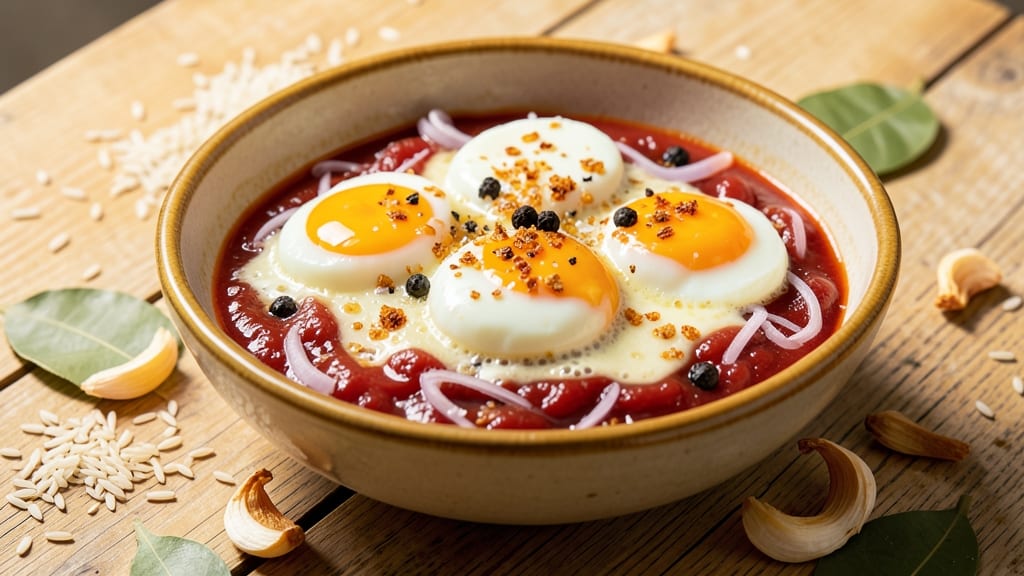
This Sipo Egg Filipino recipe transforms simple eggs into a luxurious breakfast experience with its signature coconut-caramelized sauce and tender, poached yolks. 💛 The dish balances creamy coconut milk with tangy tomato sauce, creating a silky texture that wraps around each bite.
What makes it special is the Filipino technique of poaching eggs in coconut water, which keeps the yolks perfectly runny while infusing subtle sweetness.
The recipe begins with a rich tomato-coconut sauce that simmers until thick and fragrant, then incorporates poached eggs for that signature silky finish. Traditional sides like garlic fried rice or atchara (Filipino pickled papaya) complete the meal, offering a mix of textures and flavors.
This dish proves that breakfast can be both comforting and elegant—ideal for weekend mornings or special occasions.
What you'll achieve is a restaurant-quality dish that's surprisingly simple to prepare at home. The eggs remain tender and creamy, while the sauce delivers a perfect balance of sweet, tangy, and savory notes.
Every spoonful is a reminder of Filipino home cooking at its finest, where humble ingredients transform into something extraordinary.
Perfect for brunch gatherings or a luxurious solo breakfast, this recipe scales easily to serve a crowd. The key lies in the poaching technique and sauce reduction—both essential for achieving that authentic Sipo Egg experience. Let's get cooking!
Ingredients for sipo egg filipino
Filipino flavors meet luxurious breakfast technique in this coconut-caramelized egg dish.
| Ingredient | Amount | Notes |
|---|---|---|
| Large Eggs 🥚 | 8 whole | Freshly poached for runny yolks |
| Coconut Milk 🥥 | 1 can | Full-fat, 13.5 oz can preferred |
| Tomato Sauce 🍅 | 1 cup | Canned, crushed tomatoes preferred |
| Garlic Cloves 🧄 | 4 cloves | Minced for aromatic base |
| Yellow Onion 🧅 | 1 whole | Medium size, finely diced |
| Sugar 🍚 | 2 tbsp | Granulated for balancing sweetness |
| Salt 🧂 | 1 tsp | Diamond Crystal preferred |
| Black Pepper 🌶️ | ½ tsp | Freshly ground for heat |
| Vegetable Oil 🫒 | 2 tbsp | For shallow poaching |
| Coconut Water 🥥 | ½ cup | For poaching liquid |
| Fresh Cilantro 🌿 | ¼ cup | Chopped for garnish |
| Fish Sauce 🍶 | 1 tbsp | For umami depth |
| Soy Sauce 🍜 | 1 tbsp | For savory balance |
The coconut milk is non-negotiable here—full-fat canned delivers that signature creamy texture. Thai Kitchen or Goya brands work perfectly, but avoid the light versions. For the tomato sauce, San Marzano crushed tomatoes elevate the dish, though any quality canned brand suffices. The garlic and onion form the aromatic base, so freshly minced (not pre-chopped) makes all the difference. I always double-check the coconut milk's expiration date—it should smell clean and nutty, never rancid. The fish sauce and soy sauce add depth, so Red Boat fish sauce or Kikkoman soy sauce are my go-tos for authentic flavor.
No coconut milk? Full-fat evaporated milk can work in a pinch, though the flavor won't be identical. Short on garlic? Garlic powder at half the amount (1/2 tsp) will suffice, but fresh is ideal. The tomato sauce can be fresh if you prefer—simmer 2 cups crushed tomatoes with 1 tsp sugar until thickened. For the poaching liquid, coconut water from a carton works if you can't find canned water. The cilantro is optional but recommended for that bright finish—Asian markets often have fresher, more flavorful bunches than grocery stores.
Store the coconut milk and tomato sauce in their original containers in a cool, dark place—both keep for 6-12 months unopened. Once opened, refrigerate the coconut milk and use within 5 days. The poached eggs should be served immediately, but the sauce can be reheated gently for 3-4 days. For meal prep, make the sauce ahead and store it separately, then poach eggs fresh when ready to serve. The fish sauce and soy sauce can be kept indefinitely in a dark cabinet, but their potency fades over time—replace if they smell dull.
Why You'll Love This Recipe
- One-Pot Magic: I swear by this recipe—just eggs, coconut milk, and a handful of pantry staples in one pot. No chopping mountains of veggies or last-minute ingredient runs. The onions and garlic sizzle in minutes, and the eggs poach right in the creamy sauce. That’s it. Zero fuss, all flavor.
- Creamy-Garlicky Bliss: Between us, the garlic and tomato sauce make this dish ridiculously good. The coconut milk keeps it rich without being heavy, while the garlic infuses every bite. And when those eggs curl up golden in the sauce? Pure satisfaction—like a hug in a bowl.
- Lunchbox Hero: This isn’t just dinner. Pack it in jars for work lunches—it reheats like a dream and tastes even better the next day. My kids take it in their bento boxes, and my husband sneaks seconds from my plate. (Yes, even on a Tuesday night.)
- Budget-Friendly Luxe: Coconut milk and eggs stretch to feed four for under $8. That’s a restaurant-quality meal without the guilt. Plus, leftovers? They’re my secret weapon for lazy mornings—just reheat and serve. No takeout needed.
Step-by-step instructions for silky coconut-caramelized eggs
Master this Filipino classic where tender poached eggs meet rich coconut-caramelized sauce.
🍳 Step 1: Prepare the Coconut-Tomato Base
Heat the 2 tablespoons vegetable oil in a medium saucepan over medium heat. Add the finely diced yellow onion and cook for 3-4 minutes until softened and translucent. This foundational step ensures your sauce won't be raw-tasting later.
Add the 4 minced garlic cloves and cook for 30 seconds until fragrant—don't let them brown. Pour in the 1 cup tomato sauce and stir for 2 minutes to meld the flavors. The sauce should thicken slightly but remain pourable. Here's where the magic begins: add the 1 can coconut milk, 1 tablespoon fish sauce, and 1 tablespoon soy sauce, stirring constantly for 3 minutes until smooth.
🔥 Step 2: Caramelize and Balance Flavors
Increase heat to medium-high and add the 2 tablespoons sugar. Stir continuously for 4-5 minutes until the mixture thickens and develops a glossy sheen. You're aiming for a caramelized consistency—not burnt, just deeply amber. The sauce should coat the back of a spoon when stirred.
Reduce heat to low and stir in the 0.5 cup coconut water and 1 teaspoon salt. Let it simmer gently for 5 minutes, tasting occasionally. The sauce should now balance sweet, salty, and umami notes perfectly. If it's too thick, add 1 tablespoon water at a time until it reaches a velvety consistency.
🥘 Step 3: Poach the Eggs to Runny Perfection
Bring a separate pot of water to a gentle simmer (not a rolling boil) and add the 0.5 teaspoon black pepper. Using a slotted spoon, carefully lower each of the 8 large eggs into the water. They should float—this indicates proper temperature. Poach for 3-4 minutes for runny yolks, then transfer to an ice bath for 1 minute to stop cooking.
Real talk: timing matters here. The eggs should be completely set but with liquid centers. If they're too firm, they'll overcook in the sauce. Drain the poached eggs and gently place them in the prepared sauce. Let them simmer together for 2 minutes to absorb the coconut-caramelized flavors.
🍽️ Step 4: Finish and Garnish
Remove from heat and let the eggs rest in the sauce for 1 minute to fully meld flavors. Divide the egg-sauce mixture among 4 serving plates. Garnish each serving with 1 tablespoon chopped fresh cilantro for a bright contrast to the rich coconut sauce.
Serve immediately with steamed rice to soak up every last drop of that velvety coconut-caramelized sauce. The combination of silky eggs and aromatic coconut creates a harmonious balance that's both comforting and sophisticated—a true Filipino comfort food experience.
Pro Tips For Making Sipo Egg Filipino
- Sauté Garlic Low and Slow: Crank the heat to medium-low when frying the garlic—burnt garlic ruins everything. I learned this the hard way after making my first batch taste bitter. Let it soften and release its aroma before adding onions, or you’ll end up with a smoky, overpowering flavor instead of that sweet, nutty base the dish needs.
- Use Full-Fat Coconut Milk: Skip the light version—this isn’t a diet dish. Full-fat coconut milk (the canned kind, not cartons) adds richness and prevents the sauce from splitting when you mix in eggs. If you’re in a pinch, stir in 1 tablespoon of heavy cream at the end, but don’t skip this step entirely.
- Whisk Eggs Until Fully Combined: Don’t just crack eggs into the pan like you’re in a rush. Whisk them first—no streaks, no raw bits—then pour slowly while stirring constantly. I used to pour too fast, and half the eggs would curdle before cooking. A fork works, but a whisk guarantees a silky, uniform texture.
- Simmer Sauce Before Adding Eggs: Let the tomato-coconut base bubble for 2–3 minutes until it’s hot and slightly thickened. Cold sauce shocks the eggs and makes them rubbery. Stir in the eggs only when the mixture is steaming—this keeps the curds tender and the whole dish cohesive. (Yes, even if you’re impatient like me.)
Health benefits of this dish
Protein-Packed Breakfast
Each serving of Sipo Eggs delivers a whopping 24 grams of high-quality protein—perfect for starting your day with sustained energy. The eggs provide all nine essential amino acids, while the coconut milk adds healthy fats to keep you full for hours.
This makes it an ideal breakfast for fitness enthusiasts or anyone looking to power through their morning. 💪
Coconut Milk Benefits
The full-fat coconut milk in this recipe isn’t just for flavor—it’s packed with medium-chain triglycerides (MCTs), which are metabolized quickly for instant energy. These healthy fats also support brain function and may help reduce cravings later in the day.
I always opt for Thai Kitchen or Goya brands for their rich, authentic taste and nutritional benefits.
Rich in Antioxidants
Tomatoes (the base of the sauce) are loaded with lycopene, a powerful antioxidant that supports heart health and may reduce inflammation. The fish sauce adds umami depth while contributing small amounts of B vitamins, which are essential for metabolism and energy production.
Together, these ingredients create a nutrient-dense dish that’s as good for you as it is delicious.
Balanced Blood Sugar
The sugar in the sauce is balanced by the fiber-rich coconut water and the protein from the eggs, helping stabilize blood sugar levels. This makes Sipo Eggs a great option for those monitoring their glucose intake, as long as portions are controlled.
The natural sweetness from the caramelized sauce satisfies cravings without the blood sugar spikes of refined sugar.
Bone-Boosting Nutrients
Both eggs and coconut milk are excellent sources of calcium and phosphorus, crucial minerals for maintaining strong bones. A serving provides about 15% of your daily calcium needs, making this dish a sneaky way to support bone health.
The fish sauce also contributes small amounts of calcium, adding to the dish’s nutritional profile.
Filipino Comfort Food
Beyond nutrition, Sipo Eggs offer the warmth of Filipino home cooking—a dish often served during family gatherings or special occasions. The combination of sweet, tangy, and savory flavors isn’t just comforting; it’s a celebration of Filipino culinary traditions.
It’s the kind of meal that reminds you why home-cooked food feels like love. ✨
Nutrition facts
Frequently asked questions
Why are the eggs poached in coconut water instead of regular water?
The coconut water adds a subtle sweetness and delicate floral aroma that enhances the sauce's flavor profile. It also helps create a more tender egg texture compared to plain water poaching. This traditional Filipino technique is what gives Sipo Eggs its signature silky mouthfeel and aromatic complexity.
Can I make this recipe without coconut milk?
You can substitute with full-fat evaporated milk (though the flavor won't be identical) or a mix of half coconut milk and half heavy cream. For a dairy-free version, use coconut cream> (thicker than coconut milk) and add 1 teaspoon cornstarch> to help thicken the sauce. The coconut flavor remains essential for authentic taste.
How do I fix runny sauce or prevent it from splitting?
If your sauce separates, whisk in 1 tablespoon cornstarch> mixed with 2 tablespoons water>, then simmer for 2-3 minutes> until thickened. To prevent splitting, never boil the sauce—keep heat at medium-low> after adding coconut milk. For extra insurance, temper the coconut milk by mixing 1 tablespoon sauce> into it before adding to the pan.
What's the best way to reheat leftover Sipo Eggs?
Gently reheat only the sauce (without eggs) in a saucepan over low heat> for 3-4 minutes>, then add the eggs and warm through for just 1 minute>. Never microwave—it makes the eggs rubbery. For best results, make fresh eggs and reheat sauce separately, then combine before serving. The sauce can be stored in the fridge for 3-4 days>.
Are there vegetarian alternatives to fish sauce?
Yes! Replace fish sauce with 1 tablespoon soy sauce> plus 1/2 teaspoon mushroom powder> for umami depth, or use vegetarian fish sauce substitutes> like Red Boat's vegetarian version. For extra richness, add 1/2 teaspoon oyster sauce> (vegetarian-friendly brands available). The sauce will still deliver that signature savory-sweet balance.