
Desserts
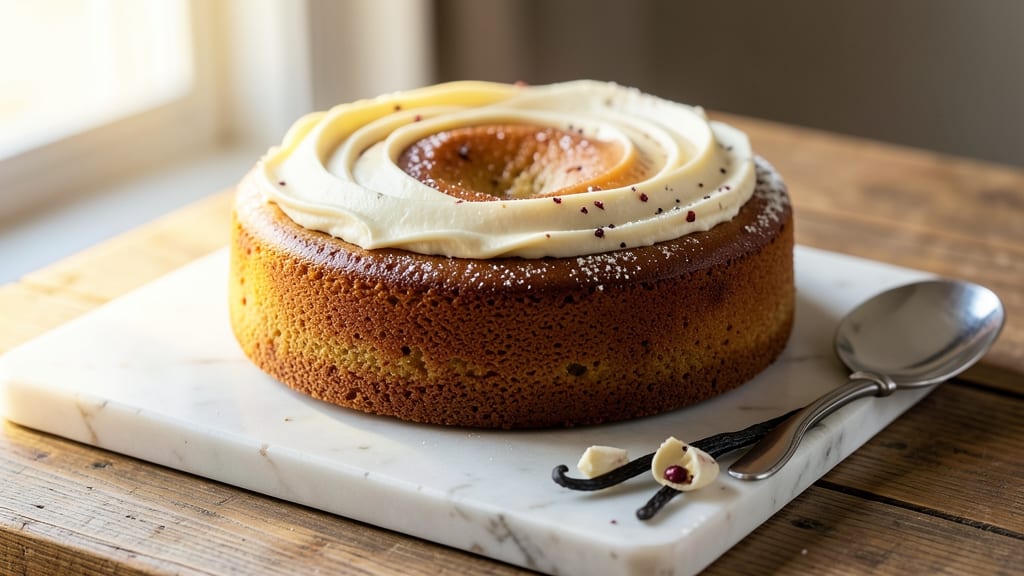
This 8-egg pound cake delivers the signature moist, tender layers that make it a classic dessert favorite. 💛 The secret lies in the perfect balance of eggs, butter, and flour—creating a rich, velvety texture that stays fresh for days.
Unlike lighter cakes, this version relies on its high egg content for structure and moisture without needing extra fat.
Traditionally, pound cakes were made with a pound each of butter, sugar, eggs, and flour, giving them their name. This recipe keeps that legacy while adding modern touches like vanilla bean infusion for depth of flavor.
The result? A cake that’s dense yet crumbly, with a subtle sweetness that pairs beautifully with fruit compotes or whipped cream.
What sets this apart is how the eggs create a fine, even crumb while keeping the cake incredibly moist—no dryness here. The vanilla bean adds aromatic complexity that elevates it beyond basic vanilla extract.
Perfect for celebrations or a simple indulgence, this cake proves you don’t need shortcuts for restaurant-quality results.
Ready in about 1 hour, including baking time, this recipe is ideal for those who appreciate tradition with a touch of refinement. Whether you’re baking for a special occasion or treating yourself, the rich texture and delicate vanilla notes make every slice worth savoring.
Ingredients for 8 egg pound cake
Eight eggs, rich butter, and vanilla bean make this classic pound cake irresistibly moist.
| Ingredient | Amount | Notes |
|---|---|---|
| Large Eggs 🥚 | 8 whole | Room temperature for even baking |
| Unsalted Butter 🧈 | 1 lb | Cold, cubed for even distribution |
| Granulated Sugar 🍚 | 2 cups | White or light brown preferred |
| All-Purpose Flour 🌾 | 3 cups | Sifted, no substitutions |
| Vanilla Bean 🌿 | 1 whole | Seeds scraped for infusion |
| Pure Vanilla Extract 🍯 | 1 tbsp | For extra depth of flavor |
| Baking Powder 🧂 | 1 tbsp | Aluminum-free for best rise |
| Salt 🧂 | ½ tsp | Fine sea salt preferred |
| Heavy Cream 🥛 | ½ cup | Cold for proper folding |
| Lemon Zest 🍋 | 1 tbsp | Freshly grated for brightness |
| Whole Milk 🥛 | ¼ cup | For tender crumb texture |
The eggs are the star here—room temperature is non-negotiable for even baking. Kirkland Signature or Organic Valley eggs work best, but any large eggs will do. Butter? Plugrá or Land O'Lakes unsalted cubes stay cold longer when cubed. Vanilla bean? Madagascar beans at Williams Sonoma have the best depth. Skip the imitation stuff—real vanilla makes all the difference. The flour? King Arthur or Bob's Red Mill all-purpose sifted gives the best texture.
No vanilla bean? Double the extract but add a pinch of cinnamon for warmth. Heavy cream too expensive? Half-and-half works but the cake won't be quite as tender. The lemon zest can be skipped if you're not a fan—just omit it. For a nutty twist, fold in 1/4 cup chopped walnuts. And if you're baking at high altitude? Reduce sugar to 1.75 cups to prevent dryness. The milk? Whole milk keeps it rich, but 2% works too if that's what you've got.
This cake keeps beautifully—3 days at room temp wrapped in foil, or 1 week in the fridge. Freeze slices for 3 months by wrapping tightly in plastic. The vanilla bean pod? Save it—it's good for 2-3 batches. For serving, I always dust with powdered sugar and add fresh berries. Slices reheated for 10 seconds in the microwave taste like fresh-baked—trust me on that.
Why You'll Love This Recipe
- No Mixer Needed: I swear by this—just fold the eggs, butter, and sugar until it’s light enough to spread on toast. The vanilla bean paste (or seeds scraped out) adds that pro baker touch without extra effort. Honestly, my stand mixer sits unused for this one.
- Rich Without Fatigue: Eight eggs? You’d think it’d be heavy, but the butter and sugar balance it out like a dream. The cake stays moist for days, and that vanilla depth? It’s the kind of flavor that makes you pause mid-slice. (Yes, even on a Tuesday night.)
- Leftover Goldmine: This cake doesn’t just hold up—it gets better. Slice it fresh, or stash it for breakfast toast or dessert later. I’ve turned day-old pieces into French toast so good, my kids now ask for “cake breakfast” on weekends.
- Budget Baking Win: Butter and eggs are the stars, but they stretch further than you’d think. A single vanilla bean lasts for months of cakes, and the flour? Just a cup or two for a whole loaf. It’s my go-to when I want something special without breaking the bank.
Step-by-step instructions for vanilla bean pound cake
Here's how to bake a perfectly moist pound cake with rich vanilla flavor.
👨🍳 Step 1: Prepare the Vanilla Bean Infusion
Split the 1 whole vanilla bean lengthwise and scrape out the seeds using the tip of a knife. Place the seeds in a small bowl and add the 1 lb unsalted butter (cubed and cold) and 2 cups granulated sugar. Let this mixture sit at room temperature for 10 minutes—this allows the vanilla to infuse into the butter while softening it slightly.
I like to press the vanilla seeds into the butter with my fingers to release their oils. This step is what gives your cake that professional bakery quality vanilla flavor. Don't rush this part—let the butter soften enough to mix easily but not melt completely.
🍳 Step 2: Cream Butter and Sugar Until Light
Using a stand mixer fitted with the paddle attachment, beat the butter-vanilla mixture on medium speed for 3-4 minutes until light and fluffy. You're looking for the mixture to nearly double in volume and become pale in color. This creaming process incorporates air, which helps create that tender crumb we want in a pound cake.
Here's where it gets fun—taste the mixture. It should be sweet but not overly so, with that beautiful vanilla aroma filling your kitchen. If the butter isn't creamy enough after 4 minutes, let it sit another 5 minutes at room temperature before continuing.
👨🍳 Step 3: Add Eggs Gradually and Mix Well
Add the 8 whole large eggs (room temperature) one at a time, mixing on low speed after each addition until fully incorporated. Then add the 1 tbsp pure vanilla extract and 1 tbsp lemon zest. Mix for another 30 seconds until completely combined. The mixture should be thick and smooth—almost like a pale yellow batter.
This is the moment that matters: the lemon zest brightens the flavor while the vanilla extract adds depth. I always use freshly grated zest because the flavor is so much more vibrant than dried. If you're worried about bitterness, don't be—just 1 tbsp is perfect for this recipe.
🥘 Step 4: Combine Dry Ingredients and Fold Gently
In a separate bowl, whisk together the 3 cups all-purpose flour (sifted), 1 tbsp baking powder, and 0.5 tsp salt. With the mixer on low speed, gradually add the dry ingredients to the wet mixture, mixing just until combined. Be careful not to overmix—you should still see some flour streaks.
Next, add the 0.5 cup cold heavy cream and 0.25 cup whole milk alternately, beginning and ending with the milk. Mix on low speed just until the batter comes together. The batter will be thick—this is normal for pound cake. Real talk: if it looks like too much, trust me, it's exactly what we want for that perfect moist texture.
⏰ Step 5: Bake Until Golden and Springy
Preheat your oven to 325°F and grease two 9-inch round cake pans thoroughly with butter. Divide the batter evenly between the pans. Bake for 50-55 minutes until a toothpick inserted in the center comes out clean and the tops are golden brown.
I know it seems like a long time, but patience is key here. The cake needs that slow bake to develop its moisture. When you tap the top gently, it should spring back slightly—that's your signal it's done. Let the cakes cool in the pans for 10 minutes before transferring to a wire rack to cool completely. This resting period helps prevent cracking as they cool.
Pro Tips For Making 8 Egg Pound Cake
- Whisk Eggs Like a Maniac: Use a stand mixer with the whisk attachment on high for 5 full minutes until the yolks and whites are pale, thick, and ribbon-like—this isn’t the time to be gentle. I learned this the hard way after a cake that collapsed like a deflated balloon because the eggs weren’t properly emulsified.
- Cream Butter and Sugar Slowly: Start with cold butter and mix on low speed, gradually increasing to medium as the sugar dissolves—this prevents butter from melting into a greasy mess. After burning through three batches of grainy, uneven batter, I finally cracked down on this step.
- Sift Flour Twice: Sift the flour before measuring and again after mixing with the dry ingredients to avoid lumps—this recipe’s high egg content forgives little. My grandmother swore by this, and she was right: the texture is noticeably smoother when the flour’s properly aerated.
- Scrape the Bowl Ruthlessly: After adding the vanilla and folding in the flour mixture, scrape the bowl every single time with a rubber spatula—no half-measures. I was skeptical until I tried it: the cake’s crumb becomes uniformly tender instead of dense in spots. (Yes, even if you’re impatient like me.)
Pro cooking tips for perfect results
Egg Temperature Matters
Room temperature eggs are absolutely critical for this recipe. Cold eggs can cause the batter to curdle, leading to a dense, uneven texture. I pull my eggs out of the fridge 30 minutes before baking and place them in a warm water bath for 5 minutes to ensure even warmth.
For extra insurance, I use a thermometer to confirm they're between 65-70°F before mixing. Trust me, this small step makes a huge difference in the final crumb. 🥚
Butter Cubing Technique
The way you cube your butter affects how the cake bakes. Use a sharp chef's knife to cut 1 lb unsalted butter into ½-inch cubes—this ensures even distribution in the batter. Larger cubes can melt unevenly, while smaller cubes incorporate too quickly.
I like to chill the butter for 15 minutes before cubing to maintain its shape during the creaming process. This helps create that signature tender crumb we're after. 🧈
Vanilla Infusion Trick
Don't just scrape the seeds—press them into the butter for maximum flavor extraction. After scraping the seeds from the 1 vanilla bean, I use the back of a spoon to gently press them into the butter cubes.
This releases more oils and creates that professional bakery-quality vanilla flavor. Let the butter-vanilla mixture sit at room temperature for 10 minutes before creaming—this allows the flavors to meld beautifully. 🌿
Baking Powder Choice
Not all baking powders work the same. For this recipe, I recommend using aluminum-free baking powder like Bob's Red Mill or King Arthur brands. Aluminum can leave a metallic aftertaste and affect the cake's rise.
Measure it carefully—1 tbsp is all you need—and sift it with the flour to ensure even distribution. This small detail prevents flat spots and ensures that perfect rise we want in a pound cake. 🧂
Batter Consistency Check
The batter should be thick but pourable—almost like a pale yellow pudding. If it looks too thin, you might have overmixed or used too much liquid. If it's too thick, add 1 tbsp milk at a time until it reaches the right consistency.
I use a spatula to check—when it holds its shape but still flows gently, it's ready for the oven. This texture is what gives pound cake its signature moist, dense crumb. 🥛
Oven Preheating Hack
Preheat your oven to 325°F for at least 20 minutes before baking. I place an oven thermometer inside to confirm accurate temperature—many home ovens run 25°F hotter than set. For even baking, place a baking sheet on the middle rack to create a steam environment.
This helps prevent the cake from drying out during that 50-55 minute bake time. Patience here pays off with perfect results. 🌡️
Nutrition facts
Frequently asked questions about 8-Egg pound cake
Why does this recipe use 8 eggs instead of 4?
Those extra eggs create the signature moist, tender crumb that defines pound cake. Each egg adds fat and protein that keeps the cake rich and dense rather than dry. The high egg content also helps create a fine, even crumb structure without needing extra leavening. Traditional pound cakes were named for their 1-pound ingredients, and eggs were a key component for that signature texture.
Can I make this cake in a different pan shape?
Yes, but adjust the baking time. For a 9x13-inch pan, bake 45-50 minutes instead. For bundt pans, reduce to 35-40 minutes—they bake faster due to their shape. Always use the same oven temperature (325°F) and check doneness with a toothpick. The cake should spring back when gently pressed.
What if my cake comes out dry?
Dryness usually means overbaking or incorrect oven temperature. First, check your oven with a thermometer—many run hot. If the cake tests done at 50 minutes but looks dry, it likely needed 5-10 minutes less time. For future bakes, try brushing warm slices with simple syrup (equal parts sugar and water) while still warm to restore moisture.
How can I add flavor variations? Swap the vanilla bean for other infusions! Try 1 tbsp orange zest + 1 tsp cardamom for a Middle Eastern twist, or 1/2 cup mashed raspberries + 1 tsp almond extract for fruity depth. For chocolate lovers, fold in 1/2 cup melted dark chocolate with the dry ingredients. Just
Is this cake gluten-free friendly?
Not traditionally, but you can adapt it! Replace the 3 cups all-purpose flour with 2.5 cups gluten-free 1:1 baking flour plus 1 tbsp xanthan gum. Add 2 tbsp extra milk** to compensate for reduced moisture in GF flours. Note the texture will be slightly denser, but the cake will still be delicious. Always test your GF flour blend first in small batches.